

The decrease from the levels five years ago in immigration prosecutions for these matters is shown more clearly in this figure. The vertical bars in Figure 1 represent the number of immigration prosecutions of this type recorded on a month-to-month basis. Where a prosecution was initially filed in U.S. Magistrate Court and then transferred to the U.S. District Court, the magistrate filing date was used since this provides an earlier indicator of actual trends.
TRAC - Criminal Enforcement
Just 2% of Immigration Court Filings Based on Alleged Criminal Activity in February 2026
Numbers are also lower now than they were a year earlier when President Trump returned to office. One year ago in February 2025, DHS filed NTAs on 821 individuals based on claims of criminal activity compared with 741 today. This represented 4 percent of the cases filed a year ago, rather than just 2 percent now.
Tracking the Historic Rise of Habeas Cases Filed by Detained Immigrants
ProPublica is tracking the historic rise in challenges filed by immigrants claiming their detention is illegal.

New Proceedings Filed in Immigration Court
Here's Every Single Death Linked to Immigration Enforcement Since Trump's Raids Began in 2025 ~ L.A. TACO
We hope this register offers a moment to remember the names and stories of the victims. For each one, we’ve included the backstory we were able to gather alongside the official account from government agencies.

Deportation Data Project
The Deportation Data Project obtains, posts, and analyzes internal U.S. government immigration enforcement data via public records litigation.
ICE Detention Trends | Vera Institute of Justice
Every year, U.S. Immigration and Customs Enforcement (ICE) subjects hundreds of thousands of people to civil immigration detention—a practice that is unjust, inhumane, and completely unnecessary. It does so under a veil of secrecy, sharing only limited, often error-prone statistics with the public. ICE’s failure to regularly release accurate, complete, and accessible data to the public enables it to operate its multi-billion-dollar detention network with impunity and little oversight.
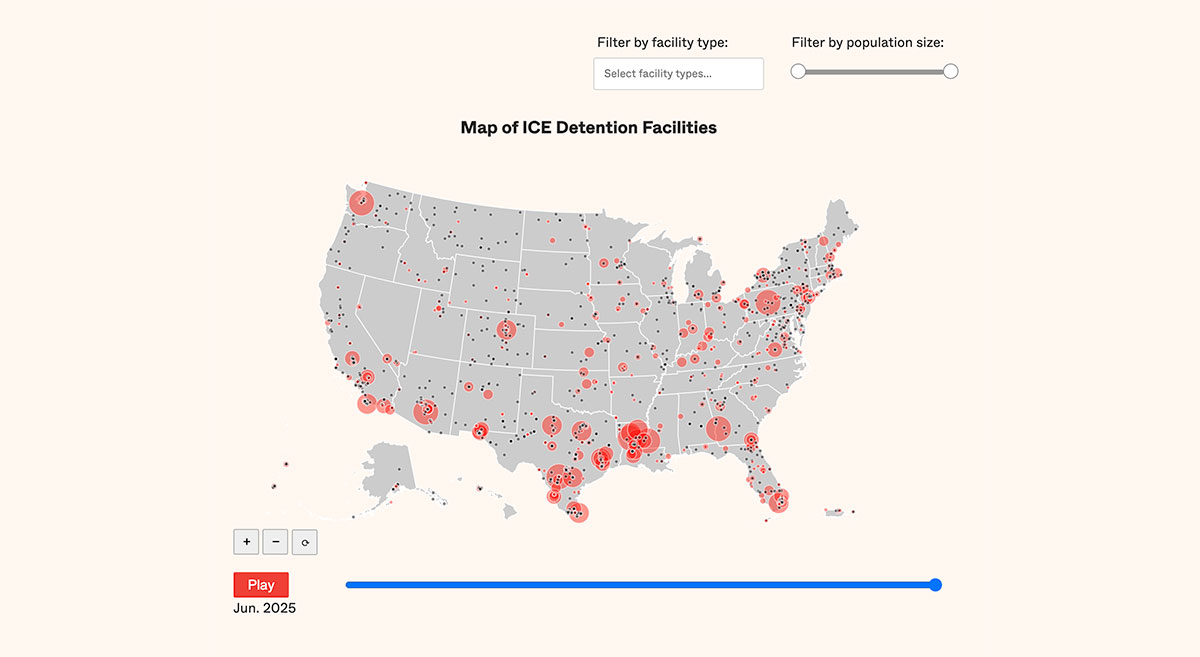
Deportation Data Project
The Deportation Data Project at UC Berkeley and UCLA uses public records litigation to obtain, post and analyze U.S. government immigration enforcement data.
Illegal Immigration Reform and Immigrant Responsibility Act of 1996
The Illegal Immigration Reform and Immigrant Responsibility Act of 1996 (IIRAIRA), is a law enacted as division C of the Omnibus Consolidated Appropriations Act of 1997 which made major changes to the Immigration and Nationality Act (INA). IIRAIRA's changes became effective on April 1, 1997.

By the numbers: the latest ICE and CBP data on arrests, detentions and deportations in the US
The Guardian has reviewed figures from Immigration and Customs Enforcement and Customs and Border Protection since Trump’s inauguration

Worst of the Worst - 152 Criminal ICE and Border Agents — Ohio Immigrant Alliance
Video recording, final report, data, and other content from the release of OIA’s new report, “The Worst of the Worst: 152 Sexually and Physically Abusive ICE and Border Agents; Implications for U.S. Communities and Actions Needed from Congress.”

Latinxs in <i>La Migra</i> : Why They Join and Why It Matters
Once an exclusively white enterprise, the last forty-five years have witnessed the emergence of a disproportionately Latinx immigration law enforcement workforce. This article addresses the question of why Latinxs elect to work for agencies that have systematically targeted the ethnic communities to which they belong. Where existing scholarship has often implied Latinxs may self-select into immigration law enforcement due to a lack of identification with the immigrant-experience, a dissociation with ethnic identity, and generally restrictionist immigration attitudes, this article finds little empirical evidence to support such an assumption. Analysis of interviews with sixty-one Latinx Immigration and Customs Enforcement (ICE) agents across Arizona, California, and Texas reveals, instead, Latinxs elect to work in immigration law enforcement in service of economic self-interest and survival, with “money,” “a good job,” and “benefits” cited as the primary motivation(s) behind applying for and accepting a job in immigration. This pattern holds irrespective of individual agents’ levels of identification with the immigrant-experience and particular attitudes toward immigration, and suggests a diversity in the demographics of immigration law enforcement agencies that extends beyond mere race and ethnicity, to include a diversity of perspective and potential for empathy.

Latinxs in <i>La Migra</i> : Why They Join and Why It Matters
Once an exclusively white enterprise, the last forty-five years have witnessed the emergence of a disproportionately Latinx immigration law enforcement workforce. This article addresses the question of why Latinxs elect to work for agencies that have systematically targeted the ethnic communities to which they belong. Where existing scholarship has often implied Latinxs may self-select into immigration law enforcement due to a lack of identification with the immigrant-experience, a dissociation with ethnic identity, and generally restrictionist immigration attitudes, this article finds little empirical evidence to support such an assumption. Analysis of interviews with sixty-one Latinx Immigration and Customs Enforcement (ICE) agents across Arizona, California, and Texas reveals, instead, Latinxs elect to work in immigration law enforcement in service of economic self-interest and survival, with “money,” “a good job,” and “benefits” cited as the primary motivation(s) behind applying for and accepting a job in immigration. This pattern holds irrespective of individual agents’ levels of identification with the immigrant-experience and particular attitudes toward immigration, and suggests a diversity in the demographics of immigration law enforcement agencies that extends beyond mere race and ethnicity, to include a diversity of perspective and potential for empathy.
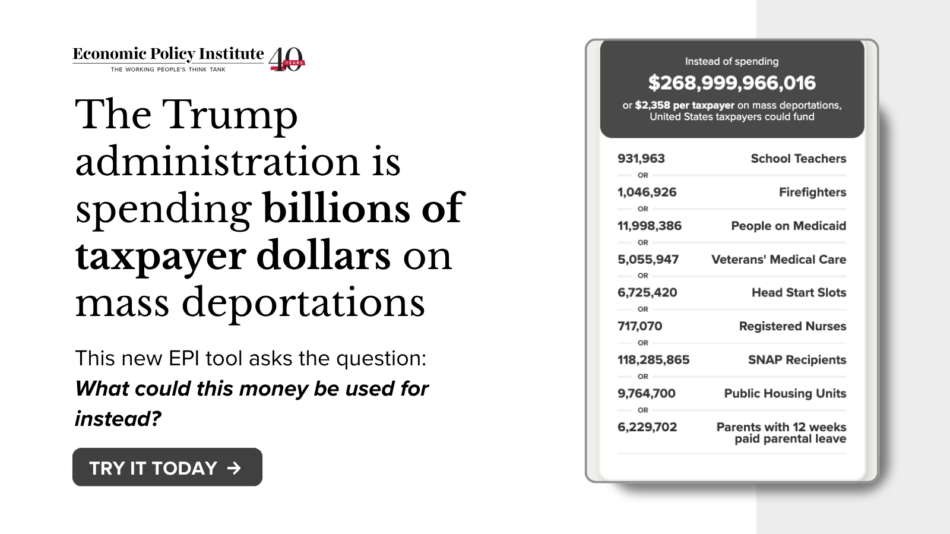
The Cost of Deportations Calculator
The Trump administration is taking billions of _your_ taxpayer dollars to pay for mass deportations. The Cost of Deportations Calculator shows what could this money be used for instead.
CBP Searched a Record Number of Phones at the US Border Over the Past Year
The total number of US Customs and Border Protection device searches jumped by 17 percent over the 2024 fiscal year, but more invasive forensic searches remain relatively rare.

8 convicted in Texas immigration center shooting and protest are sentenced to decades in prison
Eight people accused by the Justice Department of having ties to antifa have been sentenced to decades in federal prison over a shooting outside a Texas immigration detention center during a protest.