


Following on from my previous article on metaphors and paradigm shifts, I thought I would write about one particular monumental shift in paradigm, which was central to the development of VISA’…
The Future of Money: How the Digital Revolution Is Tran…
A cutting-edge look at how accelerating financial chang…

What is Money, Anyway?
Editor’s Note: This topic is now comprehensively covered in my book, Broken Money. Money is a surprisingly complex subject. People spend their lives seeking money, and in some ways it seems so straightforward, and yet what humanity has defined as money has changed significantly over the centuries. How could something so simple and so universal, […]

Preface | The World After Capital
Since publishing the previous version of The World After Capital, I have met with people across the political spectrum to discuss the ideas from the book. When I present these in person, I emphasize that the ideas are neither left nor right but forward (credit to Scott Santens who first used this phrase about Universal Basic Income). My writing, however, at times has alienated readers who identify as being more on the right. In this new edition, I am therefore making an extra effort to emphasize how both my diagnosis of where we are at and my suggestions for how to move forward do not map onto the existing political divides. Instead this is a new way of understanding our challenges and opportunities that can be the basis for movements and parties that are not trapped in Industrial Age ideology.
Systems: How the Ultra-Wealthy Think About Money - Anil Dash
A blog about making culture. Since 1999.

annotations: La globalisation, la fragmentation et le système monétaire international
Traduction française de "Globalisation, fragmentation, and the international monetary system" de Barry Eichengreen
Hype, financial narratives, and self-fulfilling prophecies in surveillance capitalism
The rise of platforms has transformed our understanding of contemporary capitalism, with the critical literature describing how these firms leverage unprecedented digital powers to extract monopoly rents – perhaps even heralding a new form of Feudalism. This paper draws on the literature on financial narratives to examine the role that such stories play within the form of capitalism that they describe, and what this suggests for the role of “hype” in contemporary capitalism. The same stories that for critical scholars appear as menacing threats of “technofeudalism” or “surveillance capitalism” for investors appear as optimistic stories of promising future returns. By driving financial investments, narratives afford platforms very real social and political powers, enabling them to function as a form of self-fulfilling prophecies. The paper argues for a cultural inflection to the political economy of Big Tech – viewing capitalism as neither mechanistic nor rational, but as an expression of a complex interplay between narrative, technology, and economic power. This suggests the need for a critical hype studies, geared at deconstructing the narratives undergirding the technological waves of capitalist pursuits, and examining the broader role of hype in coordinating and directing flows of capital within contemporary financialized capitalism.

Quotes
I have a theory, which has not let me down so far, that there is an inverse relationship between imagination and money. Because the more money and technology that is available to [create] a work, the less imagination there will be in it.
Quotes
I have a theory, which has not let me down so far, that there is an inverse relationship between imagination and money. Because the more money and technology that is available to [create] a work, the less imagination there will be in it.

Le capitalisme de la finitude : pessimisme et bellicisme
Traduction française de « Capitalism of finitude: pessimism and bellicosity. Review of Arnaud Orain’s "Le Monde Confisqué" » de Branko Milanovic

annotations: L’obsession pour les taux de change fixes nuit aux pays en développement
Traduction du billet de blog "Fixation with fixed exchange rates harms developing countries" de Douglas A. Irwin, Adnan Mazarei & Maurice Obstfeld
Systemic Change
The Paper Pilot's digital garden of thoughts on philosophy, politics, and sociology. Reading time: ~9 minute read | Published: Nov 14, 2026 | Updated: Nov 14, 2026

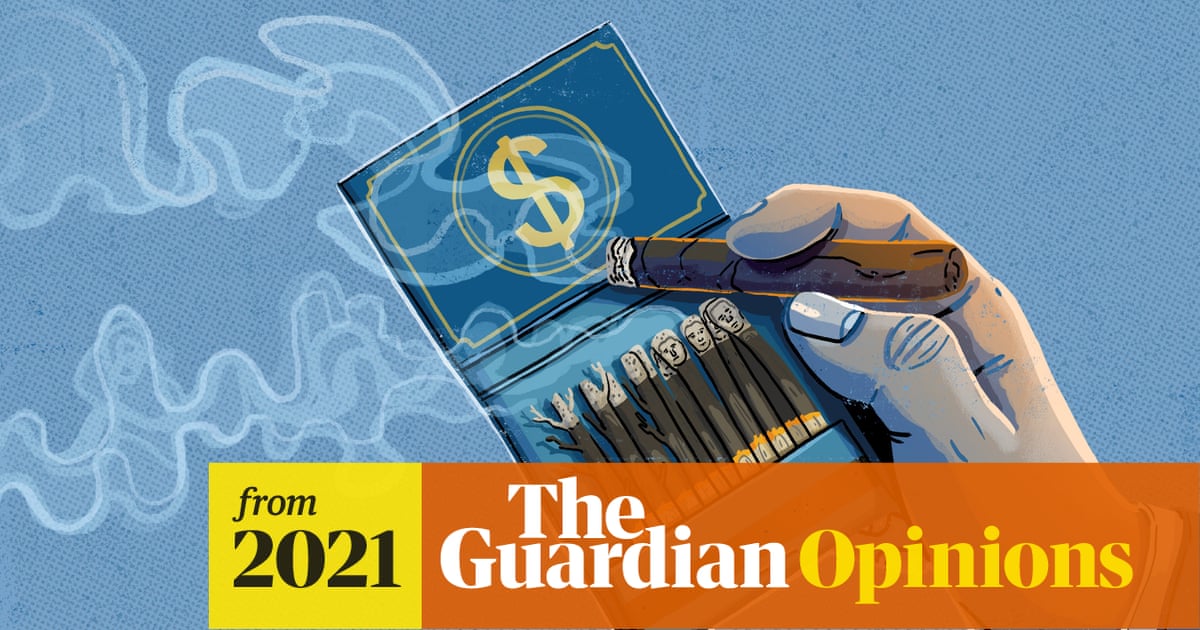
Trashing the planet and hiding the money isn’t a perversion of capitalism. It is capitalism | George Monbiot
Exploiting people, exploiting land, and keeping its ugly side secret. Its historical effects are all too recognisable in the Pandora papers now, says Guardian columnist George Monbiot
Opinion | For the Love of Money (Published 2014)
We are letting money addiction drive too much of our society.

Systems Finance

Multiple fields recognizing that finance must change in order to transform or transition various technical social systems.

TransCap Initiative

What is system-level investing?

TWIST - Investing for systems change

The Owning Impact Project | MIT Sloan Sustainability Initiative | MIT Sloan
FEST