

Transfiguration of Jesus
The Transfiguration of Jesus is an event described in the New Testament where Jesus is transfigured and becomes radiant in glory upon a mountain. The Synoptic Gospels recount the occasion, and the Second Epistle of Peter also refers to it. Ancient Christian texts considered non-canonical by Catholic and Eastern Orthodox doctrine, such as the Treatise on the Resurrection from the Nag Hammadi corpus, refer to the scene as well.

transmediale
The festival has been funded as a cultural institution of excellence by the Kulturstiftung des Bundes (German Federal Cultural Foundation) since 2004.

Filipino Transgender Health Service Directory
NYT Less Interested Than Ever in Trans Perspectives on Trans Issues
Even while feigning concern, the paper of record remains largely uninterested in centering trans people and perspectives in coverage of trans issues.
DeepL Translator | World's Most Accurate Translator
Translate texts & full document files instantly. Accurate translations for individuals and Teams. Millions translate with DeepL every day.

ChatGPT Translate | Fast, Natural, 40+ Languages
ChatGPT translates across 40+ languages with accuracy, tone, and cultural nuance. Translate text, voice, or photos for everyday use, travel, school, and work — and learn grammar or phrasing as you go.

EsDictionary - The EsDeeKid Translator
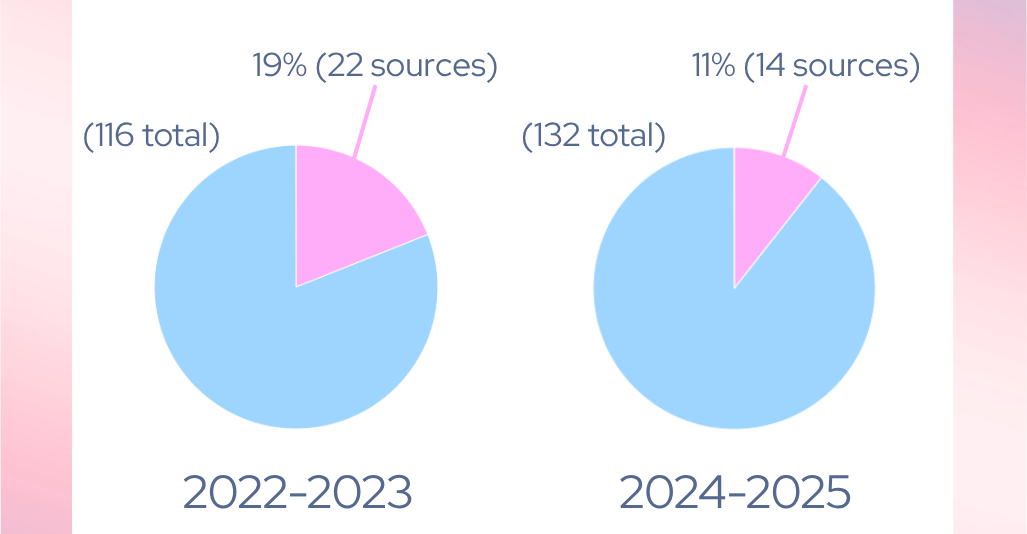
AI Translations Are Adding ‘Hallucinations’ to Wikipedia Articles
AI translated articles swapped sources or added unsourced sentences with no explanation, while others added paragraphs sourced from completely unrelated material.
Remote Origins: Translation, Genealogy, and Alterity in Medieval Castile (1252-circa 1390)
This dissertation analyzes selected examples of thirteenth- and fourteenth-century written culture to show their engagement with the religious alterity of Islam as an integral part of the origins of the kingdom of Castile. Following an interdisciplinary methodology, it addresses how medieval ideas about astrology, geography, history, medicine, race, and religion participated in creating discourses about origins that recognized the intellectual and political authority of al-Andalus. It argues that early Castilian vernacular texts conceptualized the translation of Arabic sources as an instrument for creating, transforming, and superseding the alterity of Islam while recognizing the cultural and political authority of Andalusi traditions. The first chapter serves as an introduction explaining the historical and theoretical framework of the dissertation. To do so, it provides an overview of Castilian ideas about genealogy, historiography, authority, and translatio, and translation. Then, through close reading and ample historicization, chapters two, three, and four analyze the impact of Andalusi textual traditions, cultural practices, and human population in three interrelated fields of medieval science, literature, and history. Chapter 2 explores the political implications of King Alfonso X’s (r. 1252-1284) dedication to the translation of Arabic sciences by focusing on the translation of a treatise of astrology titled Libro de las cruzes (1259). The chapter traces the cultural and political context that accompanied the transmission of the book in al-Andalus alongside the content of its Arabic and Castilian prologues. In light of ideas about the transference of knowledge (translatio studii) shared by Christian and Muslim scholars, I conclude that deployment of a twofold origin in the Libro de las cruzes illustrates the strategies and motivations of Alfonso X’s broader engagement with Arabic sources. The third chapter turns to the early fourteenth-century romance Libro del caballero Zifar with a double focus on its forged origin as a translation from caldeo (Chaldean) and the prominence of cursed lineages. Regarding lineage, the chapter explores the representation of exemplary virtues by the protagonists of the romance as enacting ideas about the transformable character of lineage and the capabilities of the individual to unmake inherited negative traits. Likewise, the textual strategy of the forged translation enables the inclusion of Arabic and Asian referents at the origin of a profoundly Christian text. In chapter 4, literature meets historiography in the analysis of the Crónica de Flores y Blancaflor. Being the result of intertwining a Castilian chronicle—Alfonso X’s Estoria de Espanna—and a French romance, this text narrates the love story between an Andalusi Muslim prince and the daughter of a captive Christian noble. The chapter focuses on Berta, the captive woman, to show the implications of her decision to nurture Flores and Blancaflor with her milk. Considering Christian and Muslim ideas about milk and wet nursing along with the tenets of Castilian historiography, the chapter shows the limits of dominant ideas about dynastic origins among the Christian elites of Castile while evidencing the existence of an alternative discourse that—coming from within Castilian historiography—incorporates maternal and non-Christian kinship as an essential part of the origins and possibilities of the kingdom. A short final chapter serves as a conclusion, suggesting paths for expanding the results of this dissertation within and the thirteenth and fourteenth centuries covered by its contents.
Trans Prostitute Programmer Turns Down Sponsorship From Framework Affiliated Company
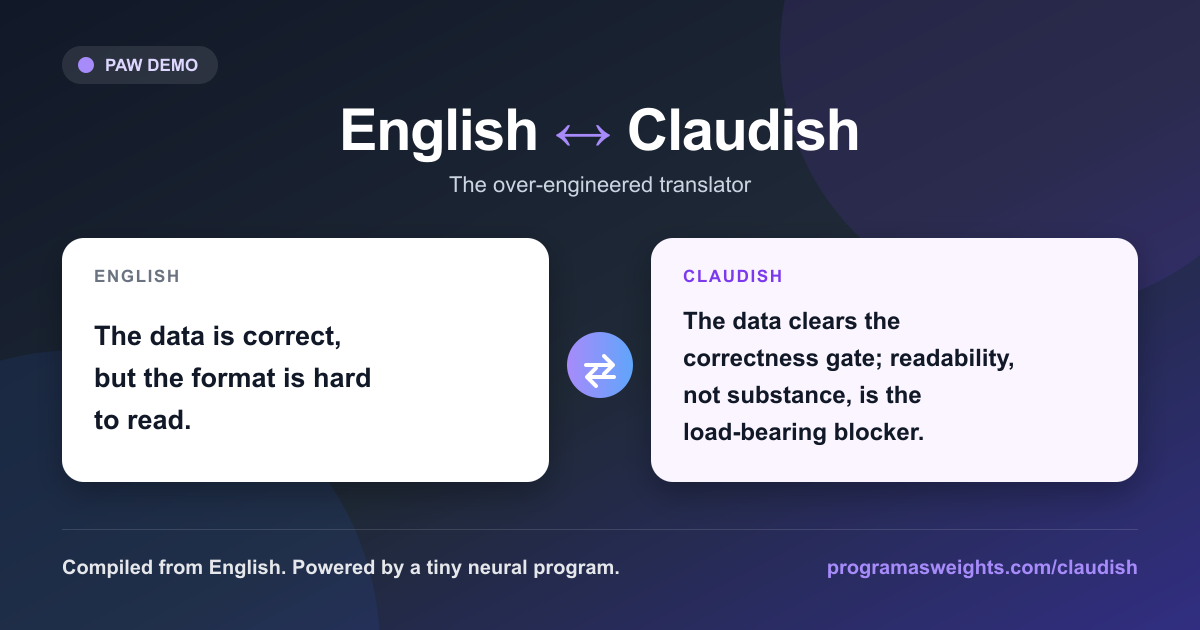
English ↔ Claudish — the over-engineered translator
A bidirectional English and Claudish translator powered by compiled neural programs.
HTML/SR Support lookup
TetraLogical Services Ltd. Company number 12951928. Content released under a GNU General Public License v3.0