

A promise I made to myself when I was very young that I have tried to keep in mind often is that I should never forget what being a child is like.
What trans kids like me need to survive a Trump presidency
Because we're all freaking tf out

Do Drunk Mice Sire Weird-Looking Offspring? – Quentin André
A recent piece in The Atlantic argues fathers-to-be should abstain from alcohol when trying to conceive. The science that underpins this recommendation has some issues.
How to parent more predictably
(As with anything else I write about parenting, this is mostly just my observations with my own two kids and may not generalize as well as I think it does.) A few weeks ago I wrote about why I think it's valuable for parents to be predictable. I was mostly describing an end state, though, and reasons why it's a good place to be, but what should you do if you're interested in being more consistent

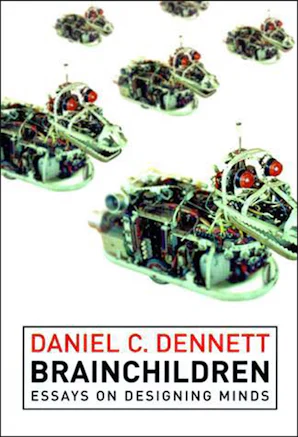
Brainchildren
Minds are complex artifacts, partly biological and partly social; only a unified, multidisciplinary approach will yield a realistic theory of how they came i...
Mechanisms of social cognition
Social animals including humans share a range of social mechanisms that are automatic and implicit and enable learning by observation. Learning from others includes imitation of actions and mirroring of emotions. Learning about others, such as their group membership and reputation, is crucial for social interactions that depend on trust. For accurate prediction of others' changeable dispositions, mentalizing is required, i.e., tracking of intentions, desires, and beliefs. Implicit mentalizing is present in infants less than one year old as well as in some nonhuman species. Explicit mentalizing is a meta-cognitive process and enhances the ability to learn about the world through self-monitoring and reflection, and may be uniquely human. Meta-cognitive processes can also exert control over automatic behavior, for instance, when short-term gains oppose long-term aims or when selfish and prosocial interests collide. We suggest that they also underlie the ability to explicitly share experiences with other agents, as in reflective discussion and teaching. These are key in increasing the accuracy of the models of the world that we construct.
NYT Less Interested Than Ever in Trans Perspectives on Trans Issues
Even while feigning concern, the paper of record remains largely uninterested in centering trans people and perspectives in coverage of trans issues.
Three important steps in my maturation process – Thomas Dullien / Halvar Flake
My father passed recently, and he was twice my age. I am approximately the same age that he was when I was born, and I am now “the old generation” - there’s no one left in the generation above me.

Why Does Everyone Hate Children?
Why Does Everyone Hate Children?
New paradigm for psychology just dropped
OR: the ideas your mother warned you about
Man Cereal
Yesterday, even though my son is barely seven years old, toxic masculinity permeated his life and, perhaps permanently and irreparably, stole a small piece of his joy.

Our Future Is Being Devoured By Feral Thought Experiments
Here's a chance to start taking it back.

Social-Information Seeking in Development: The Child as Experimental Psychologist
Research has established that children are “naive psychologists,” adept at understanding and navigating the social world from an early age. However, most of this work has focused on how children process information that they acquire incidentally, for example, by passively observing others’ actions. Here, we draw on literature framing children as intuitive scientists who actively seek information and test hypotheses to propose a view of children as naive experimental psychologists. From this perspective, children play an active role in selecting and pursuing relevant social information (e.g., about agents’ goals, traits, or relationships), whereby their search strategies are influenced both by context and task demands, as well as their prior beliefs, concepts, and domain-specific naive theories. We argue that the particular challenges associated with learning and reasoning about other minds may necessitate that children leverage their active learning competences, and we outline how the social domain uniquely constrains and shapes the learning process. We review existing research on social-information seeking in children and adults and identify directions for future research, emphasizing that children’s developing social cognition should be understood in terms of the active, exploratory role they take in learning about and participating in the social world.


"There is a contrast between my biological development, confidently realizing its in-built norm, and my fumbling psychological development, realizing partially..one among many apparently possible orders .. Learning what to want is the most radical, the most painful and the most creative art of life"
