A network of utopian conspirators, a sandbox for their creative, technical and critical projects, and a site of experimentation for new ways of learning together.
LinkedTrust — Deep Tech. Human Trust.
Verified trust systems, civic tech platforms, and AI-powered tools. Real projects, real impact.

‘Think Everybody Dead’: How the Threat of AI Is Fueling a New Political Alliance
A billionaire-backed movement from Silicon Valley and populists like Bernie Sanders are eager to stop an AI disaster — but can they overcome their mutual distrust and work together?
Utopian media studies: Introduction
This introduction to the special issue ‘Utopian Media Studies’ sketches a framework for how media studies can become a site of utopian praxis, research and experimentation. It first addresses three apprehensions media scholars might have about the notion of utopian media studies and its appeal to a loaded concept like ‘utopia’. The introduction then outlines five sensibilities to explicate the nature and significance of this special issue’s contribution to the field: a utopian media studies must adopt an ecological approach to media; recognize and be invigorated by limits; work toward the technological liberation of time; connect imagination with practice; and emphasize and enable conditions for transmitting hope. Lastly, the introduction considers Ruth Levitas’s distinction between utopia’s archaeological, ontological, and architectural mode to map some of the concrete ways in which existing media studies research is doing utopian work that aligns with these sensibilities. In connecting work that operates in these modes with the various contributions to this special issue, the introduction reveals the utopian currents that already run through media studies as a discipline and opens up new conceptual and methodological approaches to studying and modeling digital utopias.
Utopian media studies: Introduction
This introduction to the special issue ‘Utopian Media Studies’ sketches a framework for how media studies can become a site of utopian praxis, research and experimentation. It first addresses three apprehensions media scholars might have about the notion of utopian media studies and its appeal to a loaded concept like ‘utopia’. The introduction then outlines five sensibilities to explicate the nature and significance of this special issue’s contribution to the field: a utopian media studies must adopt an ecological approach to media; recognize and be invigorated by limits; work toward the technological liberation of time; connect imagination with practice; and emphasize and enable conditions for transmitting hope. Lastly, the introduction considers Ruth Levitas’s distinction between utopia’s archaeological, ontological, and architectural mode to map some of the concrete ways in which existing media studies research is doing utopian work that aligns with these sensibilities. In connecting work that operates in these modes with the various contributions to this special issue, the introduction reveals the utopian currents that already run through media studies as a discipline and opens up new conceptual and methodological approaches to studying and modeling digital utopias.

Democratizing AI: The Psyche Network Architecture - NOUS RESEARCH
Psyche is an open infrastructure that democratizes AI development by decentralizing training across underutilized hardware. Building on DisTrO and its predecessor DeMo, Psyche reduces data transfer by several orders of magnitude, making distributed training practical. Coordination happens on the Solana blockchain, ensuring a fault-tolerant and censorship-resistant network.
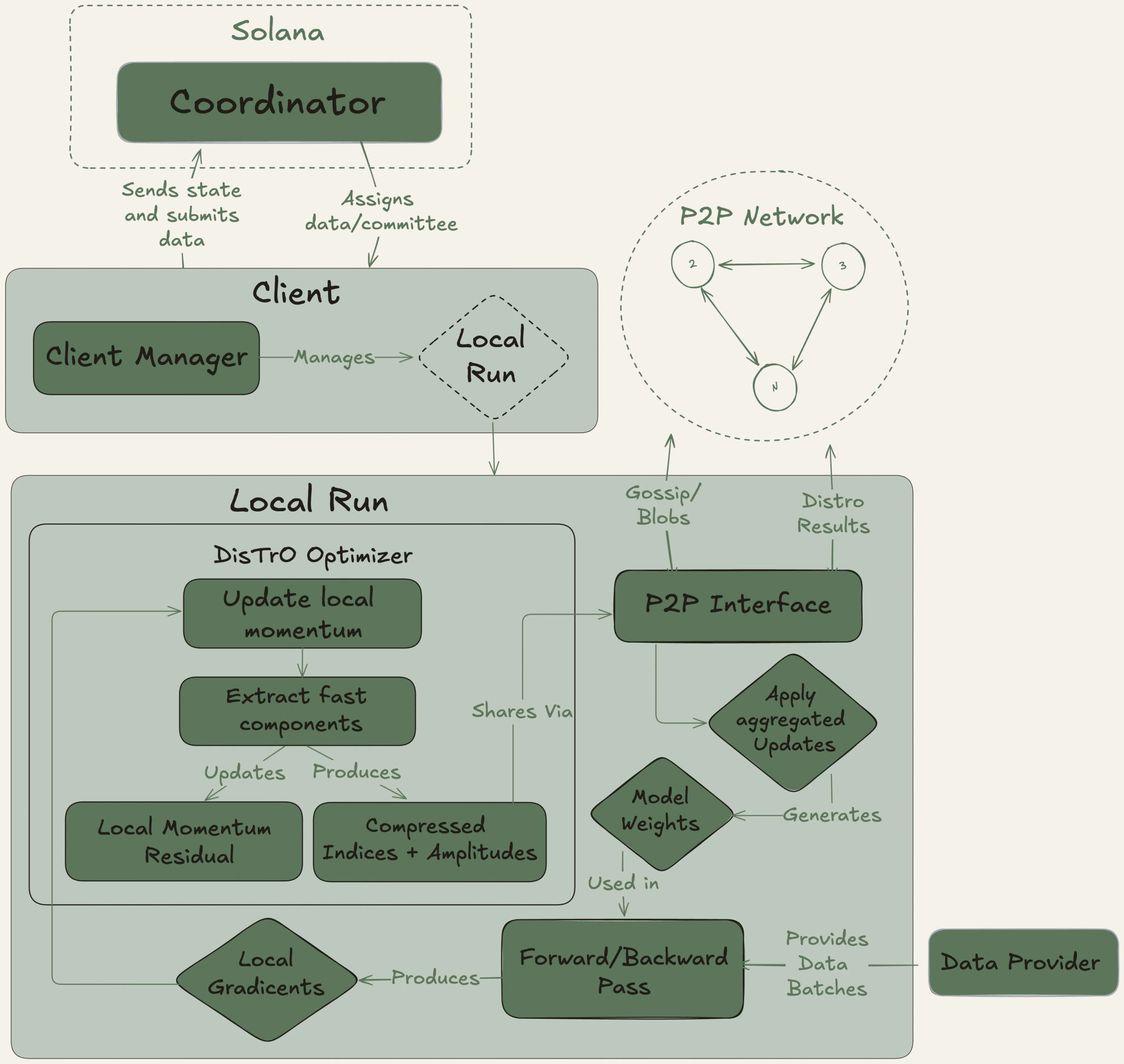
Introducing The Psyche Network
Funded projects | Scaling Trust
Explore the projects we're funding in the Scaling Trust opportunity space.
The AI We Deserve
Critiques of artificial intelligence abound. Where’s the utopian vision for what it could be?

Conspiracy Brokers: Understanding the Monetization of YouTube Conspiracy Theories
DOI: https://doi.org/10.1145/3485447.3512142 WWW '22: Proceedings of the ACM Web Conference 2022, Virtual Event, Lyon, France, April 2022
Inverting the physics of trust
Common Fabric is a social computing lab building a medium for software that revolves around people, not apps.

Trust Revolution
Unfiltered conversations with builders, thinkers, and operators in Bitcoin and beyond. Exploring systems we trust, why they work (or don't), and what's next.

Hyperstition
A hyperstition is a self-fulfilling idea that becomes real through its own existence.[1] The price of Bitcoin,[2] Roko's Basilisk,[3] accelerationism,[4] and the QAnon conspiracy theory[5] have all been described as hyperstitions. Self-fulfilling prophecies are a kind of hyperstition where predictions are made about the future that become true by being known.[6] The concept was coined by Nick Land in 1995 as a portmanteau of hyper- and superstition,[7] during his time at the Cybernetic Culture Research Unit developing the philosophy of accelerationism.[3][8]
Anarchist Cybernetics
The Paper Pilot's digital garden of thoughts on philosophy, politics, and sociology. Reading time: ~14 minute read | Published: Aug 12, 2026 | Updated: Sep 6, 2026

How a billionaire-backed network of AI advisers took over Washington
A sprawling network spread across Congress, federal agencies and think tanks is pushing policymakers to put AI apocalypse at the top of the agenda — potentially boxing out other worries and benefiting top AI companies with ties to the network.
On Trust Infrastructure Trust underpins civilisation. It expands the scope and complexity of the pursuits within our collective reach by allowing us to act as a…
Building Political Superintelligence
Amidst fears of dystopia, a blueprint for how we use AI to reinvent the way we govern ourselves