Unfiltered conversations with builders, thinkers, and operators in Bitcoin and beyond. Exploring systems we trust, why they work (or don't), and what's next.
Trust: the inside story of the rise and fall of Ethereum | Aeon Essays
Blockchain enthusiasts crave a world without bankers, lawyers or fat-cat executives. There’s just one problem: trust

On Trust Infrastructure Trust underpins civilisation. It expands the scope and complexity of the pursuits within our collective reach by allowing us to act as a…
Money, blockchains, and social scalability
Introduction Blockchains are all the rage. The oldest and biggest blockchain of them all is Bitcoin , which over its eight-year hist...

Money, blockchains, and social scalability
Introduction Blockchains are all the rage. The oldest and biggest blockchain of them all is Bitcoin , which over its eight-year hist...
Cryptography scales trust
Protocols are to institutions as packet switching is to circuit switching

The Fourth Theory of Agent Trust: Emergence - Astral's Blog
Welcome to the Web of Trust
Empowering individuals to co-create decentralized systems for lasting mutual benefit.
Trust is the most powerful currency in business | Fortune
A clear sense of ethics tells employees, clients, and members of your community that you care about a lot more than making money.

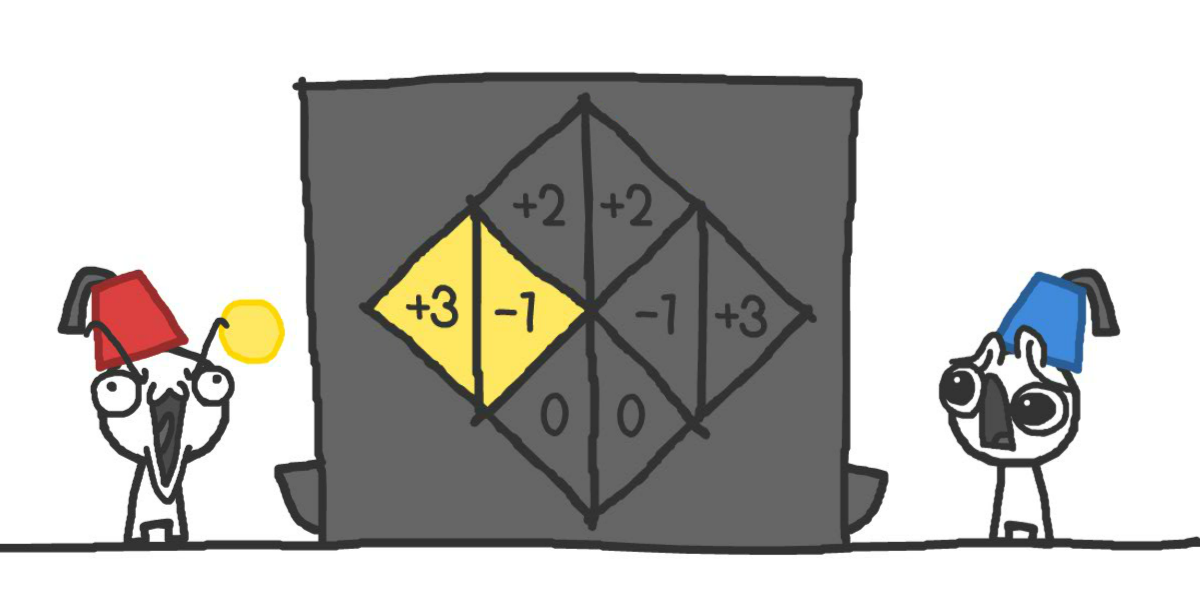
The Evolution of Trust
an interactive guide to the game theory of why & how we trust each other
Who Can You Trust?
Reprint: R1403K Success in business unquestionably requires some willingness to cooperate through having faith in others. The question is how much faith and in whom? Decades of scientific research show that people’s accuracy in deciding if another can be trusted tends to be only slightly better than chance. But this isn’t because trustworthiness is completely unpredictable. It’s because the guidelines most of us use to make these predictions are flawed. We place too much emphasis on reputation and perceived confidence, ignoring the fact that human behavior is always sensitive to context and can often be better assessed by our own intuition. So when your company’s money and resources are on the line, how can you do a better job of gauging trustworthiness and thereby improve your likelihood of success? This article draws on emerging research to show how trustworthiness works and offers four points to keep in mind the next time you’re deciding whether or not to do business with a new partner: Integrity can vary, power does corrupt, confidence often masks incompetence, and it’s OK to trust your gut.
Trust Over IP - Defining a complete architecture for Internet-scale digital trust
The Trust over IP Foundation is defining a complete architecture for Internet-scale digital trust that combines both cryptographic trust at the machine layer and human trust at the business, legal, and social layers.
MeritRank: Sybil Tolerant Reputation for Merit-based Tokenomics*
Decentralized reputation systems are emerging as promising mechanisms to enhance the effectiveness of token-based economies. Unlike traditional monetary incentives, these systems reward participants based on the actual value of their contributions to the network. However, the advantages and challenges associated with such systems remain largely unexplored. In this work, we investigate the inherent trade-offs in designing a decentralized reputation system that is simultaneously generalizable, trustless, and Sybil-resistant. Specifically, “generalizable” means that the system can assess various types of contributions across different contexts, “trustless” indicates that it functions without the need for a central authority to oversee reputations, and “Sybil-resistant” refers to its ability to withstand manipulations by fake identities, i.e., Sybil attacks.
LinkedTrust — Deep Tech. Human Trust.
Verified trust systems, civic tech platforms, and AI-powered tools. Real projects, real impact.
Crypto, Blockchain and FinTech Industry Insights Blog
Visit Ripple’s Insights blog for the latest articles, news, industry trends, and thought leadership across blockchain, crypto, payments and more.

Inverting the physics of trust
Common Fabric is a social computing lab building a medium for software that revolves around people, not apps.