

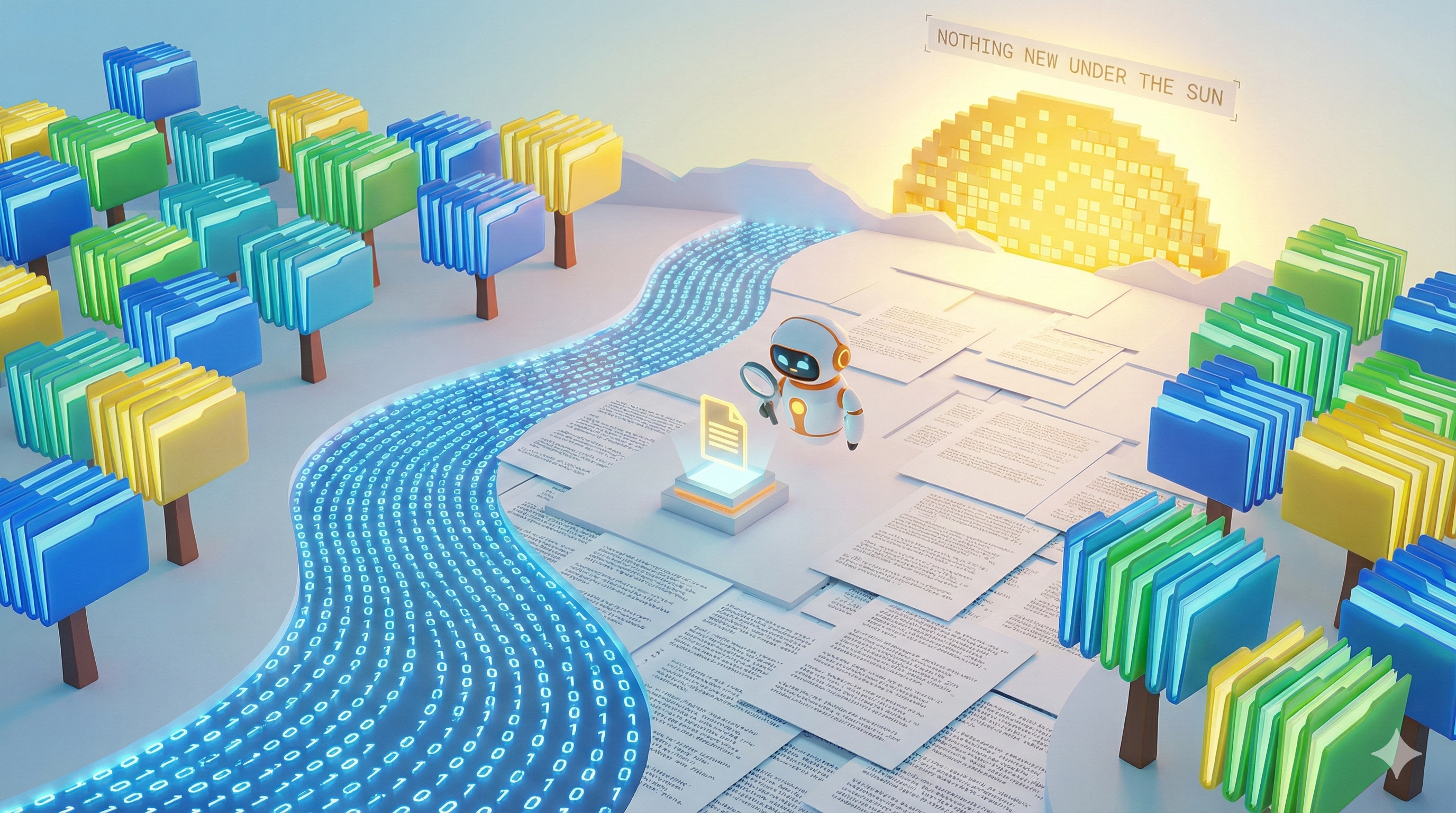
The Unix revolution was built on a key principle: everything is a file. Now, with the rise of AI Agents, LLMs have access to half a century of file-based arcana. The result? Everything is becoming a file again.
File Over App: A Philosophy for Digital Longevity
My take on the 'file over app' philosophy and why it’s essential for keeping my data resilient and built to last.
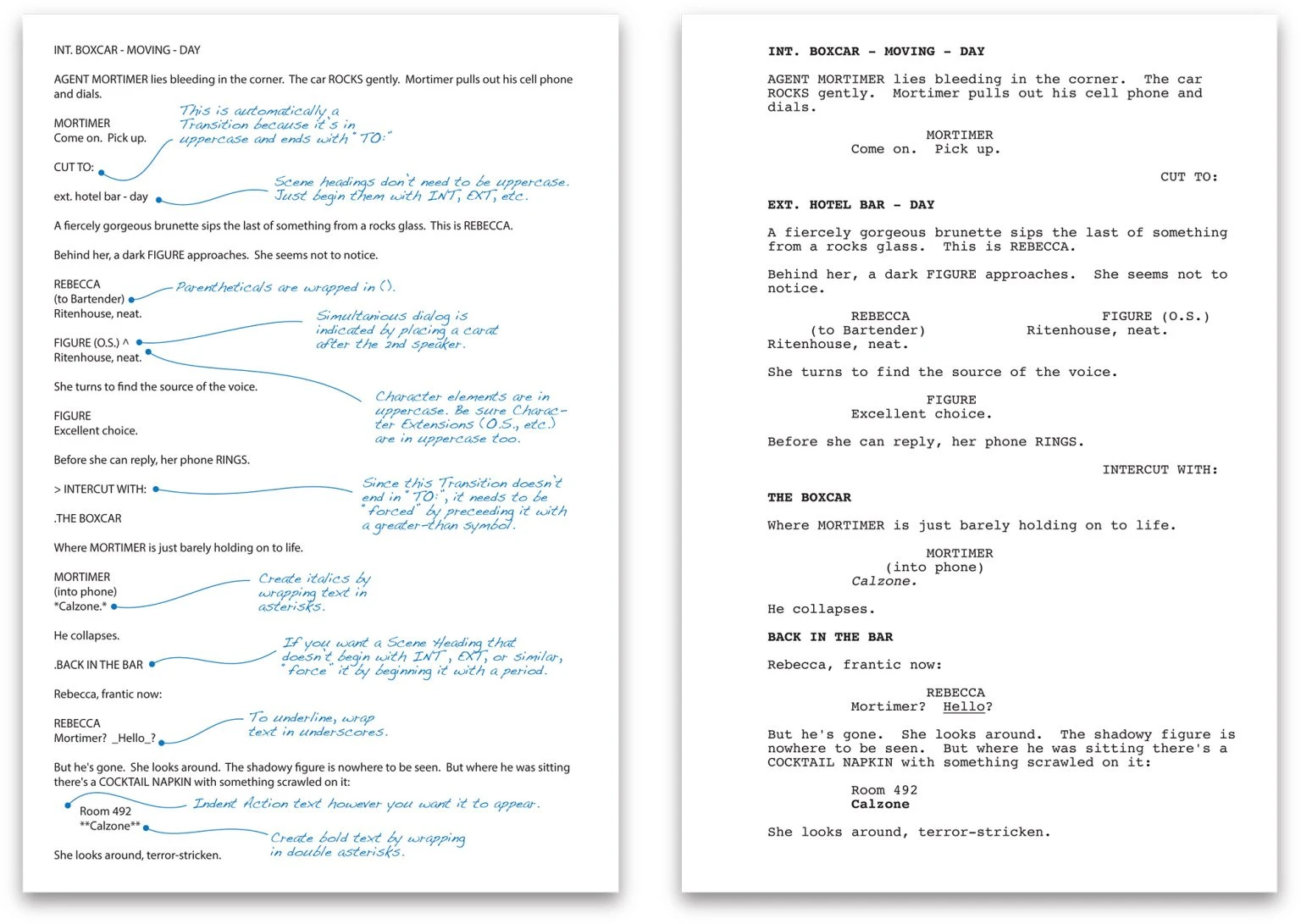
omnifs: access the world through your filesystem
omnifs turns APIs and data sources into files and directories your shell, scripts, CI jobs, notebooks, and agents can read.

S3 is files, but not a filesystem
"Deep" modules, mismatched interfaces - and why SAP is so painful
Computer Files Are Going Extinct
Technology services are changing our internet habits
AI and the Destruction of the Creative Commons
The balance of software copyright protection and openness has always been fraught with minutiae and detail that bores all but the most nerdy of pedants. Yet, through much effort and 40 years of debate we had reached an equilibrium. Now AI has thrown that out the window.
Nobody Cracks Open a Programming Book Anymore · unix.foo
A sad look at the state of modern programming books.
Atuin - Shell History & Executable Runbooks
We started with an open-source CLI that developers actually wanted to use. Now we're exploring what happens when that same philosophy meets team workflows.
A small matter of programming: perspectives on end user computing
A Small Matter of Programming asks why it has been so d…
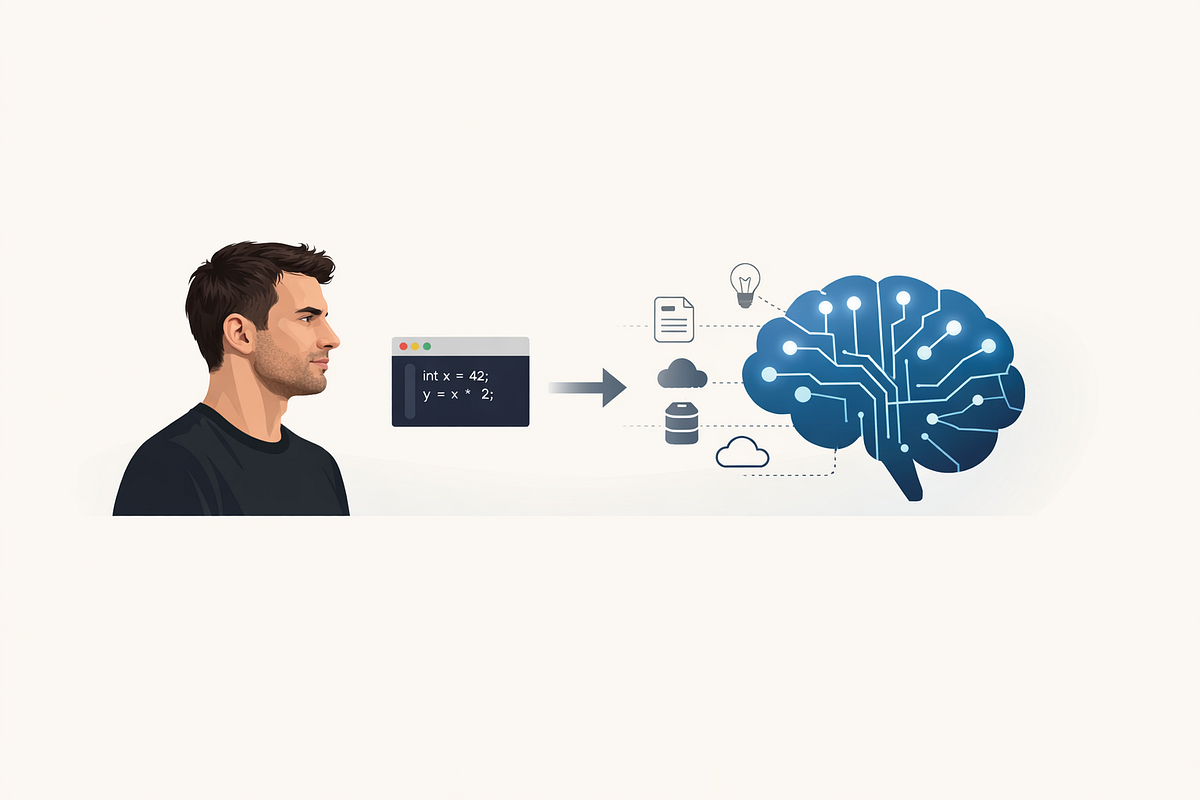
Andrej Karpathy Stopped Using AI to Write Code. He’s Using It to Build a Second Brain Instead
His new workflow turns raw research into a self-maintaining wiki.No vector databases, no RAG pipelines, just markdown files and an LLM that…
Column Storage for the AI Era
In the past few years, we’ve seen a cambrian explosion of new columnar formats, challenging the hegemony of Parquet: Lance, Fastlanes, Nimble, Vortex, AnyBlox, F3 (File Format for the Future). The thinking is that the context has changed so much that the design of yore (the previous decade) is not going to cut it moving forward. This seemed a bit intriguing to me, especially since the main contribution of Parquet has been to provide a standard for columnar storage. Parquet is not simply a file format. As an open source project hosted by the ASF, it acts as a consensus building machine for the industry. Creating six new formats is not going to help with interroperability. I spent some time to understand a bit better how things actually changed and how Parquet needs to adapt to meet the demands of this new era. In this post I’ll discuss my findings.
The Epic Story of Dropbox's Exodus From the Amazon Cloud Empire
Half-a-billion people stored files on Dropbox. Well, sort of. Really, the files were in Amazon’s cloud. Until Dropbox built its own. And threw the switch.

Digital Topology & Economic Power
The autonomous file, once the basic unit of user agency in personal computing, was first hollowed out through proprietary formats and data internalization, then abolished entirely by cloud platforms, relocating control toward incumbents at each stage. Enclosure succeeds not by offering users less, but by bundling genuine capability gains with topological restructuring, so that the user cannot accept the improvement without accepting the new relationship of power.

COS goes FOSS The sorry state of scientific publishing and how we could move to an open and resilient infrastructure
“The data files remains our property and are not deposited for free access.”
Joshua Gu on Twitter / X
Recent agentic systems (Claude Code, Codex, RLM, etc.) push context out of the prompt and into the environment (e.g., as files). This helps them maintain long-term knowledge about their goals and functionality.🚨 While this is a good idea, we show a surprising result: systems… pic.twitter.com/XHFVaDcr4l— Joshua Gu (@astrogu_) May 20, 2026
