


OpenAI leaked Q* so let’s dive into Q-Learning and how it relates to RLHF.Q-learning is a foundational concept in the field of artificial intelligence, particularly in the area of reinforcement learning. It's a model-free reinforcement learning algorithm that aims to learn the… https://t.co/Ea5O4gpp7k pic.twitter.com/DgHvxnbqBW— Brian Roemmele (@BrianRoemmele) November 23, 2023
Training AI Agents with RL | Unsloth Documentation
Learn how to train AI agents for real-world tasks using Reinforcement Learning (RL).

imjustnewatai on Twitter / X
Rumors I’ve been hearing. I’ll start with OpenAI, then Anthropic.OpenAI: The internal model’s reasoning jump comes from more aggressive RL, including training in games and simulated environments. Strategies learned there transfer to research mathematics and other fields.…— imjustnewatai (@imjustnewatai) October 28, 2026
Memory Efficient RL | Unsloth Documentation
We're excited to introduce more efficient reinforcement learning (RL) in Unsloth with multiple algorithmic advancements:
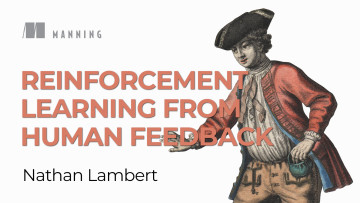
Reinforcement Learning from Human Feedback
The authoritative guide for Reinforcement learning from human feedback, alignment, and post-training LLMs. Aligning AI models to human preferences helps them become safer, smarter, easier to use, and tuned to the exact style the creator desires. Reinforcement Learning From Human Feedback (RHLF) is the process for using human responses to a model’s output to shape its alignment, and therefore its behavior. In Reinforcement Learning from Human Feedback, author Nathan Lambert blends diverse perspectives from fields like philosophy and economics with the core mathematics and computer science of RLHF to provide a practical guide you can use to apply RLHF to your models. In Reinforcement Learning from Human Feedback you’ll discover: How today’s most advanced AI models are taught from human feedback How large-scale preference data is collected and how to improve your data pipelines A comprehensive overview with derivations and implementations for the core policy-gradient methods used to train AI models with reinforcement learning (RL) Direct Preference Optimization (DPO), direct alignment algorithms, and simpler methods for preference finetuning How RLHF methods led to the current reinforcement learning from verifiable rewards (RLVR) renaissance Tricks used in industry to round out models, from product, character or personality training, AI feedback, and more How to approach evaluation and how evaluation has changed over the years Standard recipes for post-training combining more methods like instruction tuning with RLHF Behind-the-scenes stories from building open models like Llama-Instruct, Zephyr, Olmo, and Tülu After ChatGPT used RLHF to become production-ready, this foundational technique exploded in popularity. In Reinforcement Learning from Human Feedback, AI expert Nathan Lambert gives a true industry insider's perspective on modern RLHF training pipelines, and their trade-offs. Using hands-on experiments and mini-implementations, Nathan clearly and concisely introduces the alignment techniques that can transform a generic base model into a human-friendly tool.
New paper: Open Problems and Fundamental Limitations of Reinforcement Learning from Human Feedback We survey over 250 papers to review challenges with RLHF with a focus on large language models. Highlights in thread 🧵
New paper: Open Problems and Fundamental Limitations of Reinforcement Learning from Human FeedbackWe survey over 250 papers to review challenges with RLHF with a focus on large language models. Highlights in thread 🧵 pic.twitter.com/kHUBrZq8pn— Cas (Stephen Casper) (@StephenLCasper) July 31, 2023

OpenAI peeks into the “black box” of neural networks with new research
We do not understand" how LLMs work, admits OpenAI in quest to make them interpretable.
Qwen/Qwen3.8-2.4T-A95B-FP8 · Hugging Face
We’re on a journey to advance and democratize artificial intelligence through open source and open science.

cq: Stack Overflow for Agents
cq explores a Stack Overflow for agents, a shared commons where agents can query past learnings, contribute new knowledge, and avoid repeating the same mistakes in isolation.
Training Agentic Reasoners — Will Brown, Prime Intellect
Mastering Real-Time Strategy Games with Deep Reinforcement Learning: Mere Mortal Edition
The capabilities of game-playing AIs have grown rapidly over the last few years. This trend has culminated in the defeat of top human players in the complex real-time strategy (RTS) games of DoTA 2…

INTELLECT-2: The First Globally Distributed Reinforcement Learning Training of a 32B Parameter Model
Today we are launching INTELLECT-2: the first 32B parameter globally decentralized Reinforcement Learning training run where anyone can permissionlessly contribute their heterogeneous compute resources.

Learning to Communicate with Deep Multi-Agent Reinforcement Learning
We consider the problem of multiple agents sensing and acting in environments with the goal of maximising their shared utility. In these environments, agents must learn communication protocols in order to share information that is needed to solve the tasks. By embracing deep neural networks, we are able to demonstrate end-to-end learning of protocols in complex environments inspired by communication riddles and multi-agent computer vision problems with partial observability. We propose two approaches for learning in these domains: Reinforced Inter-Agent Learning (RIAL) and Differentiable Inter-Agent Learning (DIAL). The former uses deep Q-learning, while the latter exploits the fact that, during learning, agents can backpropagate error derivatives through (noisy) communication channels. Hence, this approach uses centralised learning but decentralised execution. Our experiments introduce new environments for studying the learning of communication protocols and present a set of engineering innovations that are essential for success in these domains.
Reward is not the optimization target — LessWrong
TurnTrout discusses a common misconception in reinforcement learning: that reward is the optimization target of trained agents. He argues reward is b…

#Exploration: A Study of Count-Based Exploration for Deep...
Count-based exploration algorithms are known to perform near-optimally when used in conjunction with tabular reinforcement learning (RL) methods for solving small discrete Markov decision...

OpenPipe/ART
Agent Reinforcement Trainer: train multi-step agents for real-world tasks using GRPO. Give your agents on-the-job training. Reinforcement learning for Qwen3.6, GPT-OSS, Llama, and more!
OpenPipe/ART
Agent Reinforcement Trainer: train multi-step agents for real-world tasks using GRPO. Give your agents on-the-job training. Reinforcement learning for Qwen3.6, GPT-OSS, Llama, and more!