


🚨Our paper `Reclaiming AI as a theoretical tool for cognitive science' is now forthcoming in the journal Computational Brain & Behaviour. (Preprint: https://t.co/5F0e50bkpA)Below a thread summary 🧵1/n #metatheory #AGI #AIhype #cogsci #theoreticalpsych #criticalAIliteracy pic.twitter.com/0TaLLUjf7e— Iris van Rooij 💭 (@IrisVanRooij) August 13, 2024
What the Studies Say About How AI Affects Your Brain: A (Very Big) Compilation
The entire literature clearly points to a single surprising finding
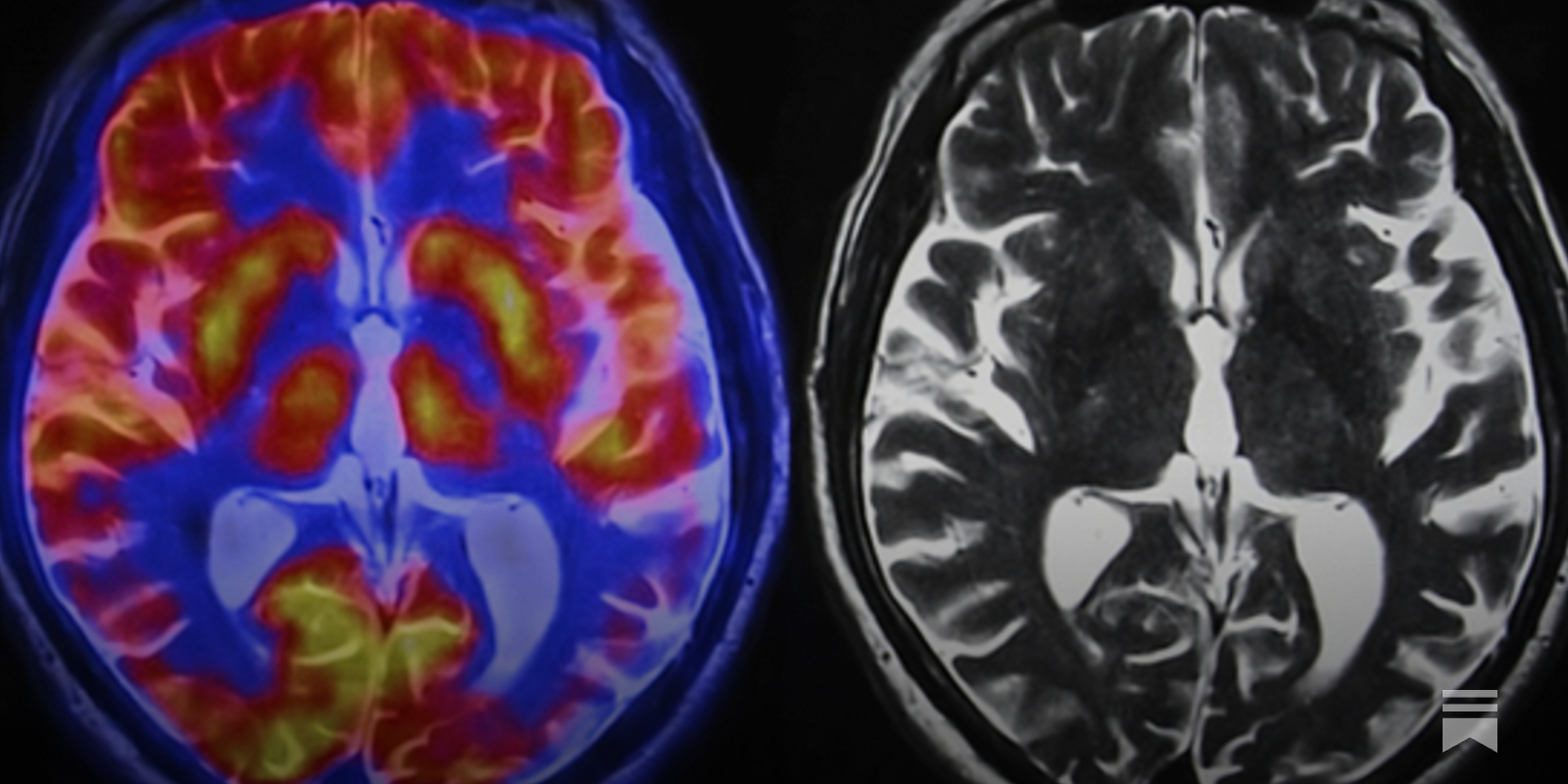
233. "The Illusion of Thinking" — Thoughts on This Important Paper
This is a fantastic paper. I just love it. tl;dr AI is not human. Anthropomorphization has been bad for AI, LLMs, and Chat. Clippy walked so today's AI could run.
Reclaiming AI as a theoretical tool for cognitive science
The idea that human cognition is, or can be understood as, a form of computation is a useful conceptual tool for cognitive science. It was a foundational assumption during the birth of cognitive science as a multidisciplinary field, with Artificial Intelligence (AI) as one of its contributing fields. One conception of AI in this context is as a provider of computational tools (frameworks, concepts, formalisms, models, proofs, simulations, etc.) that support theory building in cognitive science. The contemporary field of AI, however, has taken the theoretical possibility of explaining human cognition as a form of computation to imply the practical feasibility of realising human(-like or -level) cognition in factual computational systems; and, the field frames this realisation as a short-term inevitability. Yet, as we formally prove herein, creating systems with human(-like or -level) cognition is intrinsically computationally intractable. This means that any factual AI systems created in the short-run are at best decoys. When we think these systems capture something deep about ourselves and our thinking, we induce distorted and impoverished images of ourselves and our cognition. In other words, AI in current practice is deteriorating our theoretical understanding of cognition rather than advancing and enhancing it. The situation could be remediated by releasing the grip of the currently dominant view on AI and by returning to the idea of AI as a theoretical tool for cognitive science. In reclaiming this older idea of AI, however, it is important not to repeat conceptual mistakes of the past (and present) that brought us to where we are today.
What Is Intelligence? Lessons from AI About Evolution, Computing, and Minds | Blaise Agüera y Arcas
AI Data Centers Will Be Obsolete (Geometric Reasoning Explained)
AI overuse could spark "brain fry," new research finds
The mental strain associated with AI carries "significant costs," researchers find.
Cognitive Surrender and Tri-System Theory · Today I Learned
How AI can support, displace, or bypass human deliberation
Introducing TRIBE v2: A Predictive Foundation Model Trained to Understand How the Human Brain Processes Complex Stimuli | Keith Doelling
This is some very cool work by some awesome colleagues Jean-Rémi King, and Teon Brooks! Seriously not enough good things can be said about how cool it is. You should enjoy it and play with it. And kudos to Meta for open sourcing it. At the same time, I'm already seeing posts about how the model will replace fMRI experiments as researchers will simulate how the brain "really works" instead of running costly experiments. I think this goes WELL beyond what its creators intend. We are already seeing that use of AI in science allows you to explore charted ideas more thoroughly and much more rapidly but slows us down in finding novel ideas (https://lnkd.in/eMR2akqt). At the same time, there is growing concern that LLM performance will collapse as they are increasingly trained on their own output (https://lnkd.in/eavgfyuY). Leaving neuroscience to AI simulations risks following the same fate, where we generate seemingly new findings without gaining new meaning. A mechanistic understanding of how the brain works (if that is still your goal) will be found at the margins, in errors and idiosyncrasies of neural function. What TRIBE provides is a super useful and cool instantiation of our current understanding on how and where neural activity is instantiated in the brain. But it won't help us make groundbreaking new findings of how neural circuits lead to cognition and behavior. Experiments on real human brains, may be costly, but they will always be necessary!
AI Use Appears to Have a "Boiling Frog" Effect on Human Cognition, New Study Warns
A new study claims to offer the first causal link between AI dependency and cognitive erosion. Researchers warn of long-term implications.
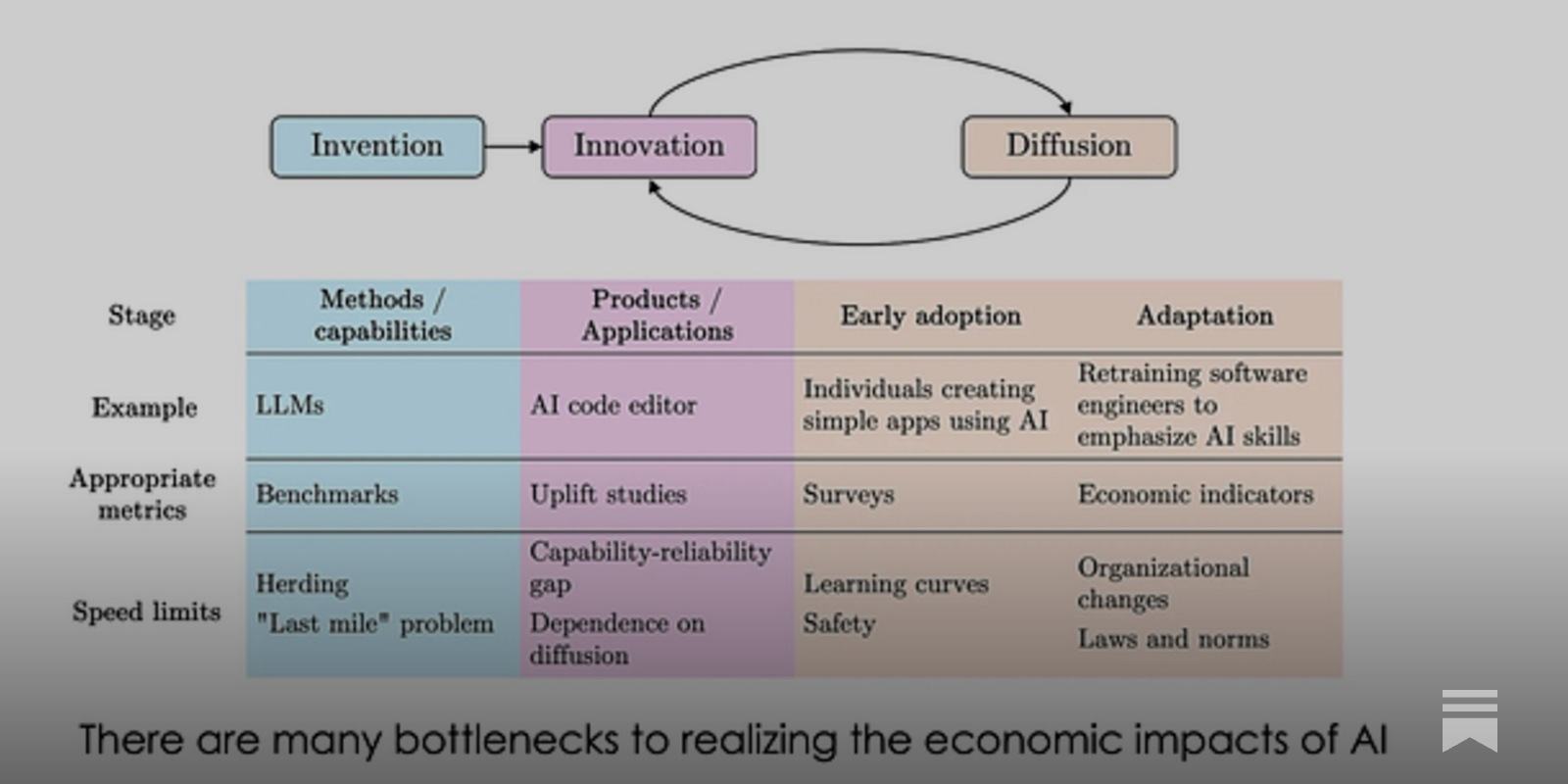
Video: In a talk at the Neuro-Symbolic AI summer school, I argued that research fields progress in explore/exploit cycles, and that while the AI community is very good at the exploit phases, it is… | Arvind Narayanan
Video: In a talk at the Neuro-Symbolic AI summer school, I argued that research fields progress in explore/exploit cycles, and that while the AI community is very good at the exploit phases, it is not so good at the explore phases and tends to get stuck in local minima. Progress toward AGI (though I don't use that term) will be helped if we have strong sub-communities that have different progress criteria from mainstream AI/ML and are big and powerful enough to support scholars' career advancement. Video on YouTube: https://lnkd.in/eUCGUjRx (link goes to timestamp starting at 51:10) The above is Part 1 of the talk; Part 2 is based on this essay with Sayash Kapoor and is about the application of AI to other scientific disciplines. https://lnkd.in/eUHy7aYi Thanks to the Centaur AI Institute for inviting me and to the participants for a great discussion.

Is the scientific paper due to be replaced?
AI is pushing scientific publishing to the brink. For neuroscience, the crisis may be an opportunity to finally connect findings across subfields.
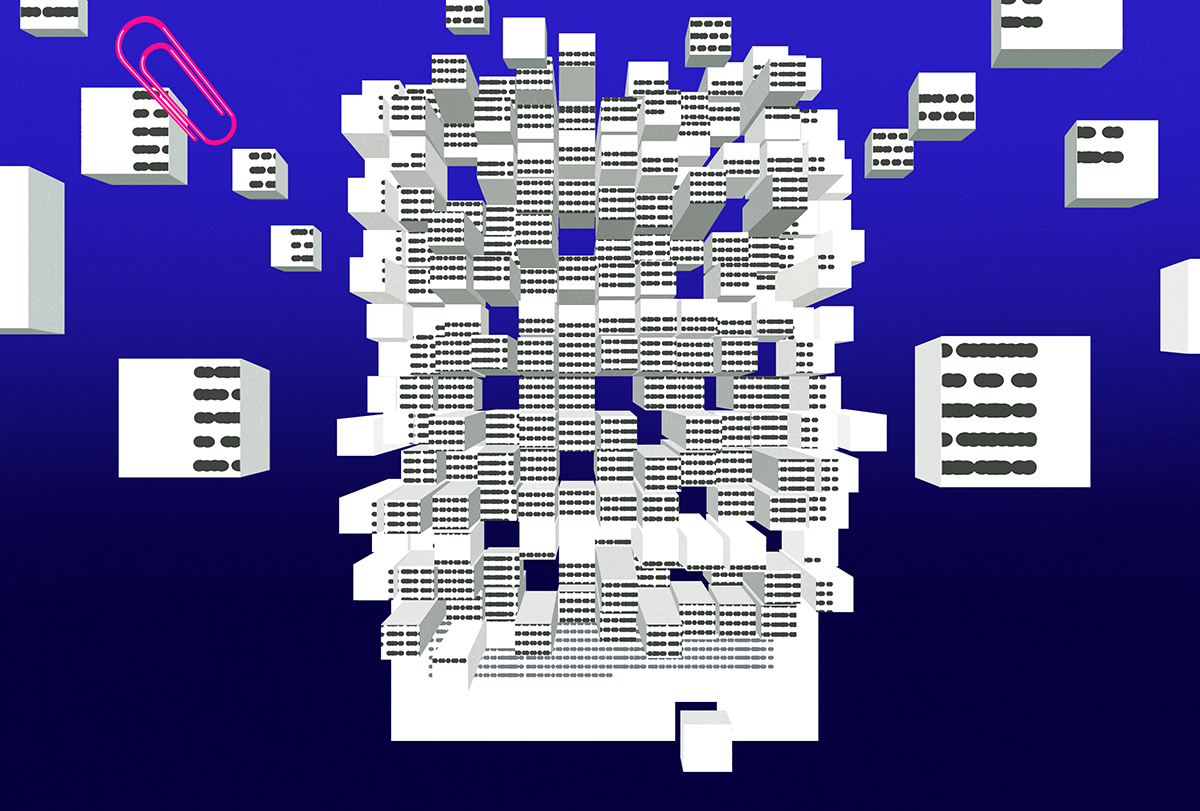
Is the scientific paper due to be replaced?
AI is pushing scientific publishing to the brink. For neuroscience, the crisis may be an opportunity to finally connect findings across subfields.
1. New preprint resolving a conundrum in systems neuroscience with an AI scientist, and humans Reilly Tilbury, Dabin Kwon, @haydari.bsky.social, @jacobmratliff.bsky.social, @bio-emergent.bsky.social, @carandinilab.net, @kevinjmiller.bsky.social, @neurokim.bsky.social biorxiv.org/content/10.1101/2025.11.12.68…

Characterizing neuronal population geometry with AI equation discovery
www.biorxiv.org