


The CDC whispered this a year ago. “SARS-CoV-2 can have lasting effects on nearly every organ & organ system of the body weeks, months, & potentially years after infection. Documented serious post-Covid conditions include cardiovascular, pulmonary, neurological, renal,… pic.twitter.com/xkSStj51y2— Laura Miers (@LauraMiers) March 9, 2024
How COVID-19 Changes the Heart—Even After the Virus Is Gone
A study adds new evidence that SARS-CoV-2—the virus that causes COVID-19—could have a lasting impact on the heart
SARS-CoV-2 infects coronary arteries, increases plaque inflammation
NIH-funded research sheds light on link between COVID-19 infection and increased risk of cardiovascular disease and stroke.

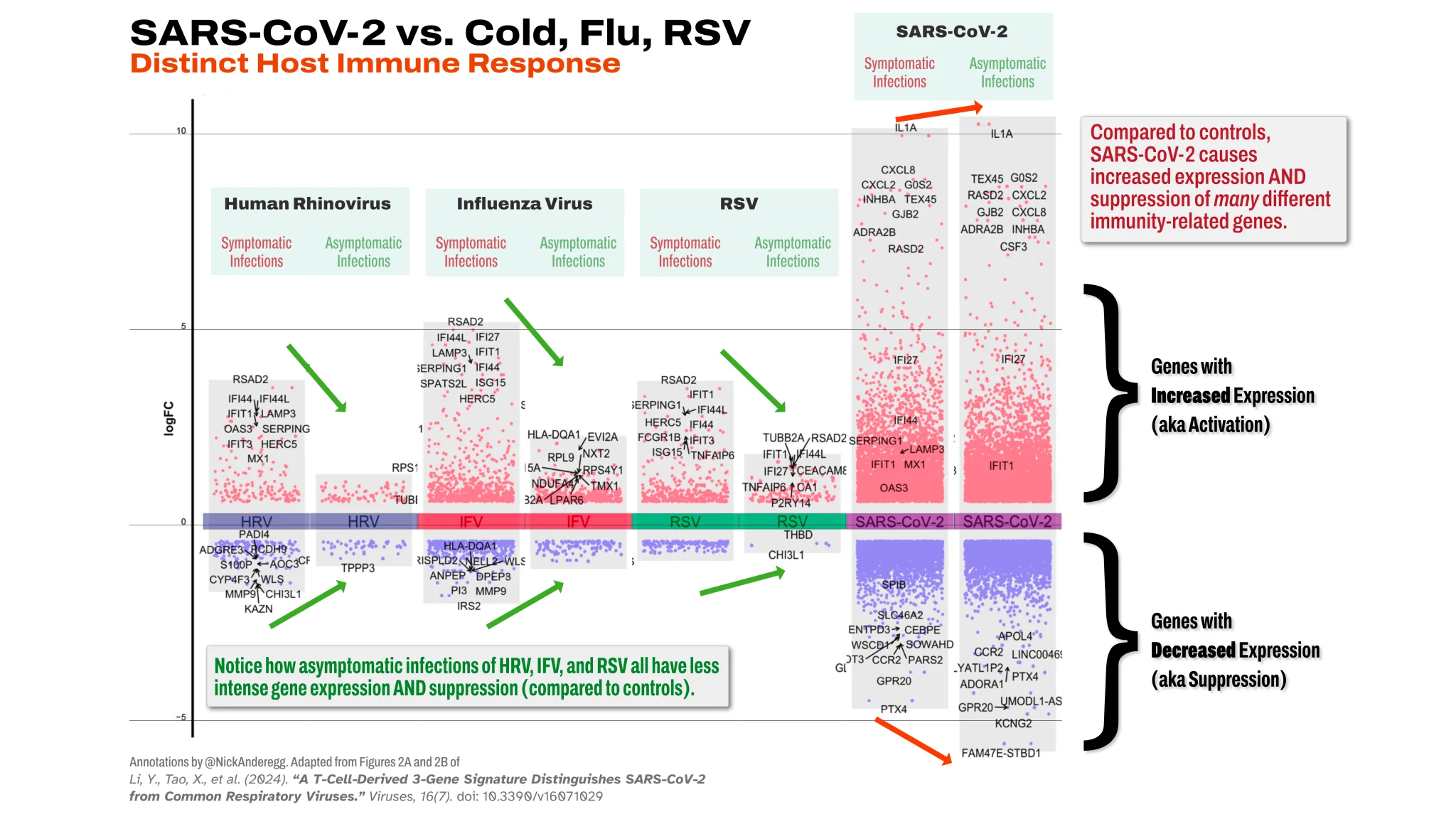
GUESS WHAT?! A new study has shown SARS-CoV-2 infection is DISTINCT from common respiratory viruses! Unequivocally, COVID is NOT "just a cold." These findings are HUGELY significant, for multiple reasons! Here's a breakdown of the study (writt
GUESS WHAT?! A new study has shown SARS-CoV-2 infection is DISTINCT from common respiratory viruses!Unequivocally, COVID is NOT "just a cold."These findings are HUGELY significant, for multiple reasons! Here's a breakdown of the study (written for a general audience)...1/16 pic.twitter.com/P7NJL2STJQ— Nick #RespiratorsFilterAllPathogens😷 Anderegg (@NickAnderegg) July 7, 2024
Timing of Long COVID Improvement in Prospectively Followed RECOVER-Adult Participants
Background: Long COVID (LC) is widespread; however, limited information has been reported on the likelihood that symptoms remit over time. Objective: To evaluate the likelihood of improvement among persons with likely LC. Design: Prospective, multisite cohort study (RECOVER-Adult [Researching COVID to Enhance Recovery]). Setting: 83 U.S.-based sites across 33 states; Washington, DC; and Puerto Rico. Participants: 1019 persons in RECOVER-Adult with likely LC (LC Research Index [LCRI] ≥11) 12 months after first SARS-CoV-2 infection. Measurements: The primary outcome was time until 2 consecutive study visits with LCRI less than 11. Secondary outcomes were time until LCRI measure reduced 50% or more and quality of life was good or better, and LCRI decreased to 0. Unadjusted estimates of cumulative incidence and adjusted marginal cumulative incidence by age, sex, SARS-CoV-2 wave, and LC subtype were reported across all follow-up time points. Results: An estimated 36.2% (95% CI, 33.0% to 39.5%) met the primary outcome by 24 months after infection, and 50.1% (CI, 46.1% to 54.0%) met the primary outcome by 36 months. An estimated 56.4% (CI, 52.2% to 60.4%) and 26.9% (CI, 23.3% to 30.5%), respectively, met the 2 secondary outcomes by 36 months. Among persons who still reported likely LC at 18 months and 24 months after first infection, relative timing of subsequent symptom improvement was similar. Limitation: Findings in this observational cohort are interpretable in a population with prevalent likely LC and do not address causal relationships between individual characteristics and symptom improvement. Conclusion: Among persons with likely LC 12 months after initial SARS-CoV-2 infection, one half experience meaningful reductions in symptoms by 36 months, whereas a quarter experience complete remission of symptoms. These findings underscore both the potential for natural recovery and the urgent need for placebo-controlled therapeutic intervention trials. Primary Funding Source: National Institutes of Health.

Timing of Long COVID Improvement in Prospectively Followed RECOVER-Adult Participants
Background: Long COVID (LC) is widespread; however, limited information has been reported on the likelihood that symptoms remit over time. Objective: To evaluate the likelihood of improvement among persons with likely LC. Design: Prospective, multisite cohort study (RECOVER-Adult [Researching COVID to Enhance Recovery]). Setting: 83 U.S.-based sites across 33 states; Washington, DC; and Puerto Rico. Participants: 1019 persons in RECOVER-Adult with likely LC (LC Research Index [LCRI] ≥11) 12 months after first SARS-CoV-2 infection. Measurements: The primary outcome was time until 2 consecutive study visits with LCRI less than 11. Secondary outcomes were time until LCRI measure reduced 50% or more and quality of life was good or better, and LCRI decreased to 0. Unadjusted estimates of cumulative incidence and adjusted marginal cumulative incidence by age, sex, SARS-CoV-2 wave, and LC subtype were reported across all follow-up time points. Results: An estimated 36.2% (95% CI, 33.0% to 39.5%) met the primary outcome by 24 months after infection, and 50.1% (CI, 46.1% to 54.0%) met the primary outcome by 36 months. An estimated 56.4% (CI, 52.2% to 60.4%) and 26.9% (CI, 23.3% to 30.5%), respectively, met the 2 secondary outcomes by 36 months. Among persons who still reported likely LC at 18 months and 24 months after first infection, relative timing of subsequent symptom improvement was similar. Limitation: Findings in this observational cohort are interpretable in a population with prevalent likely LC and do not address causal relationships between individual characteristics and symptom improvement. Conclusion: Among persons with likely LC 12 months after initial SARS-CoV-2 infection, one half experience meaningful reductions in symptoms by 36 months, whereas a quarter experience complete remission of symptoms. These findings underscore both the potential for natural recovery and the urgent need for placebo-controlled therapeutic intervention trials. Primary Funding Source: National Institutes of Health.
COVID's aftermath: Persistent organ damage at 1 year, lung abnormalities at 2
CIDRAP - Center for Infectious Disease Research & PolicyResearch and Innovation Office, University of Minnesota, Minneapolis, MN

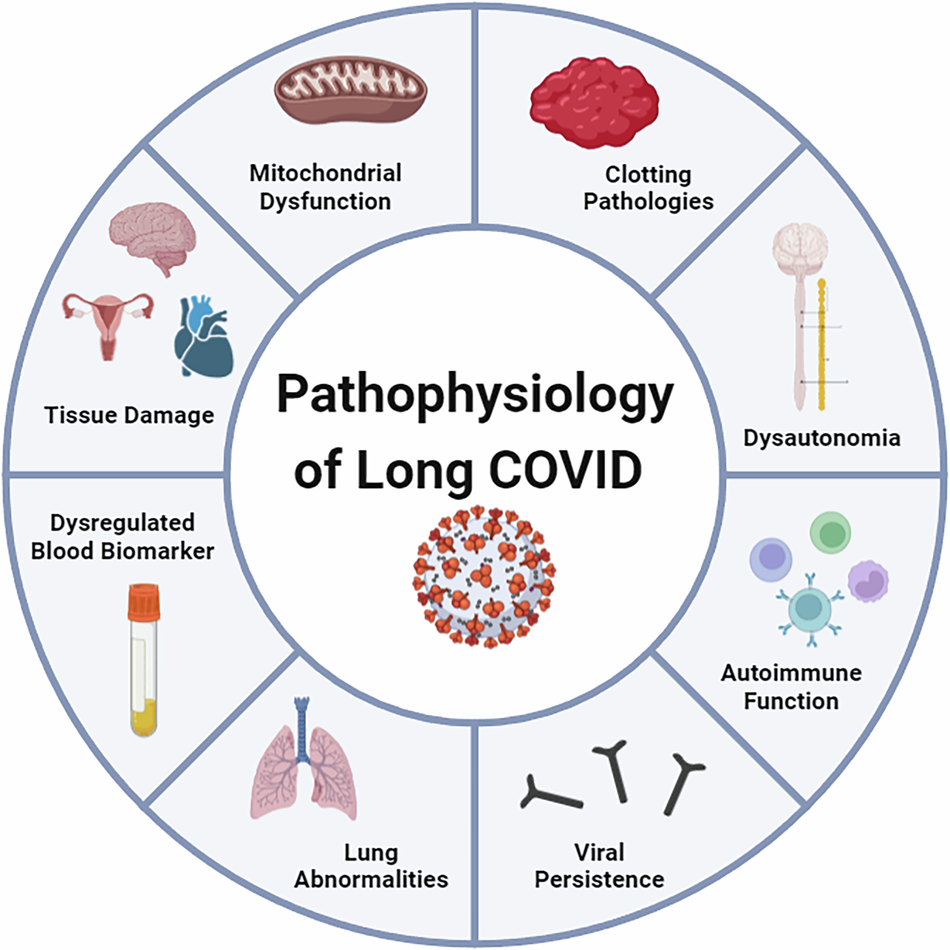
Current status and future perspectives on the mechanistic and pathophysiological understanding of long COVID
Viral and infectious illnesses can exert profound and enduring effects on population health and well-being. In the aftermath of SARS-CoV-2 infection, post-acute sequelae, collectively referred to as Long COVID, have emerged as a major global health challenge, affecting more than 400 million people and contributing to estimated annual economic costs exceeding $1 trillion. Long COVID encompasses a wide and heterogeneous spectrum of debilitating symptoms, including cognitive dysfunction, sleep disturbances, severe fatigue, and post-exertional malaise. Despite its substantial burden, fundamental uncertainties remain regarding its underlying pathophysiology, the development of robust diagnostic criteria, and the identification of effective therapeutic options. This review synthesises current evidence on the biological mechanisms thought to contribute to Long COVID, spanning immune dysregulation, viral persistence, autonomic dysfunction, microvascular pathology, and other emerging hypotheses. We examine advances and limitations in contemporary diagnostic approaches and critically appraise existing treatment strategies, highlighting inconsistencies and gaps that hinder clinical consensus. By integrating interdisciplinary insights, this review underscores the urgent need for mechanistic clarity, validated diagnostic frameworks, and rigorously evaluated treatment pathways. Addressing these gaps will be essential to developing effective, evidence-based management strategies and mitigating the long-term impact of Long COVID on global health.
Current status and future perspectives on the mechanistic and pathophysiological understanding of long COVID
Viral and infectious illnesses can exert profound and enduring effects on population health and well-being. In the aftermath of SARS-CoV-2 infection, post-acute sequelae, collectively referred to as Long COVID, have emerged as a major global health challenge, affecting more than 400 million people and contributing to estimated annual economic costs exceeding $1 trillion. Long COVID encompasses a wide and heterogeneous spectrum of debilitating symptoms, including cognitive dysfunction, sleep disturbances, severe fatigue, and post-exertional malaise. Despite its substantial burden, fundamental uncertainties remain regarding its underlying pathophysiology, the development of robust diagnostic criteria, and the identification of effective therapeutic options. This review synthesises current evidence on the biological mechanisms thought to contribute to Long COVID, spanning immune dysregulation, viral persistence, autonomic dysfunction, microvascular pathology, and other emerging hypotheses. We examine advances and limitations in contemporary diagnostic approaches and critically appraise existing treatment strategies, highlighting inconsistencies and gaps that hinder clinical consensus. By integrating interdisciplinary insights, this review underscores the urgent need for mechanistic clarity, validated diagnostic frameworks, and rigorously evaluated treatment pathways. Addressing these gaps will be essential to developing effective, evidence-based management strategies and mitigating the long-term impact of Long COVID on global health.
What Are COVID-19’s Long-Term Medical Effects?
Fascinating email from TPM Reader JO, whose personal bio is tailor-made for...

Nervous system consequences of COVID-19
Neurological symptoms highlight the need to understand pathophysiologic mechanisms , Although severe acute respiratory syndrome coronavirus 2 (SARS-CoV-2) is considered a respiratory pathogen, myriad neurologic complications—including confusion, stroke, and neuromuscular disorders—manifest during acute COVID-19. Furthermore, maladies such as impaired concentration, headache, sensory disturbances, depression, and even psychosis may persist for months after infection, as part of a constellation of symptoms now called Long Covid. Even young people with mild initial disease can develop acute COVID-19 and Long Covid neuropsychiatric syndromes. The pathophysiological mechanisms are not well understood, although evidence primarily implicates immune dysfunction, including nonspecific neuroinflammation and antineural autoimmune dysregulation. It is uncertain whether unforeseen neurological consequences may develop years after initial infection. With millions of individuals affected, nervous system complications pose public health challenges for rehabilitation and recovery and for disruptions in the workforce due to loss of functional capacity. There is an urgent need to understand the pathophysiology of these disorders and develop disease-modifying therapies.

Evidence mounts that Long Covid is damaging the hearts of those affected
There are also increasing signs that the condition can disrupt the autonomic nervous system

Researchers link Long COVID to another virus | NHK WORLD-JAPAN News
Researchers in Japan have released findings showing that COVID-19 after effects, including fatigue, occur when a coronavirus infection activates another virus already inside the body.

Persistent Cognitive Dysfunction in a Non-Hospitalized COVID-19 Long-Hauler Patient Responding to Cognitive Rehabilitation and Citicoline Treatment
The Severe Acute Respiratory Syndrome Coronavirus 2 (SARS-CoV-2) infection is characterized by severe flu-like symptoms, which can progress to life-threatening systemic inflammation and multiorgan dysfunction. The nervous system is involved in over one-third of patients, and the most common neurological manifestations concern the central nervous system, such as headache, fatigue, and brain fog. The activation of innate, humoral, and cellular immune responses, resulting in a cytokine storm and endothelial and mitochondrial dysfunctions, are the main pathophysiological mechanisms of SARS-CoV-2 infection. Citicoline is an exogenous source of choline and cytidine involved in intracellular phospholipid synthesis, which improves blood flow, brain activity, and mitochondrial dysfunction. This report will present the case of a non-hospitalized, 59-year-old female. After a mild form of SARS-CoV-2 infection, the patient developed cognitive disturbances such as forgetfulness and anomia. The multidimensional neuropsychological assessment revealed an impairment in episodic memory with borderline performance in executive and visuospatial functioning. Cognitive rehabilitation and treatment with citicoline 1000 mg/daily led to a marked improvement in symptoms after six months. Early identification of the neurological sequelae of the Coronavirus Disease 2019 (COVID-19) and timely rehabilitation interventions are required in non-hospitalized long-hauler patients with COVID-19. Long-term treatment with citicoline should be considered as potentially effective in improving cognitive functioning in subjects with Post COVID-19 Neurological Syndrome.

COVID-19 Vaccine Effectiveness and Safety for the 2026-2027 Respiratory Season
This Special Communication aims to identify and summarize the most recently published evidence evaluating the effectiveness and safety of US-licensed COVID-19 vaccines and report on the epidemiology of SARS-CoV-2 in the US.

COVID-19 Virus Does Not Infect Human Brain Cells, Study Suggests - Slashdot
An anonymous reader quotes a report from The Guardian: The virus that causes Covid-19 does not infect human brain cells, according to a study published in the journal Cell. The findings will raise hopes that the damage caused by Sars-CoV-2 might be more superficial and reversible than previously fea...

COVID-19

About the disease itself and/or SARS-CoV-2

49% of COVID infections are asymptomatic according to Yale School of Public Health. Yale advises layered protection: N95 masks, HEPA filters…
doi.org