

Someone asked me, "if many people are gradually developing long COVID, wouldn't we see it in the economic data?" Yes, we would. And in fact we are. A few recent examples:— Salvatore Mattera (@SalvMattera) February 19, 2024
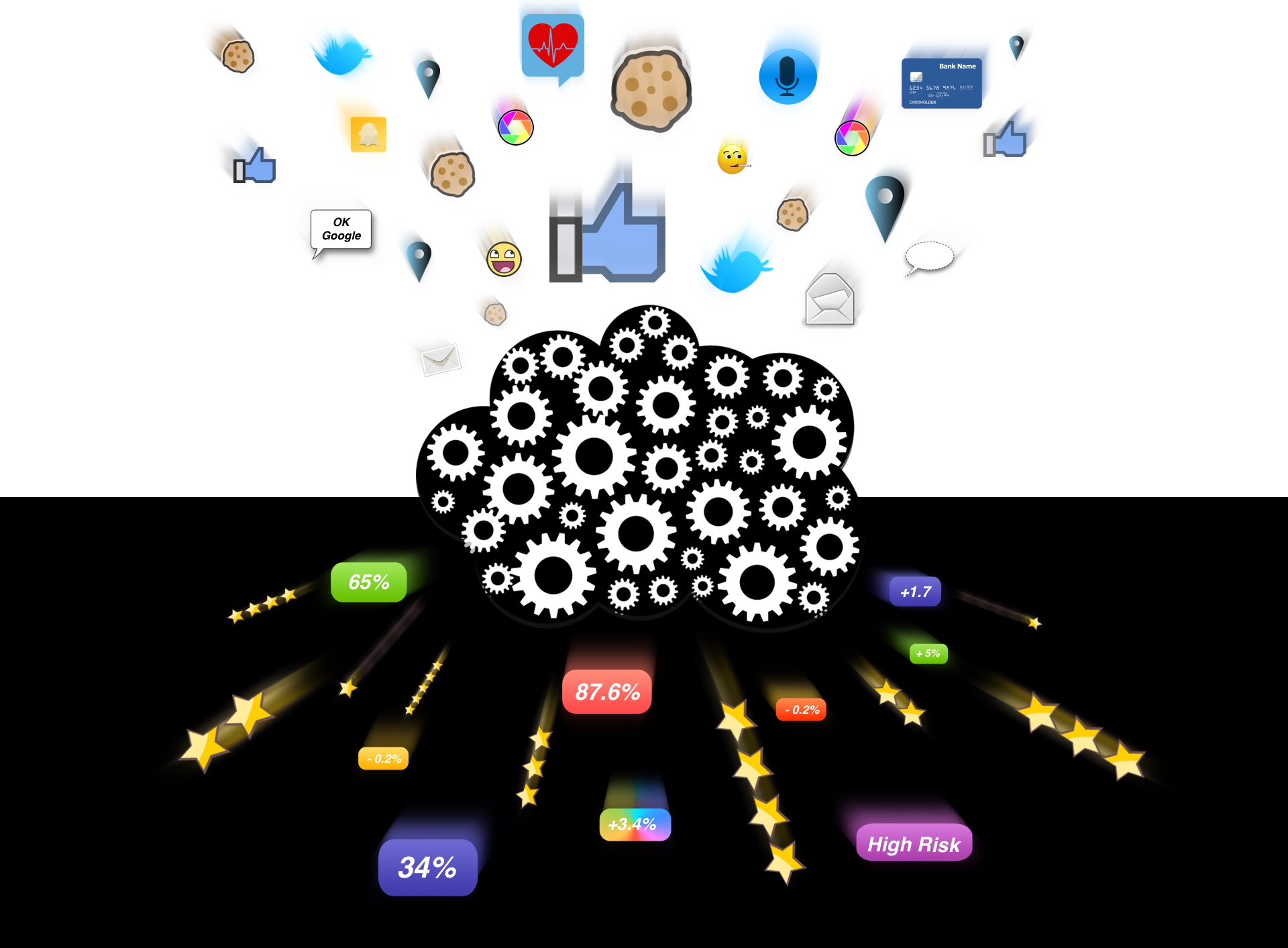
Social Cooling - Big Data's long term side-effect
If data is the new oil, what's the new global warming? Social Cooling asks the question: is our faith in big data slowly making us more well behaved.. but less human?
Here’s the full analysis of newly uncovered genetic data on COVID’s origins
The genetic data paints a picture of spillover in one zone of the market.

As long as the population is repeatedly bombarded with a virus that chronically hijacks and damages our bodies, economic output will continue to decrease. And we aren't doing anything to stop it; we just pretend it's not happening & take on more debt. This is not sustainable.
As long as the population is repeatedly bombarded with a virus that chronically hijacks and damages our bodies, economic output will continue to decrease.And we aren't doing anything to stop it; we just pretend it's not happening & take on more debt.This is not sustainable. https://t.co/7TKyneOFWY pic.twitter.com/GXwBUvWIzu— Friesein (@Friesein) February 18, 2024

I Don't Know Anyone With Long Covid
Yes. You do. It might even be you. Let's take a look at why people don't realize, or can't admit, that they're dealing with Long Covid.

According to wastewater, the US would currently be reporting an estimated 8,400,000 new Covid cases WEEKLY if we were testing & reporting data. By New Years Day, we can expect 12,6000,00 new cases per week. If all the mass disease & death isn’t reported, is it even real?
According to wastewater, the US would currently be reporting an estimated 8,400,000 new Covid cases WEEKLY if we were testing & reporting data. By New Years Day, we can expect 12,6000,00 new cases per week.If all the mass disease & death isn’t reported, is it even real? https://t.co/BTOv8cPT6z— Laura Miers (@LauraMiers) December 4, 2023
annotations: Le Covid-19 et la nouvelle bataille des idées en Europe
Blog de sciences économiques et sociales de Martin Anota. Traductions, revues de presse.
Global Risk Report highlights climate crisis and COVID-19 | World Economic Forum
While the world still reels from the coronavirus pandemic, the greatest threats we collectively face come from multiple sources.

So many people tried so hard to warn everyone, but economists and corporations wouldn’t listen. https://t.co/L3ndgZbErB
So many people tried so hard to warn everyone, but economists and corporations wouldn’t listen. https://t.co/L3ndgZbErB pic.twitter.com/AxvsbATUIg— Laura Miers (@LauraMiers) August 12, 2023

Post-Covid America Isn’t Going to Be Anything Like the Roaring ’20s
Hopes of a repeat of the post-influenza Roaring ’20s are understandable, but misunderstand the differences between then and now, says historian John M. Barry.

A break from Covid waves and a breakthrough for preventing Long Covid
Facts, data and analytics about biomedical matters
Opinion | When It Comes to Covid-19, Most of Us Have Risk Exactly Backward (Published 2020)
We aren’t very good at discussing trade-offs, but we need to make some during this pandemic.

A fact-based worldview for all | Gapminder
We live in a globalized world, not only in terms of trade and migration. More people than ever care about global development. But most people have severe misconceptions about contemporary global development. We know, because we have tested people’s knowledge. One of the main reasons for this is that students don’t learn to understand the world based on statistics and facts. Instead, we have a dramatic worldview formed by outdated school books and sensationalist news-stories. People intuitively believe that most things are getting worse. The dramatic worldview leads to irrational decisions by individuals, nonprofits, governments and business. For the first time in human history reliable statistics exist. There’s data for almost every aspect of global development. The data shows a very different picture: a world where most things improve; a world that is not divided; and a world where the fast population growth will soon be over. The world has never been less bad. But that doesn’t mean it’s perfect.
It's time to retire metrics like GDP. They don't measure everything that matters | Joseph Stiglitz
The way we assess economic performance and social progress is fundamentally wrong, and the climate crisis has brought these concerns to the fore

We Do Not Know the Population of Every Country in the World for the Past Two Thousand Years
Economists have reported results based on populations for every country in the world for the past two thousand years. The source, McEvedy and Jones’ Atlas of World Population History, includes many estimates that are little more than guesses and that do not reflect research since 1978. McEvedy and Jones often infer population sizes from their view of a particular economy, making their estimates poor proxies for economic growth. Their rounding means their measurement error is not “classical.” Some economists augment that error by disaggregating regions in unfounded ways. Econometric results that rest on McEvedy and Jones are unreliable.“… we haven’t just pulled the figures out of the sky. Well, not often.”—McEvedy and Jones (1978, p. 11)

Some parents might miss signs their child has long COVID – WTOP News
COVID isn't behind us — not yet, at least. And there are millions of kids in the U.S. suffering the effects of what's called long COVID.

Is A.I. creating jobs or killing them? Adding to inflation or fixing it? Boosting productivity or doing little? Nobody knows. And our data (public & private) isn't providing clear answers. My latest on the A.I. data gap and the challenge it poses for policymakers: nytimes.com/2026/07/02/business/economy/a…

A.I. Is Reshaping the Economy. Good Luck Measuring How.
www.nytimes.com