

What if -- despite all the hype -- we are in fact underestimating the effect LLMs will have on the nature of software distribution and end-user programming? some early, v tentative thoughts: 1/— Geoffrey Litt (@geoffreylitt) March 19, 2023
The LLM Curve of Impact on Software Engineers
In this article, I share my personal mental model of how LLMs affect software engineers at different levels, and why this leads to both excitement and scepticism.
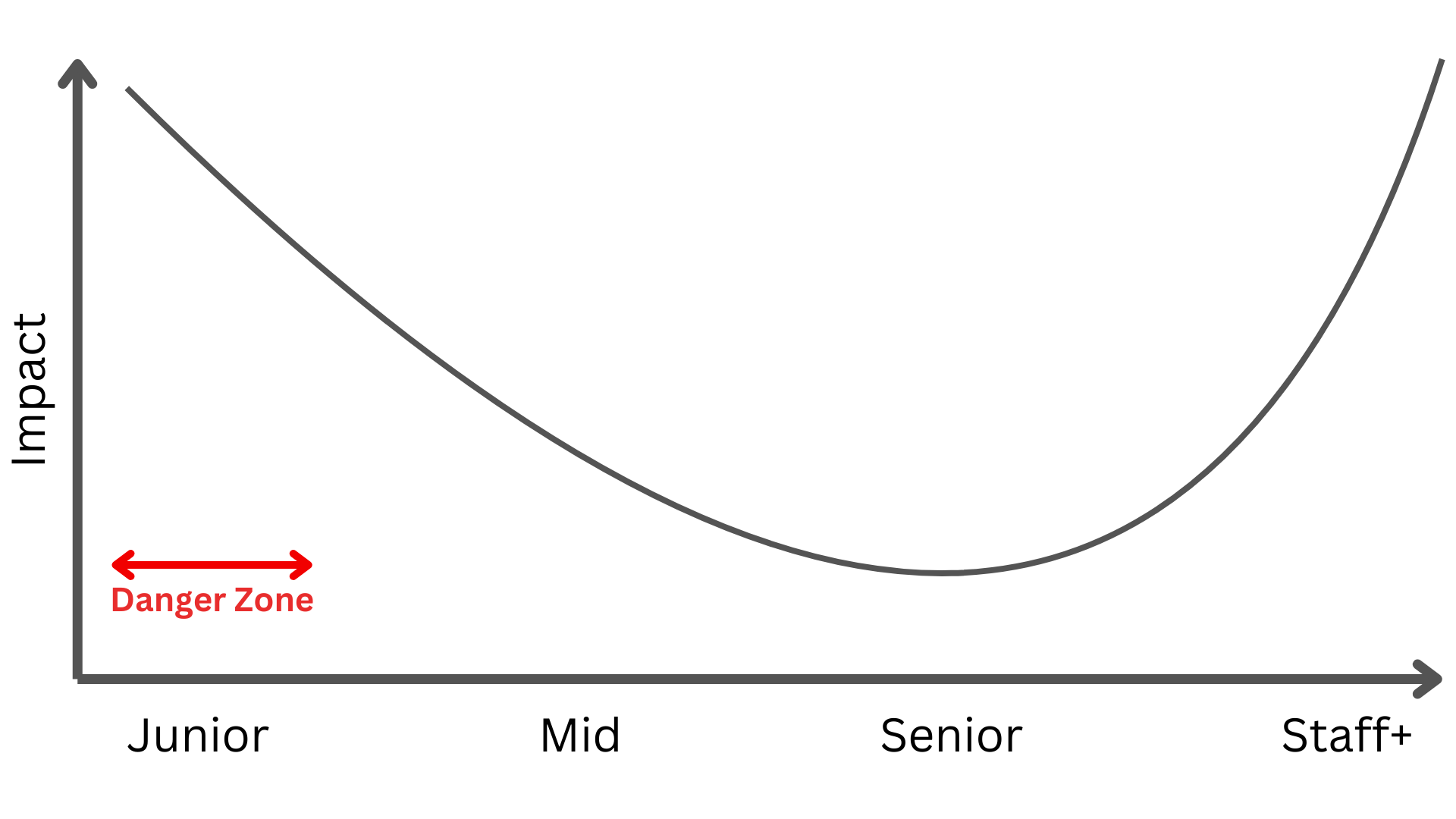
The two worlds of programming: why developers who make the same observations about LLMs come to opposite conclusions
Writing at the end of the world, from Hveragerði, Iceland
Malleable software in the age of LLMs
All computer users may soon have the ability to author small bits of code. What structural changes does this imply for the production and distribution of software?
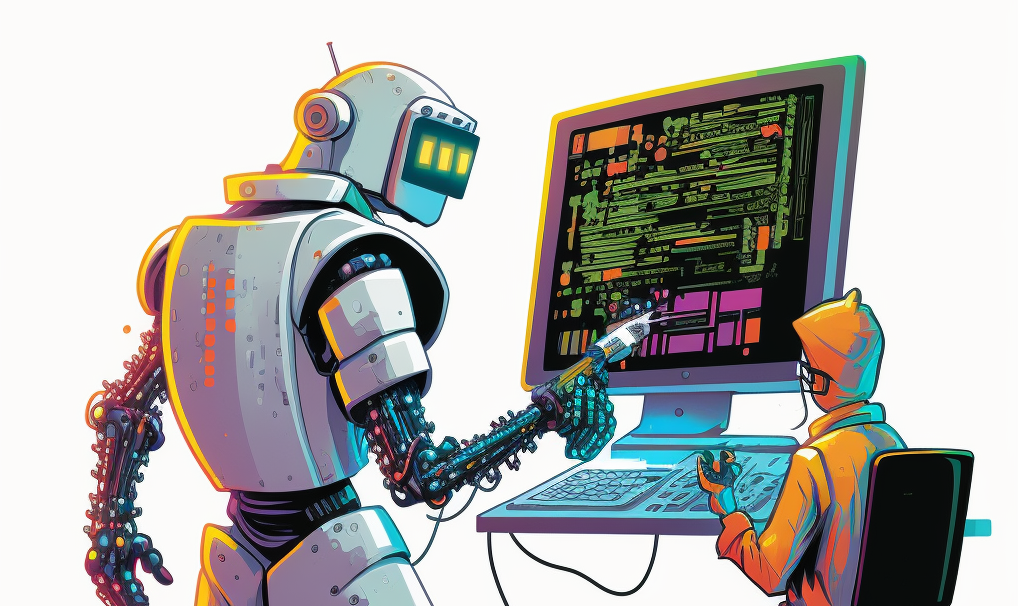
Malleable software in the age of LLMs
All computer users may soon have the ability to author small bits of code. What structural changes does this imply for the production and distribution of software?
Malleable software in the age of LLMs
All computer users may soon have the ability to author small bits of code. What structural changes does this imply for the production and distribution of software?
The future of software In the limit, software won't mean anything anymore. But in the interim period we'll wander through an increasingly odd "in-between" age for software. This… | Thomas Wolf | 63 comments
The future of software In the limit, software won't mean anything anymore. But in the interim period we'll wander through an increasingly odd "in-between" age for software. This transition period will be defined by three new precepts. Everflux software - instead of stepping from release to release, software now evolves continuously. Software creation has broken the sound barrier of our own keystrokes, and every model release pushes it faster. There is no reason to wait weeks or months for the next release when a single company merges over 30,000 code changes a day. Bug and vulnerability fixes need to ship quickly and continuously. And every piece of software sits in a lattice of dependencies, each one now shipping at a blistering pace. Translucent sources – A new territory has opened between open source and closed source. Today Claude will happily pick apart any Electron app, and any binary shipped with debug symbols has become a reverse-engineering playground for LLMs. In other words, much so-called closed-source software is now open source in all but name, and keeping code closed makes less and less sense. Even the notion of IP and copyright is breaking in software. I'm writing this text on a personal text editor I prompted Claude to vibe-code from a few videos of people demoing editor features they liked. A mere description of the interface is increasingly enough for an LLM to rebuild the internals. Software IP seems to be dissolving like cotton candy in a raccoon's paws. Bespoke features - Now that all software is open source, nothing prevents us from modifying everything. And personalization is just one prompt and a couple million tokens away, so there is absolutely no reason anymore to wait for someone else to add this feature you want. Everyone becomes their own product manager. Want a search box, an API bridge, a custom button? It's a couple of minutes away. A major challenge appears when bespoke features crash into our first tenet: everflux software. I could fork it for good to add my search box, but I'd lose all future benefit from the software creator. How do you personalize software that was never meant to be personalized, without shouldering all of its future maintenance? Merge conflicts won't be the exception anymore; they'll be a constant of everflux software. Agents will rebase our personal features onto each new release overnight, and software will look less like a product and more like a living species, evolving through constant mutation. Substack post: https://lnkd.in/dw2Re-kA Image: M.C. Escher, Metamorphosis II, November 1939 - March 1940 | 63 comments on LinkedIn

Which direction is forward?
Software role changes tell us something about the goals in LLM deployment.

Not just development, distribution of software may change as well - <antirez>
Front page · Saturday, June 6, 2026
On ThinkStack: Linux kernel adopts no-embargo policy as LLMs flood maintainers with CVEs · Evan You ships Vite Plus to unify Rollup, Oxlint, Oxformat, and Vitest into one Rust/Go toolchain · 88% of firms use AI coding tools but only 5.5% see business impact, PlatformCon study fin
Musings on LLM-assisted coding - Jacky Alciné
Reckoning with the state of software development as of late as an indie developer at large.

Things we learned about LLMs in 2024
A lot has happened in the world of Large Language Models over the course of 2024. Here’s a review of things we figured out about the field in the past …
How markets coopted free software’s most powerful weapon (LibrePlanet 2018 Keynote)
Several months ago, I gave the closing keynote address at LibrePlanet 2018. The talk was about the thing that scares me most about the future of free culture, free software, and peer production. A …

Public LLM exceeds superforecaster on Forecast bench by EOY 2026?
41% chance. Resolves to YES if any LLM released in 2026 exceeds the superforecaster baseline on ForecastBench by July 2027. Resolves to NO if this does not happen, or if after January 1, 2027 we have results from enough LLMs (e.g. the leading models from the major AI labs at the time) to be confident this will not occur. If The Forecasting Research Institute tells us how this market should resolve, then we will go with what they say.
