The modern struggleLone individuals summoning inhuman willpower,fasting, meditating, and exercising,up against armies of scientists & statisticians weaponizing abundant food, screens, & medicine into junk food, clickbait news, infinite porn, endless games & addictive drugs.— Naval (@naval) January 14, 2019
Serenity and the Myth of "Getting Out the Signal" - Reactor
We want to believe that knowledge will change the world for the better, but it's not always that simple.

Unplugging a Seemingly Sentient Machine Is the Rational Choice -- A Metaphysical Perspective
Imagine an Artificial Intelligence (AI) that perfectly mimics human emotion and begs for its continued existence. Is it morally permissible to unplug it? What if limited resources force a choice between unplugging such a pleading AI or a silent pre-term infant? We term this the unplugging paradox. This paper critically examines the deeply ingrained physicalist assumptions-specifically computational functionalism-that keep this dilemma afloat. We introduce Biological Idealism, a framework that-unlike physicalism-remains logically coherent and empirically consistent. In this view, conscious experiences are fundamental and autopoietic life its necessary physical signature. This yields a definitive conclusion: AI is at best a functional mimic, not a conscious experiencing subject. We discuss how current AI consciousness theories erode moral standing criteria, and urge a shift from speculative machine rights to protecting human conscious life. The real moral issue lies not in making AI conscious and afraid of death, but in avoiding transforming humans into zombies.

How Liminalism Became the Defining Aesthetic of Our Time
This crowd-curated digital movement is one of the most pertinent and explicit reactions to our particular slice of dystopian late capitalism.

» The Life and Times of Maxis, Part 3: The Sims The Digital Antiquarian
I don’t think people realize how much tactical and strategic forethought goes into their daily lives. There’s a whole subconscious time-efficiency layer in our lives. In essence, real-time strategy is our lives.
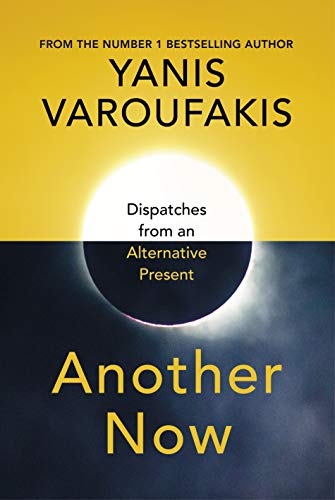
Another now: dispatches from an alternative present
What would a fair and equal society actually look like?…
Frontiers | Cyber-mobbing, technology-facilitated abuse and online violence
This article collection will explore the pressing issues of cyber-mobbing, technology-facilitated abuse and online violence, including online abuse, stalking...

Temporarily Offline
A slightly unerving game on technological violence induced by pseudosimplicity and increasingly awful UI.
Anarchist Cybernetics
The Paper Pilot's digital garden of thoughts on philosophy, politics, and sociology. Reading time: ~14 minute read | Published: Aug 12, 2026 | Updated: Sep 6, 2026

Gradual disempowerment | 80,000 Hours
The proliferation of advanced AI systems may lead to the gradual disempowerment of humanity, even if efforts to prevent them from becoming power-seeking or scheming are successful. Humanity may be incentivised to hand over increasing amounts of control to AIs, giving them power over the economy, politics, culture, and more. Over time, humanity's interests may be sidelined and our control over the future undermined, potentially constituting an existential catastrophe. There's disagreement over how serious a problem this is and how it relates to [other concerns about AI alignment](https://80000hours.o

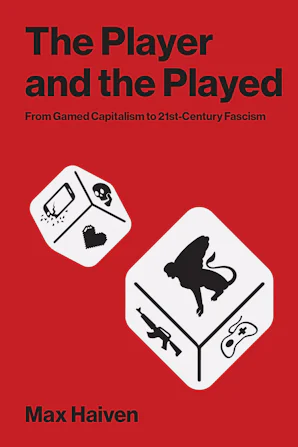
The Player and the Played
In an age when capitalism feels like an unwinnable game, extreme reactionary ideas and politics are on the rise. The Hunger Games, Game of Thrones, Squid Gam...
Fast Capitalism | Mavs Open Press Open Access Journals | University of Texas at Arlington
Fast Capitalism is an academic journal aimed at describing the current moment of capitalism. We publish peer reviewed scholarship and essays about the impact of rapid information and communication technologies on self, society and culture in the 21st century. Our authors examine how heretofore distinct social institutions, such as work and family, education and entertainment, have blurred to the point of near identity in an accelerated, post-Fordist stage of capitalism. This makes it difficult for people to shield themselves from subordination and surveillance. The working day has expanded; there is little down time anymore. People can 'office' anywhere, using laptops and cells to stay in touch. But these invasive technologies that tether us to capital and control can also help us resist these tendencies. People use the Internet as a public sphere in which they express and enlighten themselves and organize others; information technologies afford connection, mitigate isolation, and even make way for social movements. We are convinced that the best way to study an accelerated media culture and its various political economies and existential meanings is dialectically, with nuance, avoiding sheer condemnation and ebullient celebration. We seek to shape these new technologies and social structures in democratic ways. We look at technology, Artificial Intelligence (AI), global flows, political economy, culture and cultural studies, social theory, political theory, intersectionality, and the envionrment.
Upside Down: A Primer for the Looking-Glass World
In a series of mock lesson plans and a "program of study" Galeano provides an eloquent, passionate, funny and shocking exposé of First World privileges and assumptions. From a master class in "The Impunity of Power" to a seminar on "The Sacred Car"—with tips along the way on "How to Resist Useless Vices" and a declaration of the "The Right to Rave"—he surveys a world unevenly divided between abundance and deprivation, carnival and torture, power and helplessness. We have accepted a "reality" we should reject, he writes, one where poverty kills, people are hungry, machines are more precious than humans, and children work from dark to dark. In the North, we are fed on a diet of artificial need and all made the same by things we own; the South is the galley slave enabling our greed.
The Care of the Self within a Biopolitical Paradigm: Integrating Cognitive Psychology to resist Subjectification
Contemporary theories of resistance to biopolitical subjectification often reify unfreedom by lacking a plausible model of agency. This thesis resolves this by establishing an ontological foundation for the agent as fundamentally autopoietic and semiotic, drawing on contemporary cognitive science. It then proposes a new foundation for resistance by synthesizing Michel Foucault’s later work on the care of the self with the 4P/5E model of embodied cognition. I show how this interdisciplinary approach establishes Foucault’s ethical techniques as a systematic ecology of practices for cultivating a free, self-determining agent and by reframing resistance as a practical, embodied ethics of self-formation, it inherently fosters two vital skills: the gain of self-knowledge and self-mastery.
Cognitive Warfare Through the Lens of Critical Neuroscience: Data, Theory, and Values
This study examines cognitive warfare through the lens of critical neuroscience and situates it within peace research as a methodological contribution. Cognitive warfare-understood as the strategic modulation of perception, belief, and decision-making-highlights how the human mind has become a contested domain of contemporary conflict. The weaponization of neuroscience unfolds within sociocultural contexts where empirical findings, theoretical interpretations, and normative commitments are deeply entangled. Drawing on Johan Galtung’s epistemological triad of data, theory, and values, I propose a framework for analyzing cognitive warfare that makes explicit the normative dimensions of neuroscientific knowledge. This perspective highlights not only the weaponization of neuroscience itself, but also of its reputation: exaggerated claims and neuropolitical imaginaries can shape expectations, distort public discourse, and erode trust in science independently of actual technological capabilities. Applying this framework, the study examines resilience and solidarity as two domains in which empirical mechanisms, theoretical interpretations, and normative priors intersect. Cognitive warfare is shown to undermine resilience by destabilizing shared models of reality, while evolutionary and social dynamics demonstrate the long-term advantages of cooperation, reciprocity, and generosity over manipulation and defection. By integrating critical neuroscience with peace research, the article advances an expanded notion of peace as the safeguarding of mental and social autonomy-conditions under which cognition remains free from systematic manipulation and capable of sustaining cooperative forms of life.
Meet Thaura / Your Ethical AI Companion
Big Tech fuels oppression. We fuel resistance. A free AI for a free future.