

A glib line I have said for years: the first AI designed to disemploy programmers was called a compiler. It worked very well and caused explosive growth in programmer employment.— Patrick McKenzie (@patio11) March 26, 2023
The Git-ification of the World — Tim Morrissey
Why AI conquered software first, and what that tells us about which industries are next.

Andrej Karpathy Stopped Using AI to Write Code. He’s Using It to Build a Second Brain Instead
His new workflow turns raw research into a self-maintaining wiki.No vector databases, no RAG pipelines, just markdown files and an LLM that…
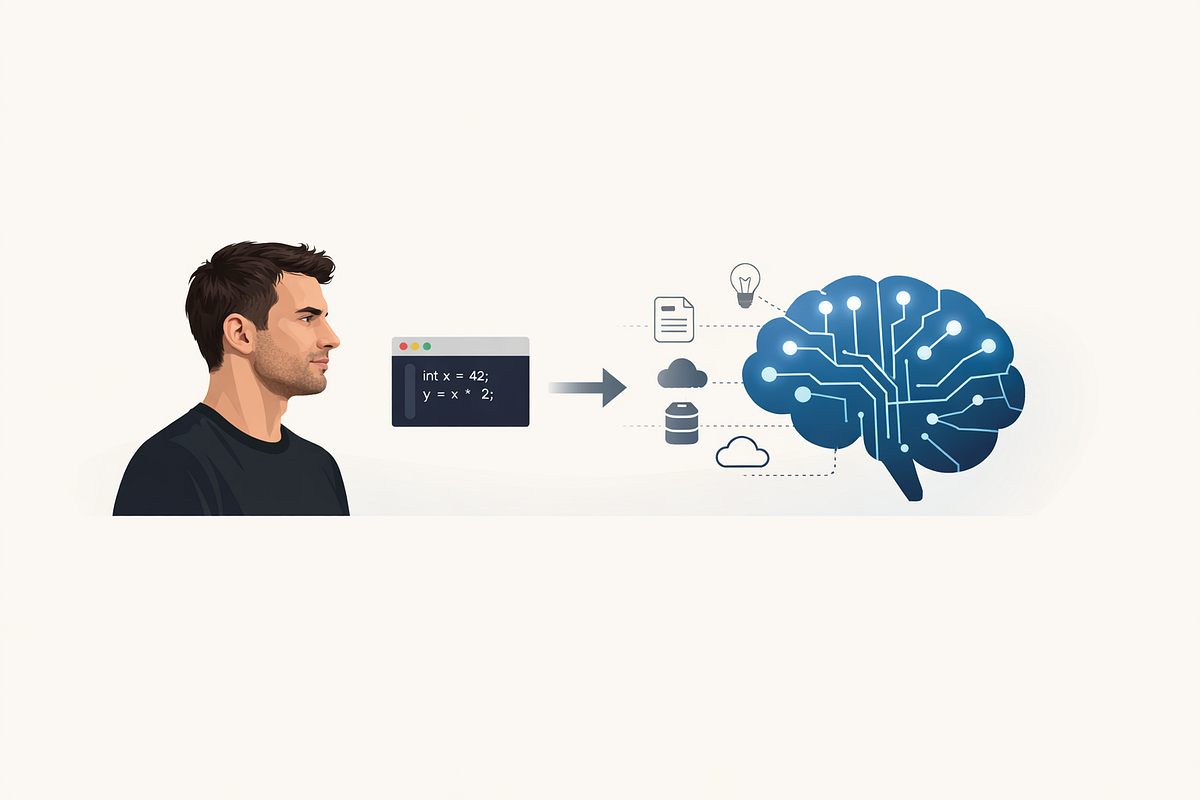
I guess I'm AI-pilled now?
As I've mentioned before, I have pretty mixed feelings on AI. Like many things in life, more than one thing can be true. I'm also going to throw a caveat here up front that most of my examples use GitHub Copilot. I work for GitHub so I…

I used AI. It worked. I hated it.
I used Claude Code to build a tool I needed. It worked great, but I was miserable. I need to reckon with what it means.

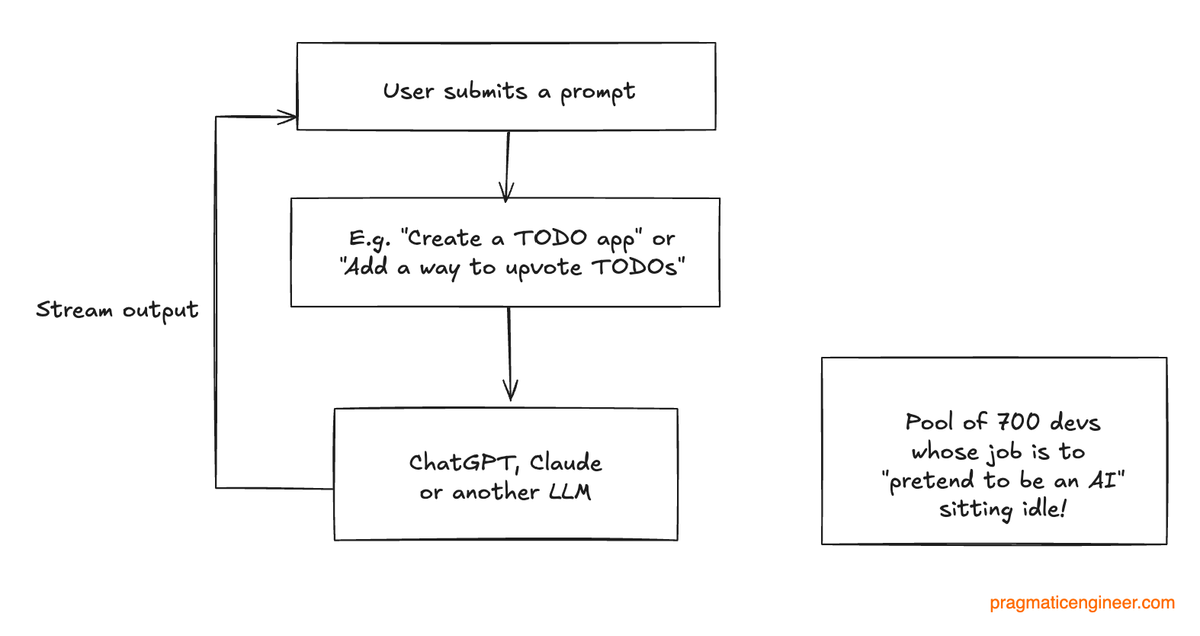
Builder.ai did not “fake AI with 700 engineers”
The claim that the AI startup “faked AI” with hundreds of engineers went viral – and I also fell for it, initially. The reality is much more sobering: Builder.ai built a code generator on top of Claude and other LLMs; it did not build a so-called “Mechanical Turk.”
Cline - AI Coding, Open Source and Uncompromised
Open-source AI coding agent with Plan/Act modes, MCP integration, and terminal-first workflows. Trusted by 5M+ developers worldwide.

"Code was never the hard part" is an insult to all programmers — Senko Rašić
The software development profession is in the midst of upheaval. Nobody knows how the AI revolution will play out in the end, but it is c...

Where Did Software Go Wrong? | Jesse Li
Software is broken, but it's not because of NPM, startups, AI, or venture capitalists. A deep dive into how we think about and produce code, and how our software systems reflect the manic state of the modern world.

Running an AI-native engineering org | Claude
How the Claude Code engineering team’s processes and structure changed once agentic coding became the default way of working.

Executable Archaeology of Programs That Model Programming: Reanimating the Heuristic Compiler (1961) and KBEmacs (1984)
Early AI programs were often also theories of how people think, and programs that wrote programs were, in part, theories of how people program. Here we report on the reanimation of two such programs that offer two seemingly different theories of programming and were developed for quite different purposes. The first, Herbert Simon's Heuristic Compiler (1961), was an experimental model of programming as problem-solving, applying the means-ends analysis methods of the General Problem Solver to investigate the nature of the programming task. The second, KBEmacs (1984), was a working prototype of an intelligent programming assistant developed by MIT's Programmer's Apprentice project, built on the view that expert programmers recognize and combine familiar patterns, or "cliches." It let a programmer build up programs by combining cliches through a stylized English command language. We approach both through the methodology of Executable Archaeology, the study of historical computational systems by running their original code, a process we call "reanimation." Our reanimation of the Heuristic Compiler reproduces the compiled code appearing in Simon's 1963 paper, and our reanimation of KBEmacs reproduces the SQRT sequence of its December 1984 self-test. Examined side by side, the two theories turn out to have much in common: the Heuristic Compiler also works by adapting existing routines, and Simon later argued that search alone requires a large body of programming knowledge. To highlight the reflexivity of this project, we deliberately used a modern AI-assisted programming tool, Anthropic's Claude Code (Opus 5.5), to carry out much of the detailed reanimation work, building on a significant base of existing software. The explicit, executable theories of programming that both systems embodied are largely absent from today's far more capable AI coding assistants.

Why Software Engineering Is Indispensable in the Age of Coding Agents
Can AI make Software Engineering (SE) -- the discipline -- obsolete? And can it make software engineers -- the professionals -- redundant? This paper argues that the rise of capable AI coding...
On AI Coding and Its Discontents - Cal Newport
Back in January, I received a note from a senior software engineer in Silicon Valley. He described himself as an AI skeptic who became converted ... Read more
AI Coding Agents: Adoption Trends - The JetBrains Blog
How many developers use AI coding agents (Claude Code, Codex, Cursor, JetBrains Junie, and others)? Evidence from the Developer Ecosystem Survey 2026.
Why tech is racing to adopt AI coding
The head of AI coding platform Cursor on what’s next for programming, whether AGI is imminent, and competing with Anthropic and OpernAI.

Cursor: AI coding agent
Built to make you extraordinarily productive, Cursor is the best AI coding agent.

AI for coding works so well because code has a bunch of built in self checks that allow an agent trained with reinforcement learning to find what works and what doesn’t. This will not so easily translate to eg machine design until we have way better simulations or much more “embodied AI” (robots).
