

As of today I ~officially~ have long COVID (as recognized by the CDC), so I wanna take a second to explain what’s happening. To set the stage: I’m 30, I’ve been an athlete my entire life, and I used to be extremely healthy, minus some pesky seasonal allergies. My resting heart 1/— Savannah Brooks (on medical leave) (@SBLitAgent) May 22, 2022
Evidence mounts that Long Covid is damaging the hearts of those affected
There are also increasing signs that the condition can disrupt the autonomic nervous system

The CDC whispered this a year ago. “SARS-CoV-2 can have lasting effects on nearly every organ & organ system of the body weeks, months, & potentially years after infection. Documented serious post-Covid conditions include cardiovascular, pulmonary, neurological, renal, endocrin
The CDC whispered this a year ago. “SARS-CoV-2 can have lasting effects on nearly every organ & organ system of the body weeks, months, & potentially years after infection. Documented serious post-Covid conditions include cardiovascular, pulmonary, neurological, renal,… pic.twitter.com/xkSStj51y2— Laura Miers (@LauraMiers) March 9, 2024

What Are COVID-19’s Long-Term Medical Effects?
Fascinating email from TPM Reader JO, whose personal bio is tailor-made for...

Current status and future perspectives on the mechanistic and pathophysiological understanding of long COVID
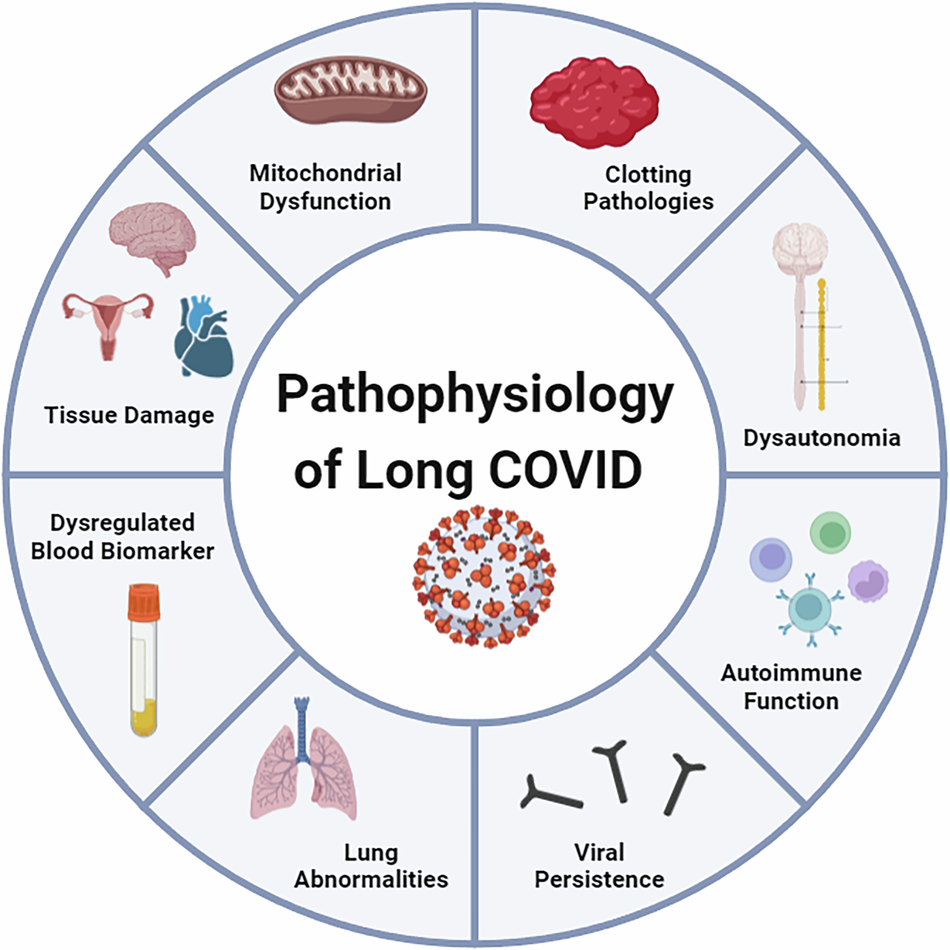
Viral and infectious illnesses can exert profound and enduring effects on population health and well-being. In the aftermath of SARS-CoV-2 infection, post-acute sequelae, collectively referred to as Long COVID, have emerged as a major global health challenge, affecting more than 400 million people and contributing to estimated annual economic costs exceeding $1 trillion. Long COVID encompasses a wide and heterogeneous spectrum of debilitating symptoms, including cognitive dysfunction, sleep disturbances, severe fatigue, and post-exertional malaise. Despite its substantial burden, fundamental uncertainties remain regarding its underlying pathophysiology, the development of robust diagnostic criteria, and the identification of effective therapeutic options. This review synthesises current evidence on the biological mechanisms thought to contribute to Long COVID, spanning immune dysregulation, viral persistence, autonomic dysfunction, microvascular pathology, and other emerging hypotheses. We examine advances and limitations in contemporary diagnostic approaches and critically appraise existing treatment strategies, highlighting inconsistencies and gaps that hinder clinical consensus. By integrating interdisciplinary insights, this review underscores the urgent need for mechanistic clarity, validated diagnostic frameworks, and rigorously evaluated treatment pathways. Addressing these gaps will be essential to developing effective, evidence-based management strategies and mitigating the long-term impact of Long COVID on global health.
Current status and future perspectives on the mechanistic and pathophysiological understanding of long COVID
Viral and infectious illnesses can exert profound and enduring effects on population health and well-being. In the aftermath of SARS-CoV-2 infection, post-acute sequelae, collectively referred to as Long COVID, have emerged as a major global health challenge, affecting more than 400 million people and contributing to estimated annual economic costs exceeding $1 trillion. Long COVID encompasses a wide and heterogeneous spectrum of debilitating symptoms, including cognitive dysfunction, sleep disturbances, severe fatigue, and post-exertional malaise. Despite its substantial burden, fundamental uncertainties remain regarding its underlying pathophysiology, the development of robust diagnostic criteria, and the identification of effective therapeutic options. This review synthesises current evidence on the biological mechanisms thought to contribute to Long COVID, spanning immune dysregulation, viral persistence, autonomic dysfunction, microvascular pathology, and other emerging hypotheses. We examine advances and limitations in contemporary diagnostic approaches and critically appraise existing treatment strategies, highlighting inconsistencies and gaps that hinder clinical consensus. By integrating interdisciplinary insights, this review underscores the urgent need for mechanistic clarity, validated diagnostic frameworks, and rigorously evaluated treatment pathways. Addressing these gaps will be essential to developing effective, evidence-based management strategies and mitigating the long-term impact of Long COVID on global health.
How COVID-19 Changes the Heart—Even After the Virus Is Gone
A study adds new evidence that SARS-CoV-2—the virus that causes COVID-19—could have a lasting impact on the heart

New research shows younger and middle-aged adults have worse long COVID symptoms than older adults
New study from Northwestern Medicine finds symptoms occurred regardless of mild or severe COVID-19 infection

Shadow Burden of Undiagnosed Myalgic Encephalomyelitis/Chronic Fatigue Syndrome (ME/CFS) on Society: Retrospective and Prospective—In Light of COVID-19
Background: Myalgic encephalomyelitis/chronic fatigue syndrome (ME/CFS) is a poorly understood, complex, multisystem disorder, with severe fatigue not alleviated by rest, and other symptoms, which lead to substantial reductions in functional activity and quality of life. Due to the unclear aetiology, treatment of patients is complicated, but one of the initial problems is the insufficient diagnostic process. The increase in the number of undiagnosed ME/CFS patients became specifically relevant in the light of the COVID-19 pandemic. The aim of this research was to investigate the issues of undiagnosed potential ME/CFS patients, with a hypothetical forecast of the expansion of post-viral CFS as a consequence of COVID-19 and its burden on society. Methods: The theoretical research was founded on the estimation of classic factors presumably affecting the diagnostic scope of ME/CFS and their ascription to Latvian circumstances, as well as a literature review to assess the potential interaction between ME/CFS and COVID-19 as a new contributing agent. The empirical study design consisted of two parts: The first part was dedicated to a comparison of the self-reported data of ME/CFS patients with those of persons experiencing symptoms similar to ME/CFS, but without a diagnosis. This part envisaged the creation of an assumption of the ME/CFS shadow burden “status quo”, not addressing the impact of COVID-19. The second part aimed to investigate data from former COVID-19 patients’ surveys on the presence of ME/CFS symptoms, 6 months after being affected by COVID-19. Descriptive and analytical statistical methods were used to analyse the obtained data. Results: The received data assumed that the previously obtained data on the ME/CFS prevalence of 0.8% in the Latvian population are appropriate, and the literature review reports a prevalence of 0.2–1.0% in developed countries. Regarding the reciprocity of ME/CFS and COVID-19, the literature review showed a lack of research in this field. The empirical results show quite similar self-esteem among ME/CFS patients and undiagnosed patients with longstanding disease experience, while former COVID-19 patients show a significantly lower severity of these problems. Notably, “psychological distress (anxiety)” and “episodic fatigue” are significantly predominant symptoms reported by former COVID-19 patients in comparison with ME/CFS patients and undiagnosed patients prior to the COVID-19 pandemic. The results of our analysis predict that the total amount of direct medical costs for undiagnosed patients (out-of-pocket payments) is more than EUR 15 million p.a. (in Latvia), and this may increase by at least 15% due to the consequences of COVID-19. Conclusions: ME/CFS creates a significant shadow burden on society, even considering only the direct medical costs of undiagnosed patients—the number of whom in Latvia is probably at least five times higher than the number of discerned patients. Simultaneously, COVID-19 can induce long-lasting complications and chronic conditions, such as post-viral CFS, and increase this burden. The Latvian research data assume that ME/CFS patients are not a high-risk group for COVID-19; however, COVID-19 causes ME/CFS-relevant symptoms in patients. This increases the need for monitoring of patients for even longer after recovering from COVID-19′s symptoms, in order to prevent complications and the progression of chronic diseases. In the context of further epidemiological uncertainty, and the possibility of severe post-viral consequences, preventive measures are becoming significantly more important; an integrated diagnostic approach and appropriate treatment could reduce this burden in the future.
Shadow Burden of Undiagnosed Myalgic Encephalomyelitis/Chronic Fatigue Syndrome (ME/CFS) on Society: Retrospective and Prospective—In Light of COVID-19
Background: Myalgic encephalomyelitis/chronic fatigue syndrome (ME/CFS) is a poorly understood, complex, multisystem disorder, with severe fatigue not alleviated by rest, and other symptoms, which lead to substantial reductions in functional activity and quality of life. Due to the unclear aetiology, treatment of patients is complicated, but one of the initial problems is the insufficient diagnostic process. The increase in the number of undiagnosed ME/CFS patients became specifically relevant in the light of the COVID-19 pandemic. The aim of this research was to investigate the issues of undiagnosed potential ME/CFS patients, with a hypothetical forecast of the expansion of post-viral CFS as a consequence of COVID-19 and its burden on society. Methods: The theoretical research was founded on the estimation of classic factors presumably affecting the diagnostic scope of ME/CFS and their ascription to Latvian circumstances, as well as a literature review to assess the potential interaction between ME/CFS and COVID-19 as a new contributing agent. The empirical study design consisted of two parts: The first part was dedicated to a comparison of the self-reported data of ME/CFS patients with those of persons experiencing symptoms similar to ME/CFS, but without a diagnosis. This part envisaged the creation of an assumption of the ME/CFS shadow burden “status quo”, not addressing the impact of COVID-19. The second part aimed to investigate data from former COVID-19 patients’ surveys on the presence of ME/CFS symptoms, 6 months after being affected by COVID-19. Descriptive and analytical statistical methods were used to analyse the obtained data. Results: The received data assumed that the previously obtained data on the ME/CFS prevalence of 0.8% in the Latvian population are appropriate, and the literature review reports a prevalence of 0.2–1.0% in developed countries. Regarding the reciprocity of ME/CFS and COVID-19, the literature review showed a lack of research in this field. The empirical results show quite similar self-esteem among ME/CFS patients and undiagnosed patients with longstanding disease experience, while former COVID-19 patients show a significantly lower severity of these problems. Notably, “psychological distress (anxiety)” and “episodic fatigue” are significantly predominant symptoms reported by former COVID-19 patients in comparison with ME/CFS patients and undiagnosed patients prior to the COVID-19 pandemic. The results of our analysis predict that the total amount of direct medical costs for undiagnosed patients (out-of-pocket payments) is more than EUR 15 million p.a. (in Latvia), and this may increase by at least 15% due to the consequences of COVID-19. Conclusions: ME/CFS creates a significant shadow burden on society, even considering only the direct medical costs of undiagnosed patients—the number of whom in Latvia is probably at least five times higher than the number of discerned patients. Simultaneously, COVID-19 can induce long-lasting complications and chronic conditions, such as post-viral CFS, and increase this burden. The Latvian research data assume that ME/CFS patients are not a high-risk group for COVID-19; however, COVID-19 causes ME/CFS-relevant symptoms in patients. This increases the need for monitoring of patients for even longer after recovering from COVID-19′s symptoms, in order to prevent complications and the progression of chronic diseases. In the context of further epidemiological uncertainty, and the possibility of severe post-viral consequences, preventive measures are becoming significantly more important; an integrated diagnostic approach and appropriate treatment could reduce this burden in the future.

Timing of Long COVID Improvement in Prospectively Followed RECOVER-Adult Participants
Background: Long COVID (LC) is widespread; however, limited information has been reported on the likelihood that symptoms remit over time. Objective: To evaluate the likelihood of improvement among persons with likely LC. Design: Prospective, multisite cohort study (RECOVER-Adult [Researching COVID to Enhance Recovery]). Setting: 83 U.S.-based sites across 33 states; Washington, DC; and Puerto Rico. Participants: 1019 persons in RECOVER-Adult with likely LC (LC Research Index [LCRI] ≥11) 12 months after first SARS-CoV-2 infection. Measurements: The primary outcome was time until 2 consecutive study visits with LCRI less than 11. Secondary outcomes were time until LCRI measure reduced 50% or more and quality of life was good or better, and LCRI decreased to 0. Unadjusted estimates of cumulative incidence and adjusted marginal cumulative incidence by age, sex, SARS-CoV-2 wave, and LC subtype were reported across all follow-up time points. Results: An estimated 36.2% (95% CI, 33.0% to 39.5%) met the primary outcome by 24 months after infection, and 50.1% (CI, 46.1% to 54.0%) met the primary outcome by 36 months. An estimated 56.4% (CI, 52.2% to 60.4%) and 26.9% (CI, 23.3% to 30.5%), respectively, met the 2 secondary outcomes by 36 months. Among persons who still reported likely LC at 18 months and 24 months after first infection, relative timing of subsequent symptom improvement was similar. Limitation: Findings in this observational cohort are interpretable in a population with prevalent likely LC and do not address causal relationships between individual characteristics and symptom improvement. Conclusion: Among persons with likely LC 12 months after initial SARS-CoV-2 infection, one half experience meaningful reductions in symptoms by 36 months, whereas a quarter experience complete remission of symptoms. These findings underscore both the potential for natural recovery and the urgent need for placebo-controlled therapeutic intervention trials. Primary Funding Source: National Institutes of Health.

Timing of Long COVID Improvement in Prospectively Followed RECOVER-Adult Participants
Background: Long COVID (LC) is widespread; however, limited information has been reported on the likelihood that symptoms remit over time. Objective: To evaluate the likelihood of improvement among persons with likely LC. Design: Prospective, multisite cohort study (RECOVER-Adult [Researching COVID to Enhance Recovery]). Setting: 83 U.S.-based sites across 33 states; Washington, DC; and Puerto Rico. Participants: 1019 persons in RECOVER-Adult with likely LC (LC Research Index [LCRI] ≥11) 12 months after first SARS-CoV-2 infection. Measurements: The primary outcome was time until 2 consecutive study visits with LCRI less than 11. Secondary outcomes were time until LCRI measure reduced 50% or more and quality of life was good or better, and LCRI decreased to 0. Unadjusted estimates of cumulative incidence and adjusted marginal cumulative incidence by age, sex, SARS-CoV-2 wave, and LC subtype were reported across all follow-up time points. Results: An estimated 36.2% (95% CI, 33.0% to 39.5%) met the primary outcome by 24 months after infection, and 50.1% (CI, 46.1% to 54.0%) met the primary outcome by 36 months. An estimated 56.4% (CI, 52.2% to 60.4%) and 26.9% (CI, 23.3% to 30.5%), respectively, met the 2 secondary outcomes by 36 months. Among persons who still reported likely LC at 18 months and 24 months after first infection, relative timing of subsequent symptom improvement was similar. Limitation: Findings in this observational cohort are interpretable in a population with prevalent likely LC and do not address causal relationships between individual characteristics and symptom improvement. Conclusion: Among persons with likely LC 12 months after initial SARS-CoV-2 infection, one half experience meaningful reductions in symptoms by 36 months, whereas a quarter experience complete remission of symptoms. These findings underscore both the potential for natural recovery and the urgent need for placebo-controlled therapeutic intervention trials. Primary Funding Source: National Institutes of Health.
Myalgic Encephalomyelitis/Chronic Fatigue Syndrome: Essentials of Diagnosis and Management
Despite myalgic encephalomyelitis/chronic fatigue syndrome (ME/CFS) affecting millions of people worldwide, many clinicians lack the knowledge to appropriately diagnose or manage ME/CFS. Unfortunately, clinical guidance has been scarce, obsolete, or potentially harmful. Consequently, up to 91% of patients in the United States remain undiagnosed, and those diagnosed often receive inappropriate treatment. These problems are of increasing importance because after acute COVID-19, a significant percentage of people remain ill for many months with an illness similar to ME/CFS.

A break from Covid waves and a breakthrough for preventing Long Covid
Facts, data and analytics about biomedical matters
Hypothesis: inflammatory acid-base disruption underpins Long Covid
The mechanism of Long Covid (Post-Acute Sequelae of COVID-19; PASC) is currently unknown, with no validated diagnostics or therapeutics. SARS-CoV-2 can cause disseminated infections that result in multi-system tissue damage, dysregulated inflammation, and cellular metabolic disruptions. The tissue damage and inflammation has been shown to impair microvascular circulation, resulting in hypoxia, which coupled with virally-induced metabolic reprogramming, increases cellular anaerobic respiration. Both acute and PASC patients show systemic dysregulation of multiple markers of the acid-base balance. Based on these data, we hypothesize that the shift to anaerobic respiration causes an acid-base disruption that can affect every organ system and underpins the symptoms of PASC. This hypothesis can be tested by longitudinally evaluating acid-base markers in PASC patients and controls over the course of a month. If our hypothesis is correct, this could have significant implications for our understanding of PASC and our ability to develop effective diagnostic and therapeutic approaches.

Nervous system consequences of COVID-19
Neurological symptoms highlight the need to understand pathophysiologic mechanisms , Although severe acute respiratory syndrome coronavirus 2 (SARS-CoV-2) is considered a respiratory pathogen, myriad neurologic complications—including confusion, stroke, and neuromuscular disorders—manifest during acute COVID-19. Furthermore, maladies such as impaired concentration, headache, sensory disturbances, depression, and even psychosis may persist for months after infection, as part of a constellation of symptoms now called Long Covid. Even young people with mild initial disease can develop acute COVID-19 and Long Covid neuropsychiatric syndromes. The pathophysiological mechanisms are not well understood, although evidence primarily implicates immune dysfunction, including nonspecific neuroinflammation and antineural autoimmune dysregulation. It is uncertain whether unforeseen neurological consequences may develop years after initial infection. With millions of individuals affected, nervous system complications pose public health challenges for rehabilitation and recovery and for disruptions in the workforce due to loss of functional capacity. There is an urgent need to understand the pathophysiology of these disorders and develop disease-modifying therapies.
