“Chattel slavery was the first-use case for big data systems to control, surveil, and enact violence in order to ensure global power and profit structures.” #DataCapitalism https://t.co/8kGVJ59hIw— Linda (@thelindaden) May 24, 2021
REINVENTING SOCIETY IN THE WAKE OF BIG DATA | Edge.org
With Big Data we can now begin to actually look at the details of social interaction and how those play out, and are no longer limited to averages like market indices or election results. This is an astounding change. The ability to see the details of the market, of political revolutions, and to be able to predict and control them is definitely a case of Promethean fire—it could be used for good or for ill, and so Big data brings us to interesting times. We're going to end up reinventing what it means to have a human society.
Big Data’s Radical Potential
Today, big data is used to boost profits and spy on civilians. But what if it was harnessed for the social good?

The Origins of 'Big Data': An Etymological Detective Story
Tracing the origins of the term “Big Data” shows how digital technology is changing the way words and ideas develop and spread, and how they are studied.

Data Colonialism: Critiquing Consent and Control in “Tech for Social Change”
Lack of ethical processes around data collection and management, and ongoing Western control over data, continue the legacy of colonialism within aid work.

Data Capitalism and Algorithmic Racism - D4BL
Even before the global pandemic drastically increased reliance on communications technology for working, learning, shopping, and socializing at a distance, Americans from all walks of life reported a growing unease about the impact of technology companies on our country. Whether it is the gig economy company that tinkers with its incentive algorithms—and sends pay plummeting for thousands of “independent contractors,” or the firm peddling facial recognition technology that disproportionately misidentifies people of color as wanted criminals, the video site that promotes inflammatory misinformation guaranteed to generate clicks, or the social media giant that lets advertisers exclude Black homebuyers from seeing real estate ads in particular neighborhoods, communities across the country are struggling with the effects of unaccountable data* extraction and algorithmic decision-making. Concerns go far beyond worries about personal privacy to fundamental questions of power and control. This paper makes the case that the underlying driver is data capitalism: an economic model built on the extraction and commodification of data and the use of big data and algorithms as tools to concentrate and consolidate power in ways that dramatically increase inequality along lines of race, class, gender, and disability. Along with this report, we’ve built a microsite (https://datacapitalism.d4bl.org/) to help you understand: what is data capitalism and algorithmic racism?
Digital Socialism?
What opportunities does the new feedback infrastructure of data capitalism offer for non-market forms of social coordination? Hayek and the Calculation Debate revisited in the age of big data.

Is “Big Data” racist? Why policing by data isn’t necessarily objective
Concerns with predictive big data technologies appear in most big data policing models."

Rethinking data and rebalancing digital power
What is a more ambitious vision for data use and regulation that can deliver a positive shift in the digital ecosystem towards people and society?

Data Reboot: 10 Reasons why we need to change how we approach data in today’s society
Stefaan G. Verhulst and Julia Stamm, The Data Tank

Why the internet of things could destroy the welfare state
Tech pioneers in the US are advocating a new data-based approach to governance – 'algorithmic regulation'. But where does this leave governments, asks Evgeny Morozov

In the face of rampant AI, is ‘data poisoning’ a new form of civil disobedience?
Boycotts, sabotage and other types of civil disobedience have long served collective action against injustice.

In the face of rampant AI, is ‘data poisoning’ a new form of civil disobedience?
Boycotts, sabotage and other types of civil disobedience have long served collective action against injustice.
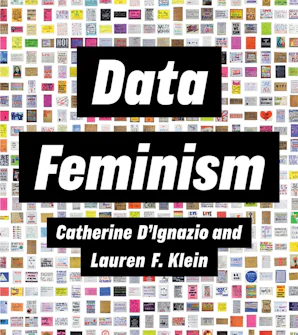
Data Feminism
Today, data science is a form of power. It has been used to expose injustice, improve health outcomes, and topple governments. But it has also been used to d...
Data Liberation in 2024
Imagine a more open web where people can switch between any platform of their choosing. A web where being locked into a system is a thing of the past. This is the web I’ve always wanted to see. Tha…

China’s plan to organize its society relies on ‘big data’ to rate everyone
The Communist Party wants to harness vast troves of online data to score people and companies on their behavior.

The Staggering Ecological Impacts of Computation and the Cloud
Anthropologist Steven Gonzalez Monserrate draws on five years of research and ethnographic fieldwork in server farms to illustrate some of the diverse environmental impacts of data storage.