


On this week’s episode of “WTF is TESCREAL?,” I’d like to tell you a story with a rather poetic narrative arc. It begins and ends with Ted Kaczynski—yes, THAT GUY, the Unabomber!—but its main characters are Eliezer Yudkowsky and the “AI safety” community.A long but fun🧵. pic.twitter.com/UJ8RS2KjXa— Dr. Émile P. Torres (they/them) (@xriskology) April 13, 2023
My Objections to "We’re All Gonna Die with Eliezer Yudkowsky" — AI Alignment Forum
Introduction I recently watched Eliezer Yudkowsky's appearance on the Bankless podcast, where he argued that AI was nigh-certain to end humanity. Sin…
My Objections to "We’re All Gonna Die with Eliezer Yudkowsky" — LessWrong
Introduction I recently watched Eliezer Yudkowsky's appearance on the Bankless podcast, where he argued that AI was nigh-certain to end humanity. Sin…
The guru of the AI apocalypse
Eliezer Yudkowsky is confusing a very human obsession with death and a very modern fear of a techno-deity
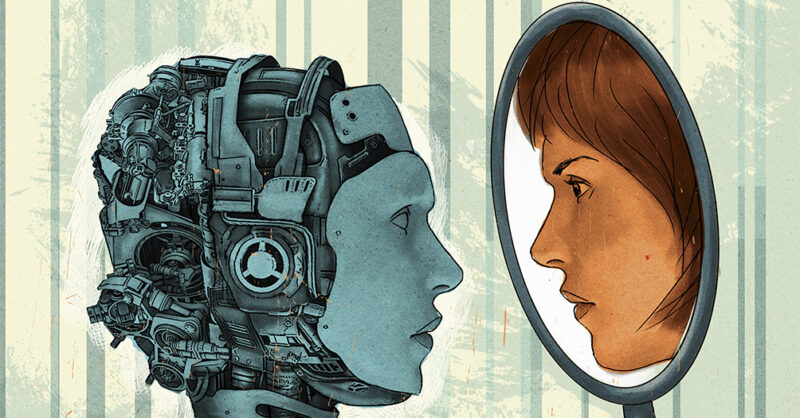
Amanda Askell on AI Consciousness, Claude & Silicon Valley’s Biggest Fear
Episode 5: Metaphors for AI, with Shannon Vallor
This week, Adam talks with Shannon Vallor, a philosopher of AI, about the metaphors we use to talk about AI and ourselves. They also dunk on libertarians and San Francisco billboards, and consider what kind of hope we can have for the future of technology.Messages: • Support the show at patreon.com/DreamingAgainstTheMachine • Follow us on Bluesky and Instagram • Subscribe to the show wherever you get your podcasts! • Check out other great podcasts from Multitude like Wow if TrueAbout the show:Dreaming Against the Machine is a podcast about envisioning a realistic and hopeful future. Each week, the show’s host, journalist and astrophysicist Dr. Adam Becker, will have an earnest (and entertaining!) conversation with a guest about possible futures, seen through the lenses of history, science, and culture. In a world where tech oligarchs and their power fantasies are driving visions of the future, Dreaming Against the Machine aims to take back the terms of the public conversation about what our world can and should be.
A new writing series: Re-envisioning AI safety through global majority perspectives | Brookings
Chinasa T. Okolo previews a new writing series that will re-envision AI safety through global majority perspectives.

A case for AI taboos – Writings and rehearsals by Nathan Schneider
We probably all know the person, and maybe it is ourselves, who has inundated themselves in AI use, and say they are fully aware of all the dangers, but are so, so careful as to not fall into such traps themselves.

Your Favorite Science YouTubers Are Wrong About AI, (e.g. SciShow, Kurzgesagt, and Kyle Hill )
Claude Fable 5 and new safety fables
One step further into the power politics of frontier AI systems.
Welp @WIRED laid me off alongside a bunch of other talented people, and on the way out the door I want to appreciate some stories that I was proud to write while reporting on how AI can harm people, accelerate inequality, violate human rights, and threaten society. A thread 🧵:
Welp @WIRED laid me off alongside a bunch of other talented people, and on the way out the door I want to appreciate some stories that I was proud to write while reporting on how AI can harm people, accelerate inequality, violate human rights, and threaten society. A thread 🧵:— Khari Johnson (@kharijohnson) December 12, 2023
Wisereads Vol. 21 — The latest Howard Marks, Ethan Mollick on AI, and The Communist Manifesto

The AI Echo Chamber: New Paper on AI and Epistemic Risk
NEW PAPER: John Wihbey argues that as AI increasingly mediates the information domains that shape public knowledge, it risks producing an "epistemically anachronistic" public sphere, stifling the emergence of new ideas and limiting democratic deliberation. While AI has the potential to enhance our informational ecosystem, he argues, there preserving space for organic human insight and discourse.
AI Safety Is a Narrative Problem · Special Issue 5: Grappling With the Generative AI Revolution
This op-ed explores power and narrative dynamics around AI. Drawing on pop-culture references, the professional experiences of the author and examples from 2023’s “Great AI Safety Hype Roadshow,” this piece draws on the literary criticism technique of practical criticism to consider how speeches and announcements from both Silicon Valley executives and research scientists to interrogate the media-friendly nature of p(doom) discourse—which focuses on the existential risks of AI (PauseAI, 2023)—and its likely consequences. The complexities of AI and its numerous social impacts can be difficult for even the most expert analyst to unpack. In spite of this, the potential of “existential threats” has successfully cut through to become a mainstay of mainstream media coverage over the last year. This piece will make the case that this is an effective narrative conceit that has achieved a number of ends that traditional science communication tends to find difficult, if not impossible, to achieve. Firstly, it is easy to understand. Simplification of this nature—that removes jargon and complexity and focuses on a single outcome—is much easier to fit on a TV rolling news ticker or on the cover of a tabloid newspaper than more well-balanced, representative opinions. Secondly, it inherits prior assumptions from well-known dramatic forms. P(doom) plays to stories familiar from Greek tragedy through to Marvel movies, in which lone male heroes battle ineluctable forces. Thirdly, it is imbued with urgency and so becomes difficult to ignore.
The AI safety vibe shift
Once a fringe obsession of Bay Area rationalists, existential risk is suddenly all anyone is talking about

