


My third post about typography in sci-fi has been gestating for a while now. Indeed, it’s been slowly taking shape – you might say it’s been forming itself inside of me – for really qui…
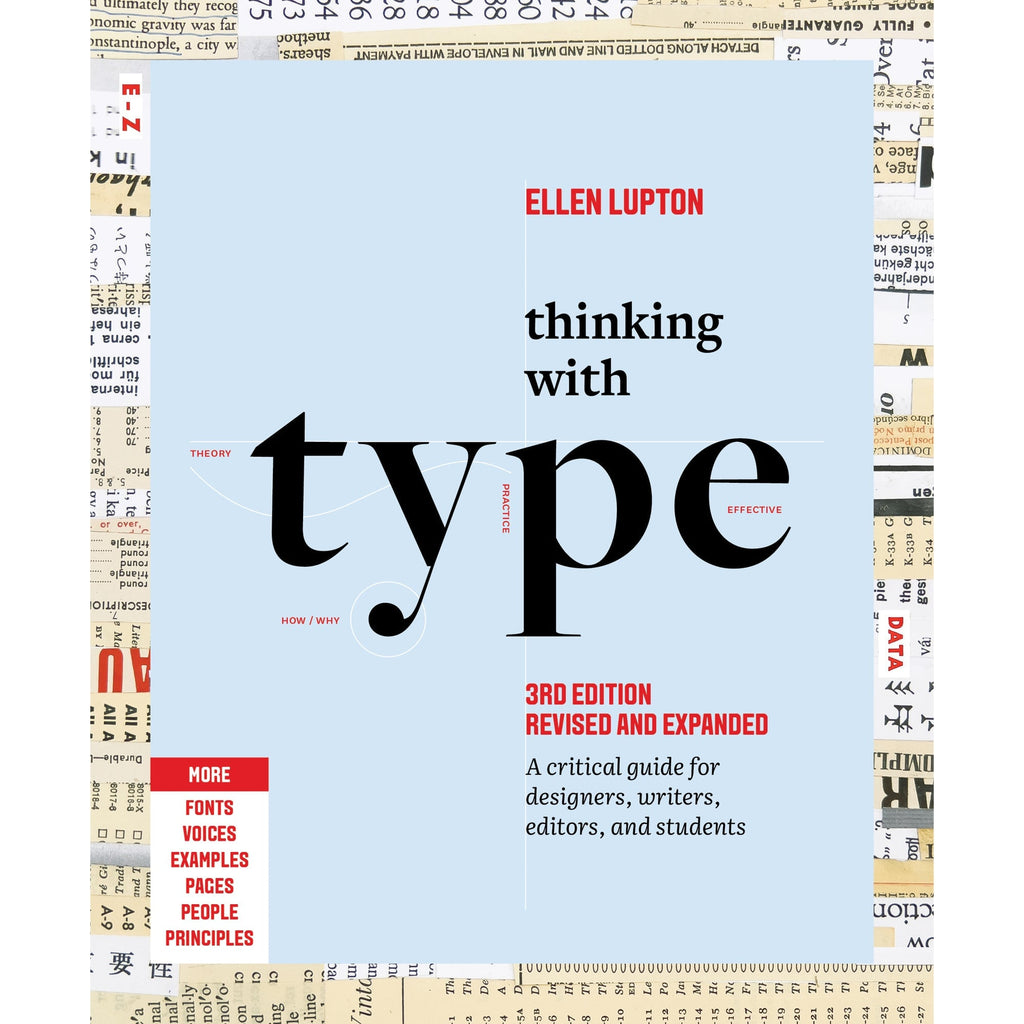
Thinking with Type
The essential and bestselling guide to typography from beloved design educator Ellen Lupton—revised and expanded to include new and additional voices, examples, and principles, and a wider array of typefaces. "Thinking with Type is to typography what Stephen Hawking's A Brief History of Time is to physics."—I Love TypographyThe bestselling Thinking with Type in a revised and expanded third edition: This is the definitive guide to using typography in visual communication. Covering the essentials of typography, this book explores everything from typefaces and type families to kerning and tracking to grids and layout principles.Ellen Lupton provides clear and focused guidance on how letters, words, and paragraphs should be aligned, spaced, ordered, and shaped. Historical and contemporary examples of graphic design show how to learn the rules and how to break them. Critical essays, eye-opening diagrams, helpful exercises, and dozens of examples and illustrations show readers how to be inventive within systems that inform and communicate.Featuring 32 pages of new content, the third edition is revised and refined from cover to cover: More fonts: old fonts, new fonts, weird fonts, libre fonts, Google fonts, Adobe fonts, fonts from independent foundries, and fonts and lettering by women and BIPOC designersIntroductions to diverse writing systems, contributed by expert typographers from around the worldDemonstrations of basic design principles, such as visual balance, Gestalt grouping, and responsive layoutCurrent approaches to typeface design, including variable fonts and optical sizes; tips for readability, legibility, and accessibility; and stunning reproductions from the Letterform Archive Thinking with Type is the typography book for everyone: designers, writers, editors, students, anyone who works with words on page or screen, and enthusiasts of type and lettering. Readers will also love Ellen Lupton's book Extra Bold: A Feminist, Inclusive, Anti-racist, Nonbinary Field Guide for Graphic Designers. Ellen Lupton is a designer, writer, and educator. She has written numerous books about graphic design, including Thinking with Type, Graphic Design Thinking, and Extra Bold: A Feminist, Inclusive, Anti-racist, Nonbinary Field Guide for Graphic Designers. She teaches in the Graphic Design MFA program at Maryland Institute College of Art in Baltimore (MICA), where she proudly serves as the Betty Cooke and William O. Steinmetz Design Chair. She is Curator Emerita at Cooper Hewitt, Smithsonian Design Museum in New York City, where her exhibitions included Herbert Bayer: Bauhaus Master and The Senses: Design Beyond Vision. Lupton loves reading, writing, teaching, and learning new things about design.
The Type Founders (@thetypefounders.bsky.social)
We built Typographer because finding the right font shouldn’t mean hunting down trials across dozens of foundry sites. A year after launch, we’re making it even more accessible: 38+ independent foundries in one place, now free to join.

An interactive introduction to the terrific experience of rendering Arabic typography and its technical debt
This post was discussed in Lobsters and HackerNews

What’s Happening to Reading?
For many people, A.I. may be bringing the age of traditional text to an end.

What’s Happening to Reading?
For many people, A.I. may be bringing the age of traditional text to an end.
Butterick’s Practical Typography

Typography Is Not About You. Neither Is Your Product.
Yesterday I used Google Flights to compare routes, adjust dates, and pick a flight, all in a couple of minutes. I didn’t stop to appreciate any of it. I just made a decision and moved on. Tha…

The Title Cards in Blade Runner Are Fucking Amazing
Appreciating typography is a study in paradox. The primary goal of well-designed typography is to help you read the words, not appreciate how the words are comp
Weaver - Long-form writing
I grew up, like a lot of people on Bluesky, in the era of the internet where most of your online social interactions took place via text. I had a MySpace account, MSN messenger and Google Chat, I first got on Facebook back when they required a school email to sign up, I had a Tumblr, though not a LiveJournal. I was super into reddit for a long time. Big fan of Fanfiction.net and later Archive of Our Own.
The Punch — Typography, organized by who made it
A curated directory of independent type foundries. Discover the designers behind your favorite fonts.
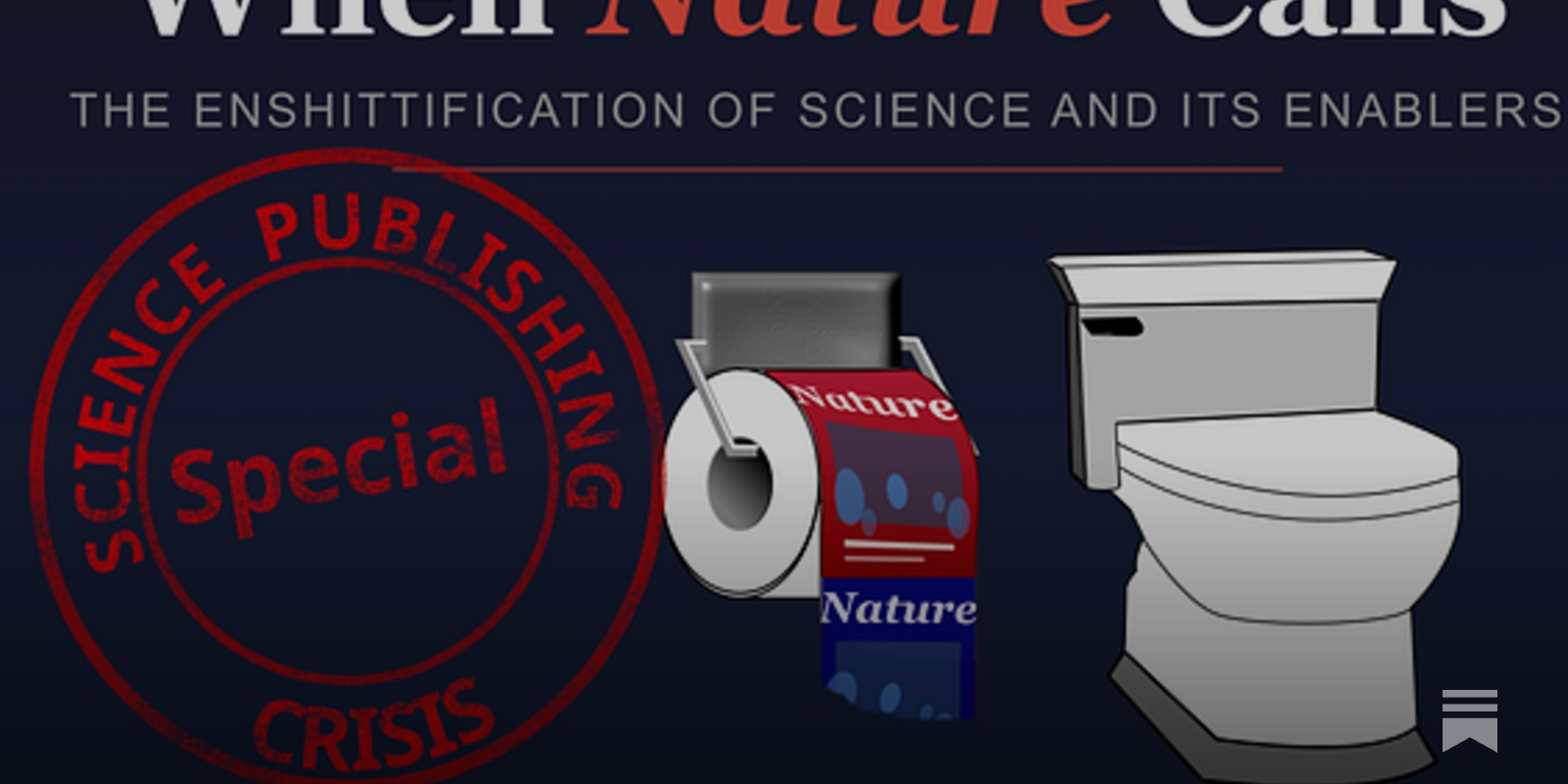
When Nature Calls: The Enshittification of Science and Its Enablers
Proof-of-work papers, policy laundering, and the collapse of self-correction
Ness Letters: Why Originality is Overrated
The Ness Letters are a weekly newsletter by Ness Labs, exploring how we can think better, work smarter, and live happier.
Announcing: Navigating the AI Shift
Image credit: Joe Groove For a lot of people, AI started out as a net negative. You’re reviewing documents someone couldn’t be bothered to write themselves. You’re having your tim…

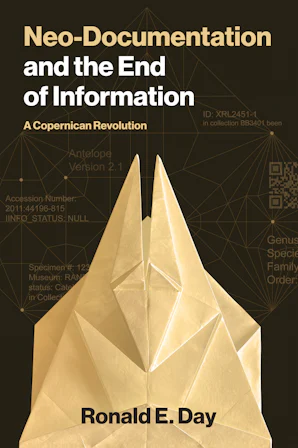
Neo-Documentation and the End of Information
Ronald Day’s Neo-Documentation and the End of Information critiques the modern conception of information as representational “content.” The...
Scientific production in the era of Large Language Models
Large Language Models (LLMs) are rapidly reshaping scientific research. We analyze these changes in multiple, large-scale datasets with 2.1M preprints, 28K peer review reports, and 246M online accesses to scientific documents. We find: 1) scientists adopting LLMs to draft manuscripts demonstrate a large increase in paper production, ranging from 23.7-89.3% depending on scientific field and author background, 2) LLM use has reversed the relationship between writing complexity and paper quality, leading to an influx of manuscripts that are linguistically complex but substantively underwhelming, and 3) LLM adopters access and cite more diverse prior work, including books and younger, less-cited documents. These findings highlight a stunning shift in scientific production that will likely require a change in how journals, funding agencies, and tenure committees evaluate scientific works.

1. We—@eduede.bsky.social, @mjcrockett.bsky.social, Kevin Gross, and I—have a new preprint on the arXiv today, based on ideas that emerged during an @sfiscience.bsky.social workshop in November 2024: The unintended consequences of large language models as a labor-augmenting technology in science.

The unintended consequences of large language models as a labor-augmenting technology in science
arxiv.org