

Political extremism is often attributed to voter anger and broader structural socioeconomic conditions. From this perspective, efforts to counter extremist movements may appear futile, since such groups are seen as deeply embedded in the contexts from which they arise. But is this necessarily the case? To address this question, we examine the Papal condemnation of an influential far-right movement in interwar France.
En Europe, 20 ans d'activisme extra-parlementaire de l’extrême droite
À travers le projet de recherche européen de l’Observatoire des protestations d’extrême droite en Europe (FARPO), Caterina Froio et Pietro Castelli Gattinara, chercheurs en sciences politiques,

Les Néo-fascismes européens et les mondes arabo-musulmans
Stéphane François et Nicolas Lebourg, « Le courant nationaliste-révolutionnaire et les mondes arabo-musulmans, de Maurice Bardèche à Christian Bouchet », Bernard Bruneteau et Yves Santamaria dir., …

The new right: Anatomy of a global political revolution – European Council on Foreign Relations
The thinkers and ideas of the rising nationalist right merit the political mainstream's attention. Only by understanding them can it build a resilient counter-p

American Fascists: The Christian Right and the War on A…
Twenty-five years ago, when Pat Robertson and other rad…

En finir avec le concept de pureté militante - Engrainage
Le concept de pureté militante fait débat. Le plus souvent il renvoie à une injonction à maintenir une ligne de conduite irréprochable au sein de groupes militants, souvent basée sur des normes de langage et de comportement. Un concept flou derrière lequel on retrouve de nombreux mécanismes sociaux comme des dynamiques de domination, d’exclusion ou encore d’individualisation des luttes. En parallèle, la pureté militante est aussi instrumentalisée. Elle est effectivement utilisée comme défense par les personnes accusées de comportements ou d’actions oppressives en affirmant que les critiques reçues s’assimilent à de la pureté militante. Ce qui induit notamment une certaine silenciation de la critique politique. Le manque de définition claire autour de ce terme empêche de nommer précisément les problématiques et de s’en saisir concrètement. Ce flou laisse place aussi à des abus d’utilisation voire de l’instrumentalisation.
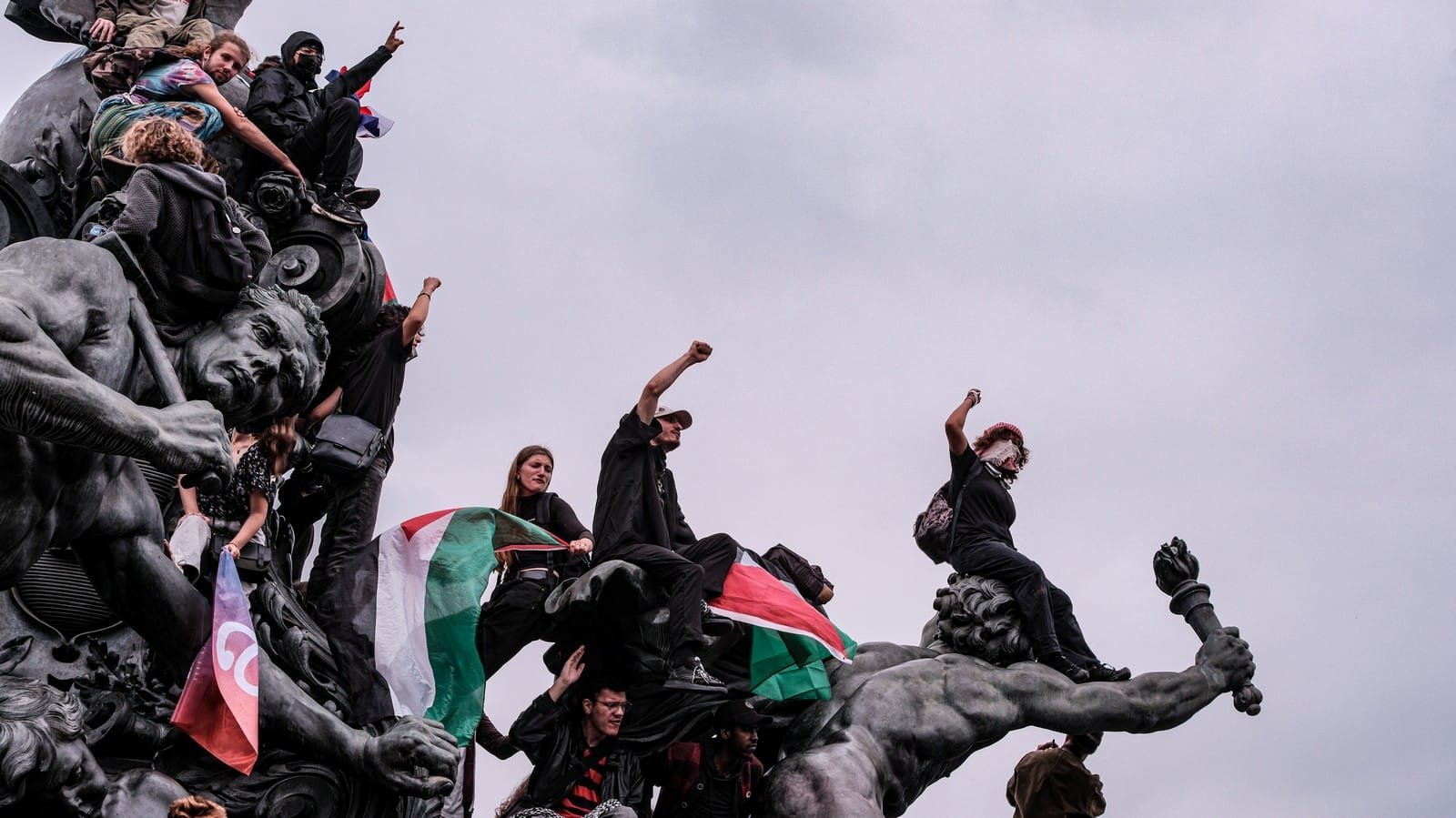
The thinking style that makes people vulnerable to extremism | Psyche Ideas
The people most drawn to ideological thinking and authoritarianism aren’t aware of what makes them so susceptible

Les récidivistes - AOC media
Agiter le chiffon rouge de la montée du nazisme reste une vaine superstition si l’on persiste dans les erreurs historiques – faire porter la responsabilité sur les classes populaires et le suffrage universel. Le parallèle avec aujourd’hui est à situer du côté d’une oligarchie soucieuse de barrer la route à la gauche, y compris sociale-démocrate, et qui ne tient plus compte du résultat des législatives. Il n’y a pas de déterminisme à la montée des fascismes : c’est le résultat d’un choix.
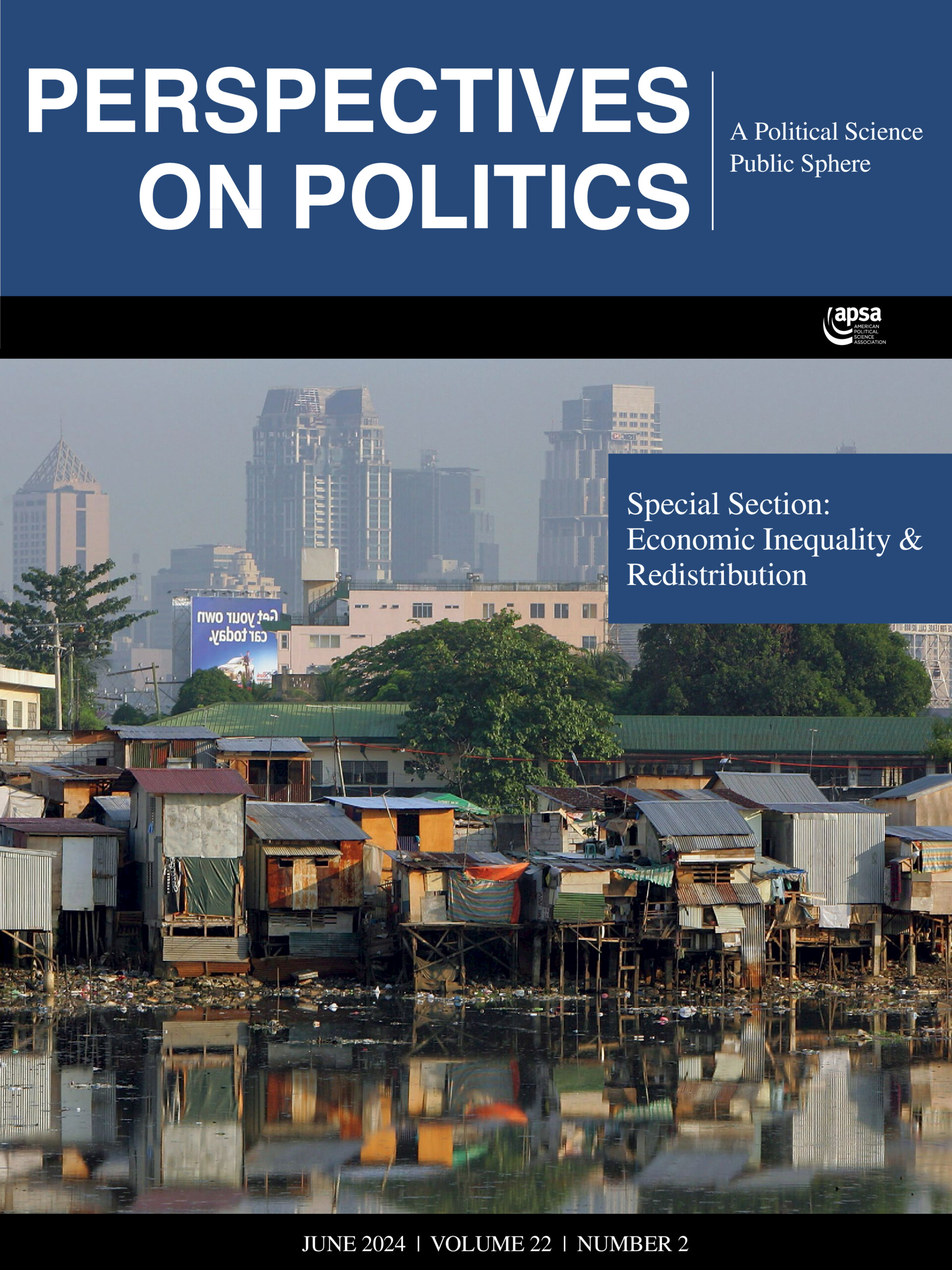
It’s Not Polarization; It’s the Radicalization of the Political Right
Polarization has become the master concept for diagnosing contemporary democratic crises. The notion denotes three features: symmetry between parties, politics as an opinion space where positions diverge, and mutual repulsion between opposing camps. Yet none of these capture current realities. Across democracies, the central dynamic is not two poles drifting apart but the transformation of the political right into authoritarianism, norm breaking, and openness to political violence. Social democratic and center-right parties tend to respond in the opposite way from what “polarization” implies: by accommodating rightward. Attempts to salvage the polarization frame with modifiers (“asymmetric,” “affective,” “sectarian,” “pernicious”) concede these realities but risk hollowing out the concept’s definitional core. These limitations reveal a deeper misdiagnosis: when one party turns antidemocratic and illiberal, incivility and conflict are inevitable—but they are symptoms, not the root problem. Misdiagnosing them as the central issue leads to viewing civility and compromise as remedies, thereby risking the legitimation of authoritarian actors. This article proposes an alternative lens: the radicalization of the political right. Developed in the study of extremism, the radicalization framework better captures asymmetric change, identity-driven politics, and the mainstreaming of illiberalism. It foregrounds identity fusion, threat narratives, elite entrepreneurship, and escalation. Concepts are never politically innocent and persisting with “polarization” risks both misdiagnosing and normalizing authoritarian threats.
It’s Not Polarization; It’s the Radicalization of the Political Right
Polarization has become the master concept for diagnosing contemporary democratic crises. The notion denotes three features: symmetry between parties, politics as an opinion space where positions diverge, and mutual repulsion between opposing camps. Yet none of these capture current realities. Across democracies, the central dynamic is not two poles drifting apart but the transformation of the political right into authoritarianism, norm breaking, and openness to political violence. Social democratic and center-right parties tend to respond in the opposite way from what “polarization” implies: by accommodating rightward. Attempts to salvage the polarization frame with modifiers (“asymmetric,” “affective,” “sectarian,” “pernicious”) concede these realities but risk hollowing out the concept’s definitional core. These limitations reveal a deeper misdiagnosis: when one party turns antidemocratic and illiberal, incivility and conflict are inevitable—but they are symptoms, not the root problem. Misdiagnosing them as the central issue leads to viewing civility and compromise as remedies, thereby risking the legitimation of authoritarian actors. This article proposes an alternative lens: the radicalization of the political right. Developed in the study of extremism, the radicalization framework better captures asymmetric change, identity-driven politics, and the mainstreaming of illiberalism. It foregrounds identity fusion, threat narratives, elite entrepreneurship, and escalation. Concepts are never politically innocent and persisting with “polarization” risks both misdiagnosing and normalizing authoritarian threats.
Indextreme.fr
Indextrême : Observer, répertorier et connaître les symboles graphiques du fascisme en France.

Non, la France ne va pas faire faillite
EDITORIAL - Même si la France peine à réduire son endettement, les marchés financiers sont rassurés par l’absence de partis extrêmes au gouvernement et sont convaincus du soutien de la Banque centrale européenne.

L’antisémitisme et la réforme de la Bourse de Paris (1893-1898)
Les réformes de la Bourse de Paris entre 1893 et 1898 sont l’occasion de manifestations d’antisémitisme qui peuvent ne guère surprendre dans le contexte de l’époque. Les partisans du monopole des agents de change traitent de juifs les membres du marché libre (les coulissiers) qui le remettent en cause. Au-delà de la défense conservatrice d’une corporation privilégiée et de sa contestation libérale, cet épisode permet de mieux comprendre que ce sont deux conceptions du marché financier toujours actuelles qui sont en cause. Les coulissiers privilégient la liquidité, la rapidité d’exécution, les financiers professionnels et les échanges internationaux, au prix éventuellement d’une moindre sécurité et d’une moindre égalité dans l’échange, au détriment sans doute des petits boursicoteurs et de la stabilité du marché. Les agents de change avaient des priorités inverses. Le débat s’enrichit de l’émergence d’une tierce position socialiste qui renvoie dos à dos libéraux et conservateurs pour proposer une Bourse service public privilégiant transparence et sécurité sans que ce soit au profit d’un groupe privilégié, position qui, sans prévaloir, annonce de nouvelles conceptions de l’économie de marché., The reforms of the Paris Stock Exchange between 1893 and 1898 gave rise to manifestations of antisemitism that were very much of their time. Supporters of the stockbrokers’ monopoly branded their opponents who participated in the free market (known as coulissiers) as Jews. Beyond the conservative defense of a privileged guild and its liberal contestation, this episode illuminates two conceptions of the financial market that are still current today. The coulissiers favored liquidity and speed of execution, professional financiers, and international exchanges, potentially at the cost of trading security and equality, and to the detriment of small traders and market stability. The official brokers (agents de change) had opposite priorities. The debate was complexified by the emergence of a third, socialist position that rejected both liberal and conservative visions, proposing a public-service stock exchange that would favor transparency and security without benefiting a privileged group. Although this position did not win out, it nevertheless heralded new conceptions of the market economy.
Les motifs de la confiance (et de la défiance ) politique : intérêt, connaissance et conviction dans les formes du raisonnement politique
Le rapport de confiance ou de défiance unissant les citoyens à la politique se nourrit d’une variété de facteurs relatifs à la position sociale des citoyens, à la mise en cause de leurs intérêts par les politiques publiques comme à leur perception normative de l’univers politiques. En se fondant sur un matériel qualitatif composé de groupes de discussion réunissant des citoyens français faiblement politisés, cette contribution vise à cerner les motifs argumentatifs de la confiance et de la défiance politique. Leurs propos expriment un rapport au politique construit de façon endogène, à dimension fortement normative et manifestant une capacité argumentative fondée sur différents types de principes.
Very interesting mapping of far right in France—many of whom resonate with Kremlin talking points when speaking to a French audience. I wish someone posts a similar thread in English, giving more "so-what" answers to a broader, beyond-France, public. HT to @fugitivamel.bsky.social

LinkED
Après plusieurs mois de travail, nous lançons officiellement @Link-ed.info @Link-ed.info est un projet visant à cartographier la galaxie d’ #extrêmedroite à l’oeuvre pour porter au pouvoir le Rassemblement national. link-ed.info
‘Polarization’ has become the master concept for diagnosing our current democratic crisis. But this is not polarization. It is the radicalization of the political right. By misdiagnosing it, we risk becoming complicit in the crisis. 🧵 Just out in Perspectives on Politics doi.org/10.1017/S1537592726105246

