UC Riverside is the nation’s leader for social mobility with a diverse & inclusive community pioneering research with impacts around the globe.
Connecting Research with Community - Civic Innovation Lab
Welcome to Civic Innovation Lab, where we drive social impact through collaborative solutions and empower communities. Join us in fostering sustainable development, co-creating initiatives, and advancing inclusive governance for a better future.

This big university system is embracing AI. Students and faculty aren't all on board
The California State University system offers an early look at what happens when an administration commits to a technology that its own community isn't convinced will improve education.

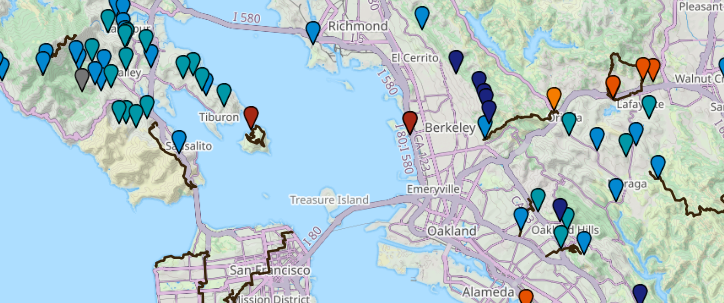
Community Memory in Berkeley, California 🗺️
Sustainability
The sustainable University – structures, individuals and questions around institutional transformation
Home | Future Cities Institute founded by Caivan
Fostering healthy, prosperous future cities and communities.

The Color of Power — Oakland Public Library
The Color of Power — Douzet, Frédérick — <p></p><p> <i>The Color of Power </i>is a fascinating examination of the changing politics of race in Oakland, California. Oakland has been at the forefront of California’s multicultural changes for decades. Since the 1960s, the city has been a shining example of a fruitful liberal black-and-white political partnership and the successful incorporation of black politicians into the political landscape. But over the past forty years, the balance of power has changed as a consequence of dramatic demographic trends and economic circumstances. The city’s formerly dominant biracial political machine has been challenged by the demands of new multiracial interests.</p><p></p><p>The city, once governed by a succession of black mayors and majority black city councils, must now accommodate rapidly growing Asian and Latino communities. While the black-led coalition still relies on white progressive support, this alliance has weakened due to a shift in the progressives’ agenda and the voting habits of the black community, the rise of a Hispanic-Asian coalition, and a strong demographic decline of the African American population. With similar demographic changes taking place across the nation, Oakland’s experience provides insight in to the multiracial future of other American cities.</p><p></p><p> <i>The Color of Power</i> investigates Oakland’s contemporary racial politics with a detailed study of conflicts over issues like education, elections and political representation, and crime. Trained as a journalist, a political scientist, and a geographer, the author provides a unique perspective supported by numerous maps and extensive interviews.</p><p>Winner of awards from the French Society of Geography and the French National Academy of Sciences</p><br/>Trained as a journalist, a political scientist, and a geographer, the author provides a unique perspective supported by numerous maps and extensive interviews.<p>Winner of awards from the French Society of Geography and the French National Academy of Sciences</p>
Civic, Citizen and Grassroots Science: Towards a Transformative Scientific Research Model | Request PDF
Request PDF | On Jan 1, 2013, Jessica McCallum Breen and others published Civic, Citizen and Grassroots Science: Towards a Transformative Scientific Research Model | Find, read and cite all the research you need on ResearchGate

'Mau Mau Tech': The Making of a Black University in Oakland, California, 1960-1970 : Indybay
Mau Mau Tech' looks at efforts to form a Black University in Oakland, California in the late 1960s and early 1970s.

Hiking by Transit
Transit-accessible hikes, parks, and trailheads across California.
What It Means for Universities to Run Their Own PDS: The Potential of DID as Academic Infrastructure - Nightflight
Fragmented Identity Researchers' identities are fragmented. Grant IDs, ORCID, institutional email addresses, ResearchGate, Google Scholar, and various socia…
A City for Children — Oakland Public Library
A City for Children — Gutman, Marta, — American cities are constantly being built and rebuilt, resulting in ever-changing skylines and neighborhoods. While the dynamic urban landscapes of New York, Boston, and Chicago have been widely studied, there is much to be gleaned from West Coast cities, especially in California, where the migration boom at the end of the nineteenth century permanently changed the urban fabric of these newly diverse, plural metropolises. In A City for Children Marta Gutman focuses on the use and reuse of everyday buildings in Oakland, California, to make the city a better place for children. She introduces us to the women who were determined to mitigate the burdens placed on working-class families by an indifferent industrial capitalist economy. Often without the financial means to build from scratch, women did not tend to conceive of urban land as a blank slate to be wiped clean for development. Gutman shows how, over and over, women instead turned private houses and even a saloon in Oakland into orphanages, kindergartens, settlement houses, and day care centers, and in the process built the charitable landscape--a network of places that was critical for the betterment of children, families, and public life. The industrial landscape of Oakland, riddled with the effects of social inequality and racial prejudice, is not a neutral backdrop in Gutman's story but an active player. Spanning one hundred years of history, A City for Children provides a compelling model for building urban institutions, and it demonstrates that children, women, charity, and reform, along with incremental construction, renovations, alterations, additions, and repurposed structures, are central to the understanding of modern cities.
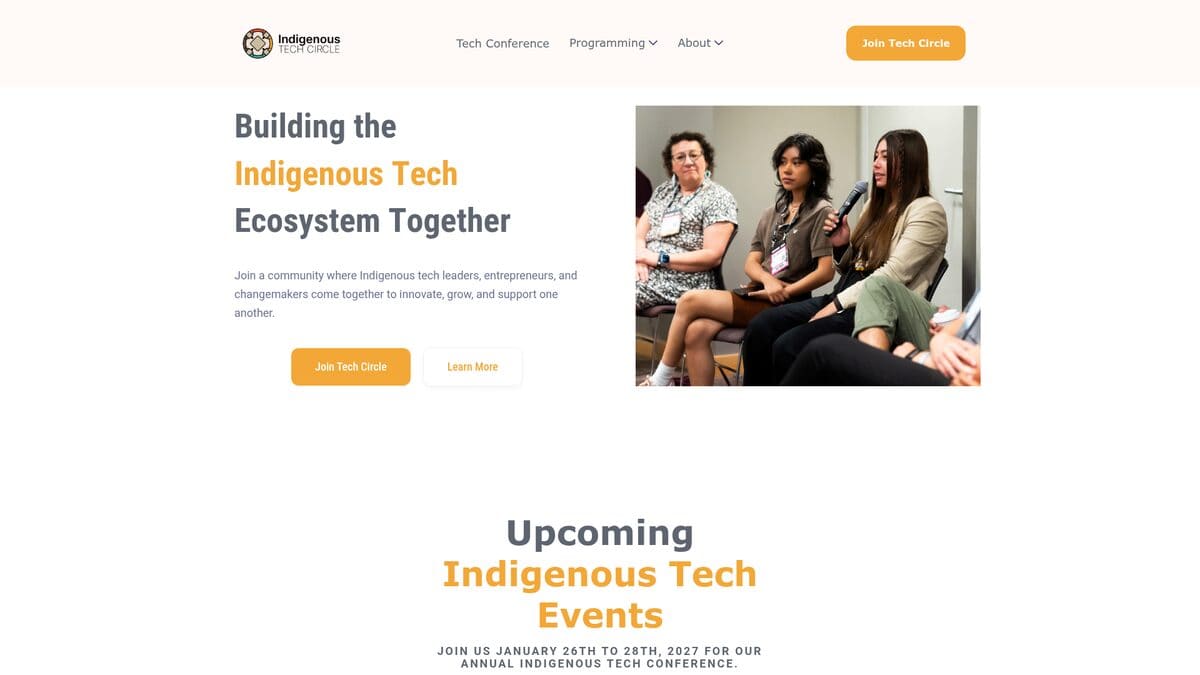
Indigenous Tech Circle | Indigenous-led Tech in Canada
Indigenous-led community connecting technologists, founders, investors, and changemakers across Canada — host of the largest Indigenous tech conference.

Relational Tech Project — Build what we need
Many of us wish our neighborhoods were more connected. We want to live in neighborhoods where we learn from the creativity, care, and skills of our neighbors — and share our gifts too.

How to Break the Academic Silo Mindset - The Community Solution Education System
What’s stopping higher education from reaching its full potential? In this episode of Radical Cooperation, Dr. Michael Horowitz sits down with Dr. Beronda Montgomery—biologist, author of Lessons from Plants, and former Vice President for Academic Affairs and Dean at Grinnell College—to unpack why silos persist in colleges and universities, and how those divisions hold institutions […]