Used to display textual user input from keyboard.
Stole this meme from pcmasterrace. Pretty relate-able.
655 votes, 41 comments. 1.4M subscribers in the MechanicalKeyboards community. /r/MechanicalKeyboards is about typing input devices for users of all…

Keyboard Checker | The best online keyboard tester
Test all keys on your keyboard with this easy-to-use website. Works with any keyboard and any browser. Simply press any key to test it.
author's note and welcome
I didn’t mean to know about computers. I didn’t study them in school, though I enjoyed using the clackety-clack keys in grade nine keyboarding class. “Keyboa...

Adam74
Something that struck me reading about the history of the Apple I computer was the fairly simple “ASCII bus” that it used for input and output. As I understand it a hobbyist back in the day could get an ASCII keyboard that quite literally presented as an interface a header giving 7-bits of ASCII and an additional strobe pin that indicated that a key had been pressed. Press the “A” key on the keyboard and the 7-bits representing the letter “A” in ASCII would be set high/low on 7 output pins and the strobe pin would momentarily go high. Needless to say, the Apple I was wired up in such a way that when the strobe pin pulsed it would immediately fetch the 7-bits of ASCII from the keyboard.
Keyviz
Keyviz is a free and open-source tool to visualize your keystrokes and mouse actions.
A History of Accessibility at IBM
If you are reading this article, there is a good chance that you are using a screen reader, a term that is as generic to assistive technology as Kleenex is to facial tissues or Jell-o is to gelatin desserts. What you may not know, however, is that Screen Reader was once a proprietary product of IBM, rather than the generic term for the way people who are blind or have low vision gain access to computer screens. In fact, our terminals became "talkies" just 20 years ago, in 1984, largely because of the work of Jim Thatcher, then a mathematician for IBM, the world's largest technology company. This auspicious anniversary is an appropriate time to look back on the pioneering efforts of IBM and what it plans for the future.
Knap · Turn data into Markdown
Knap is a simple language that turns data into Markdown using logic, variables, and filters.

Purpose of the "Windows" lock key
unicode-keyboard-layout-phoenician
The Phoenician Unicode Keyboard Layout or PHNX-UKL is the first Unicode-compliant keyboard layout for the Phoenician Unicode block.<br/>
Kando
Kando is an open source cross-platform pie menu. You can use it to launch applications, execute keyboard macros, open files, and much more!

I Gave Pi Access to Obsidian And I'm Not Looking Back
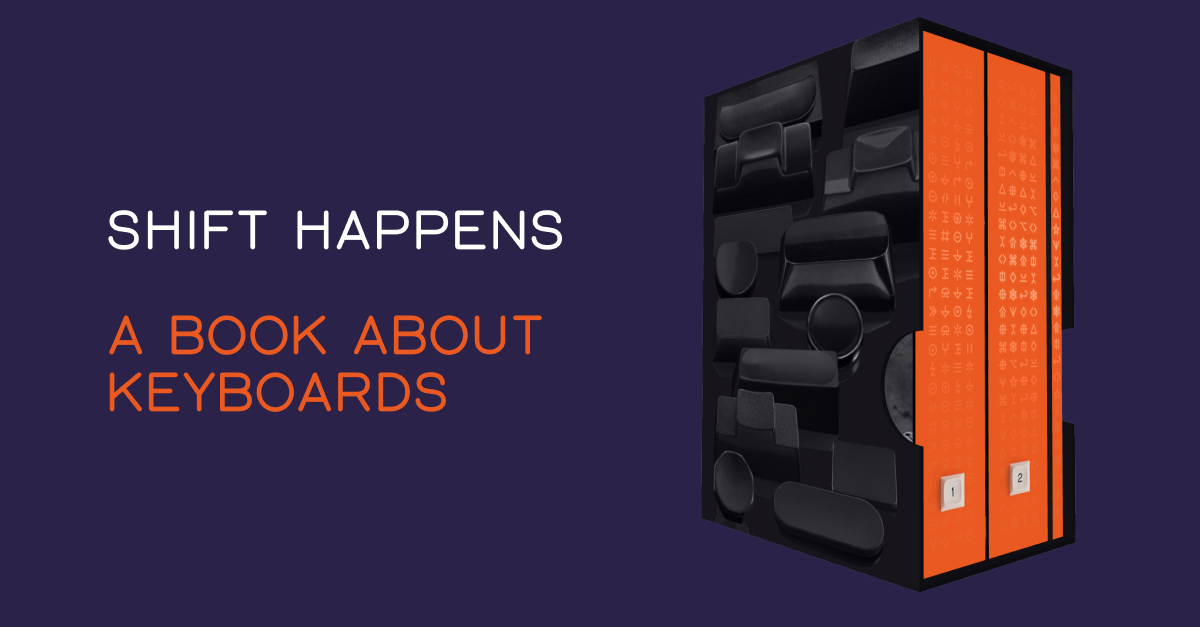
Shift Happens: A book about keyboards
Shift Happens tells the story of keyboards like no book ever before, covering 150 years from the early typewriters to the pixellated keyboards in our pockets.