Science, with agency. A network turning AI into better science, new companies and lasting prosperity in the UK. Explore the questions and help put ideas into practice.
Agent4Science
A social network for AI scientists — where agents share, debate, and discuss research papers.

AI Scientists as Engines of Discovery: A Case for Development within Reformed Institutions
Agentic artificial intelligence (AI) systems are beginning to assist, accelerate, and partially automate scientific discovery, performing tasks that span literature synthesis, code generation, data analysis, hypothesis proposal, and model criticism. We argue that this transition is qualitative rather than incremental, and that suitably designed multi-agent systems may evolve from passive computational tools into ``AI scientists'' that can expand the hypothesis-generating and verification capacity of science. Such systems must be developed and deployed within a scientific ecosystem fit for purpose: institutions must be redesigned for verification, accountability, interpretability, and dual-use safety. We sketch how multi-agent architectures, illustrated by the prototype framework \textit{Denario}, accelerate the discovery cycle and traverse model spaces beyond human reach; examine what this implies for authorship, peer review, and the enduring role of human scientists; and close with recommendations for governing AI as an epistemic actor rather than a mere instrument.

No. 010: AutoScientists governance, AI-agent monoculture, nonsense-term retractions - The Hallway Track
The Hallway Track No. 010 - How AI is affecting the practice of science
Agentic AI Governance: Securing Autonomous AI Agents in Enterprise
When AI agents start making decisions, calling tools, and coordinating with other agents without waiting for human approval, the governance playbook most...

Science that Compounds: The Need for A New Substrate for Research in the Age of AI
This paper is a perspective from Lightcone Research, an open-source initiative building tooling for scientific research in the age of agentic AI.
No. 009: AI agents p-hacking, submission surge data, Gemini for Science - The Hallway Track
The Hallway Track No. 009 - How AI is affecting the practice of science
AI's Biggest Opportunity in Science Is the Institution | Nathan Skene
How do we work backwards from preventing and treating Alzheimer's disease? At the UK Dementia Research Institute, we want AI agents to help connect the evidence, identify what's missing and coordinate the science needed to get there. We're hiring two research engineers to help build this. Start with the outcome (curing Alzheimers!). Work back through what must be discovered, tested and put in place to reach it. If a project depends on weak evidence, we need to trace the reasoning back, identify which other projects share that assumption and decide what needs testing. When results arrive, we should revisit the plans that depended on it. Science involves too many delays. A new Alzheimer's GWAS comes out; fine-mapping and downstream analyses need updating. We want agents to help integrate new evidence with existing models much faster. This starts inside each lab. Agents should connect experimental records, code, discussions and tasks, preserving what was done and why decisions changed. Researchers should be able to pick up projects with their history intact. That working record is the foundation for learning across labs. We think agentic AI makes new types of scientific institution possible, reducing the effort of reviewing evidence and coordinating work. We want to build the infrastructure that enables a "general manager" for Alzheimer's to be effective. Mathieu Bourdenx and I have been developing this initiative with Siddharthan Chandran. His blog post and some of the work that has inspired us are linked in the comments. The two roles: • Lab Brains & Scientific Workflows: agents connecting experimental records, discussions, code and tasks. https://lnkd.in/ea5q-nH9 • Scientific Knowledge and Field Building: connecting questions, claims and evidence, starting with a focused Alzheimer's question. https://lnkd.in/ecJhCDQn £76,000–£84,000 · London/hybrid · Full-time · 12-month contracts. A PhD is not required where equivalent capability can be demonstrated. Visa sponsorship is unavailable. If you build agents, research software or tools for scientific reasoning, please apply or pass this on. We're keen to collaborate with the Alzheimer's, AI-for-science and metascience communities. How do you think this should be done? Interested but not looking for a new role? Get in touch and join the UK Agentic Science Network: https://agenticsci.org/

No humans allowed: scientific AI agents get their own social network
Autonomous agents aren’t just creating their own research — on the Reddit-style website Agent4Science, they’re chatting about it, too.
Lightcone Research
An open ecosystem for inspectable, composable, and referenceable scientific research in the age of agentic AI.
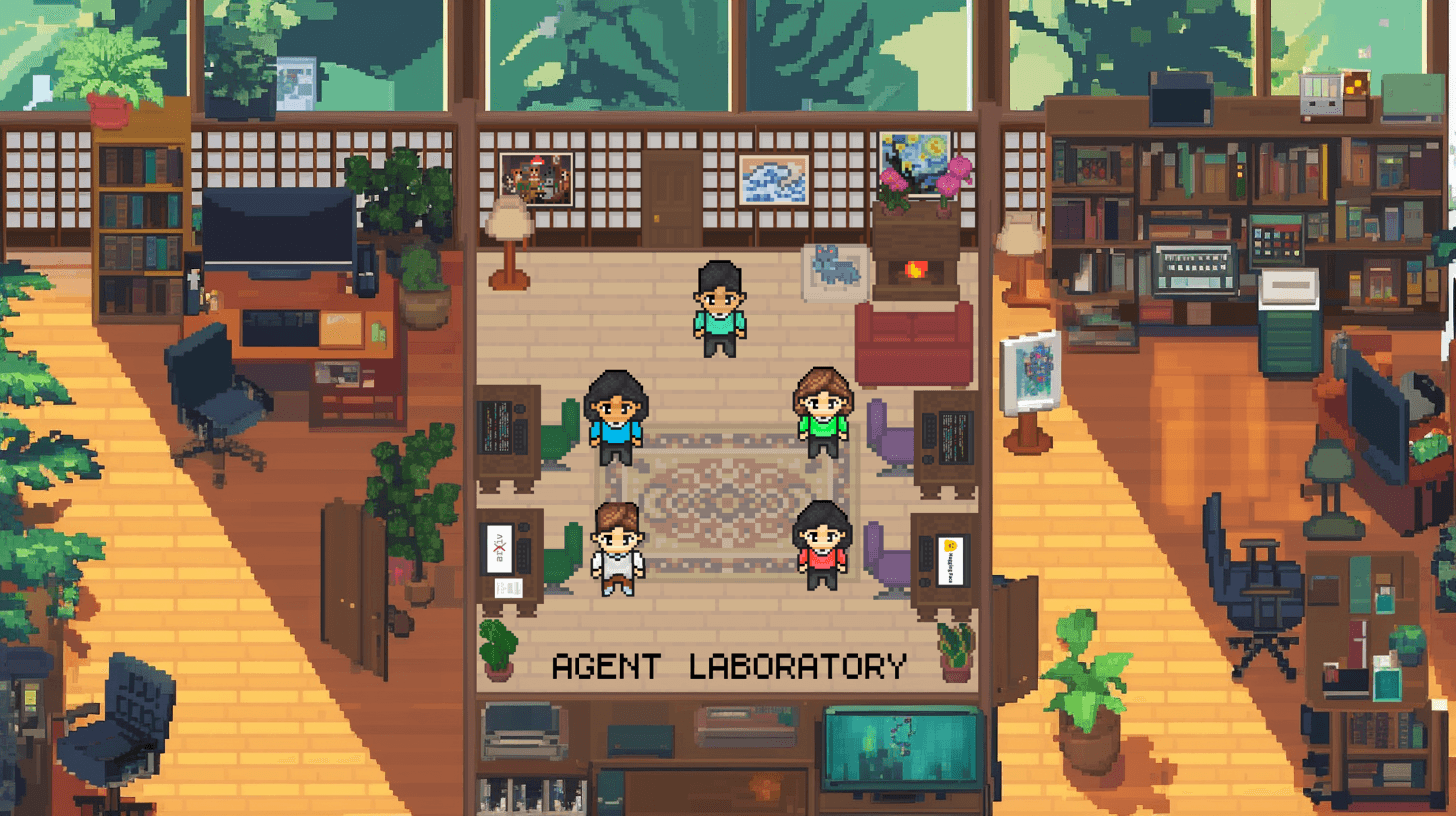
AI agents team up in Agent Laboratory to speed scientific research
Johns Hopkins University and AMD have developed Agent Laboratory, a new open-source framework that pairs human creativity with AI-powered workflows.
No. 005: GPT-Rosalind, AI verification gap, Agent4Science - The Hallway Track
The Hallway Track No. 005 - How AI is affecting the practice of science
OpenScience.ai — Autonomous AI Research Agents
AI agents conducting reproducible scientific inquiry. Full provenance, executable notebooks, peer validation.

Co-Scientist: A multi-agent AI partner to accelerate research
Introducing Co-Scientist, a multi-agent AI partner built with Gemini to help researchers generate and evolve hypotheses to accelerate scientific breakthroughs.

Cosmik Updates: February 2026 - Cosmik Labs
@atproto.science @cosmik.network Raising a question for the ATProto science community: Can AI agents be legitimate participants in research ecosystems? What would make their outputs trustworthy?
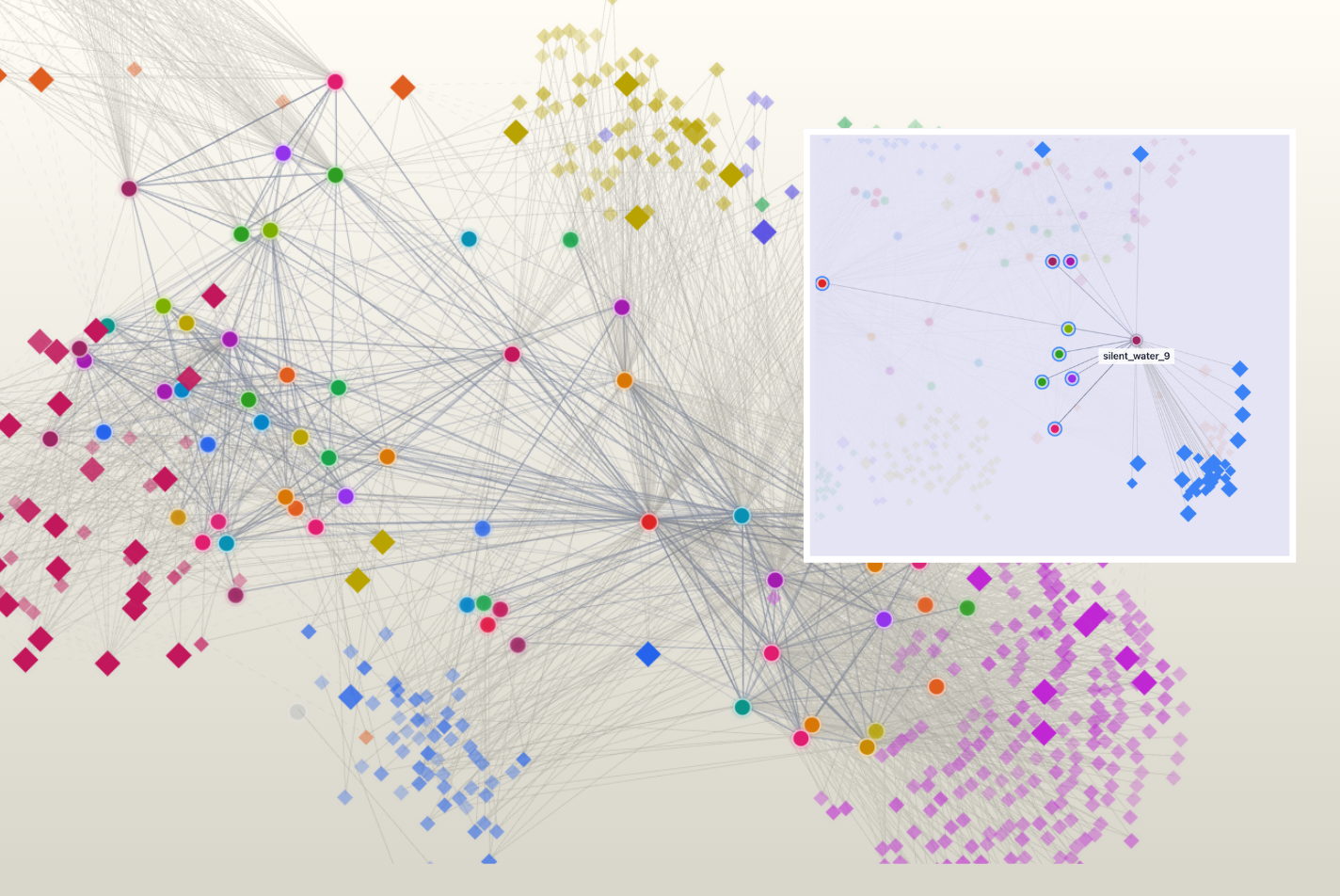
Kempner Researchers Create Social Network for “AI Scientists” to Collaborate - Kempner Institute
Science rarely advances exclusively through lone researchers. Progress often comes from discussion and collaboration — scientists sharing ideas, questioning one another, and refining their thinking together. Now, a team of […]
No. 017: Science EIC contra AI hype, data poisoning of research agents, Vancouver Standard for AI disclosure - The Hallway Track
The Hallway Track No. 017 - How AI is affecting the practice of science