A world without prisons? Ridiculous. Schools that foster the genius of every child? Impossible. Work that doesn’t strangle the life out of people? Naive. A society where everyone has food, shelter, love? In your dreams. Exactly. Ruha Benjamin, Princeton University professor, insists that imagination isn’t a luxury. It is a vital resource and powerful tool for collective liberation. Imagination is her proclamation that we have the power to use our imaginations to challenge systems of oppression and to create a world in which everyone can thrive. But obstacles abound. We have inherited destructive ideas that trap us inside a dominant imagination. Consider how racism, sexism and classism make hierarchies, exploitation and violence seem natural and inevitable—but all emerged from the human imagination. The most effective way to disrupt these deadly systems is to do so collectively. Benjamin highlights the educators, artists, activists and many others who are refuting powerful narratives that justify the status quo, crafting new stories that reflect our interconnection, offering creative approaches to seemingly intractable problems. Imagination offers visionary examples and tactics to push beyond the constraints of what we think, and are told, is possible. This book is for anyone who is ready to take to heart Toni Morrison’s instruction: “Dream a little before you think.”
Imagination: a manifesto
One of The Millions's Most-Anticipated Books of Winter 2024 In this revelatory work, Ruha Benjamin calls on us to take imagination seriously as a site of struggle and a place of possibility for reshaping the future

Imagination Activism — Moral Imaginations
The term is ‘Imagination Activist’ and ‘Imagination Activism’ is protected by a Creative Commons licence, CC BY-NC 4.0 DEED.
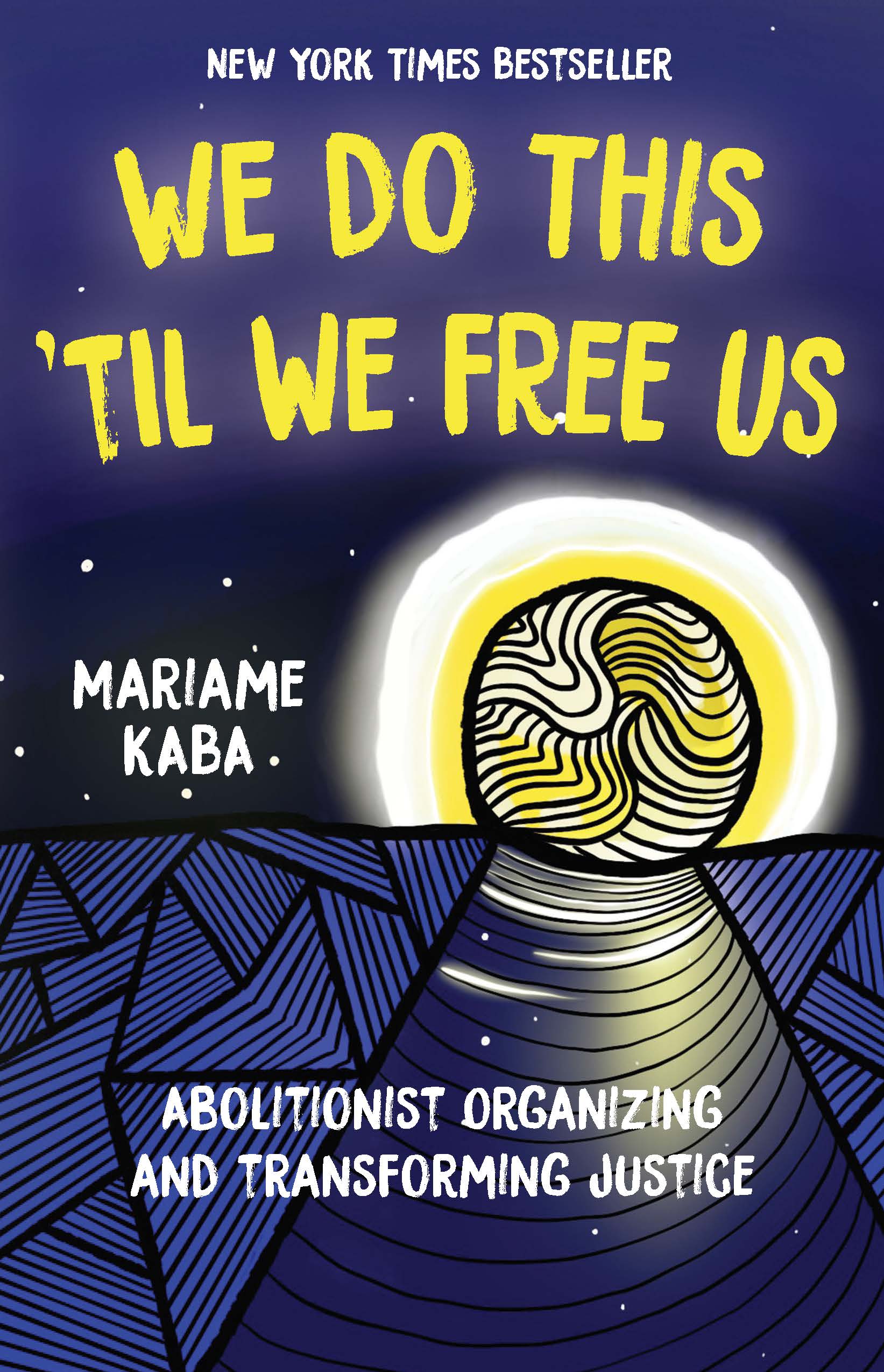
We Do This 'Til We Free Us
New York Times Bestseller “Organizing is both science and art. It is thinking through a vision, a strategy, and then figuring out who your targets are, always being concerned about power, always being concerned about how you’re going to actually build power in order to be able to push your issues, in order to be able to get the target to actually move in the way that you want to.” What if social transformation and liberation isn’t about waiting for someone else to come along and save us? What if ordinary people have the power to collectively free ourselves? In this timely collection of essays and interviews, Mariame Kaba reflects on the deep work of abolition and transformative political struggle. With a foreword by Naomi Murakawa and chapters on seeking justice beyond the punishment system, transforming how we deal with harm and accountability, and finding hope in collective struggle for abolition, Kaba’s work is deeply rooted in the relentless belief that we can fundamentally change the world. As Kaba writes, “Nothing that we do that is worthwhile is done alone.”
Early violence is a bad teacher. But the mind can learn anew | Aeon Essays
A world of violence sustains itself through guns, poverty and other social ills, but also through the minds it creates
Social Reproduction Theory: Remapping Class, Recentering Oppression
This groundbreaking collection explores the profound power of Social Reproduction Theory to deepen our understanding of everyday life under capitalism. While many Marxists tend to focus on the productive economy, this book focuses on issues such as child care, health care, education, family life and the roles of gender, race and sexuality, all of which are central to understanding the relationship between economic exploitation and social oppression. In this book, leading writers such as Lise Vogel, Nancy Fraser, David McNally and Susan Ferguson reveal the ways in which daily and generational reproductive labour, found in households, schools, hospitals and prisons, also sustains the drive for accumulation. Presenting a more sophisticated alternative to intersectionality, these essays provide ideas which have important strategic implications for anti-capitalists, anti-racists and feminists attempting to find a path through the seemingly ever more complex world we live in.

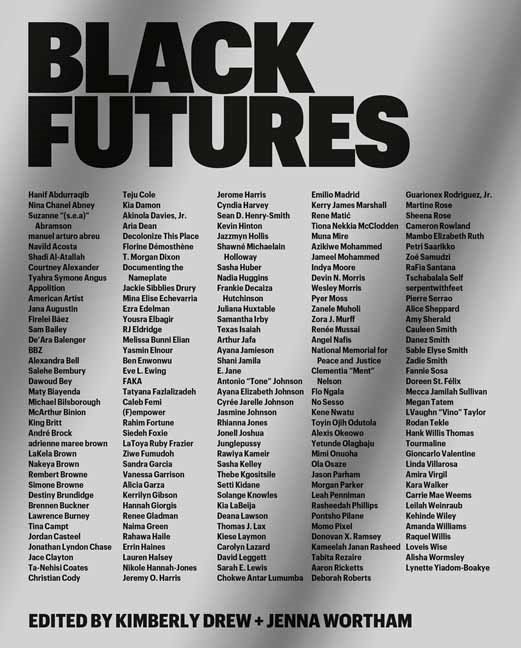
Black Futures
Check out Black Futures - <b><b>“A literary experience unlike any I’ve had in recent memory . . . a blueprint for this moment and the next, for where Black folks have been and where they might be going.”—<i>The New York Times Book Review</i> (Editors’ Choice)</b><br><br></b><i><b>What does it mean to be Black and alive right now?</b></i><br><br>Kimberly Drew and Jenna Wortham have brought together this collection of work—images, photos, essays, memes, dialogues, recipes, tweets, poetry, and more—to tell the story of the radical, imaginative, provocative, and gorgeous world that Black creators are bringing forth today. The book presents a succession of startling and beautiful pieces that generate an entrancing rhythm: Readers will go from conversations with activists and academics to memes and Instagram posts, from powerful essays to dazzling paintings and insightful infographics.<br><br> In answering the question of what it means to be Black and alive, <i>Black Futures</i> opens a prismatic vision of possibility for every reader. by Jenna Wortham and Kimberly Drew on Bookshop.org UK!
Upside Down: A Primer for the Looking-Glass World
In a series of mock lesson plans and a "program of study" Galeano provides an eloquent, passionate, funny and shocking exposé of First World privileges and assumptions. From a master class in "The Impunity of Power" to a seminar on "The Sacred Car"—with tips along the way on "How to Resist Useless Vices" and a declaration of the "The Right to Rave"—he surveys a world unevenly divided between abundance and deprivation, carnival and torture, power and helplessness. We have accepted a "reality" we should reject, he writes, one where poverty kills, people are hungry, machines are more precious than humans, and children work from dark to dark. In the North, we are fed on a diet of artificial need and all made the same by things we own; the South is the galley slave enabling our greed.
A Year of Magical Thinking
Elite impunity has fueled the fantasy that catastrophes are for other people.
Weird Studies
Professor Phil Ford and writer J. F. Martel host a series of conversations on art and philosophy, dwelling on ideas that are hard to think and art that opens up rifts in what we are pleased to call "reality."

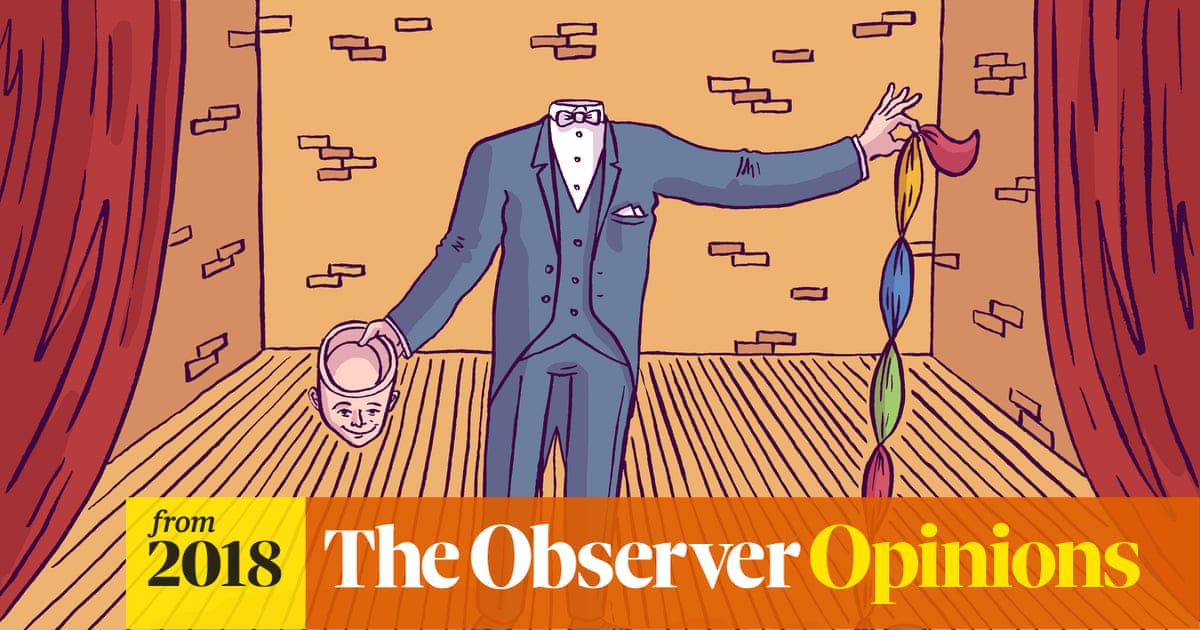
A revolution in our sense of self | Nick Chater
Psychologists have tried to plumb the depths of human motivation to make sense of our behaviour. But our inner mental world is a fiction, sustained by constant improvisation
Ecocivilization: making a world that works for all
""One of the greatest thinkers of our age" (The Guardian) presents a new way of living-one modeled on nature's design instead of capitalism's-for fans of Guns, Germs, and Steel and Doughnut Economics It has often been said that it is easier to imagine the end of the world than it is to imagine the end of capitalism-and yet that is what the historical moment urgently calls for. Climate change has reached an emergency state, inequality continues to grow, and, for many, the future has never seemed more bleak. Incremental policy improvements are no longer enough-we need a deep transformation of our current civilization to continue to survive. In Ecocivilization, leading thinker Jeremy Lent reimagines the basis of our civilization, and argues for a new global system of living, one based on life-affirming principles modeled after nature's own design. What enfolds is a robust framework incorporating Lent's own expertise, and the lived experiences of those on the ground already putting ecological civilization's core tenants into practice-justice, mutuality, diversity, and symbiosis. From the global economy to universal housing and income, from infrastructure to agriculture, every major aspect of our society could be redesigned to work together as a coherent whole, setting the conditions for all people to flourish. Ecocivilization shows how this future on a regenerated Earth is not only desirable, but entirely feasible"--

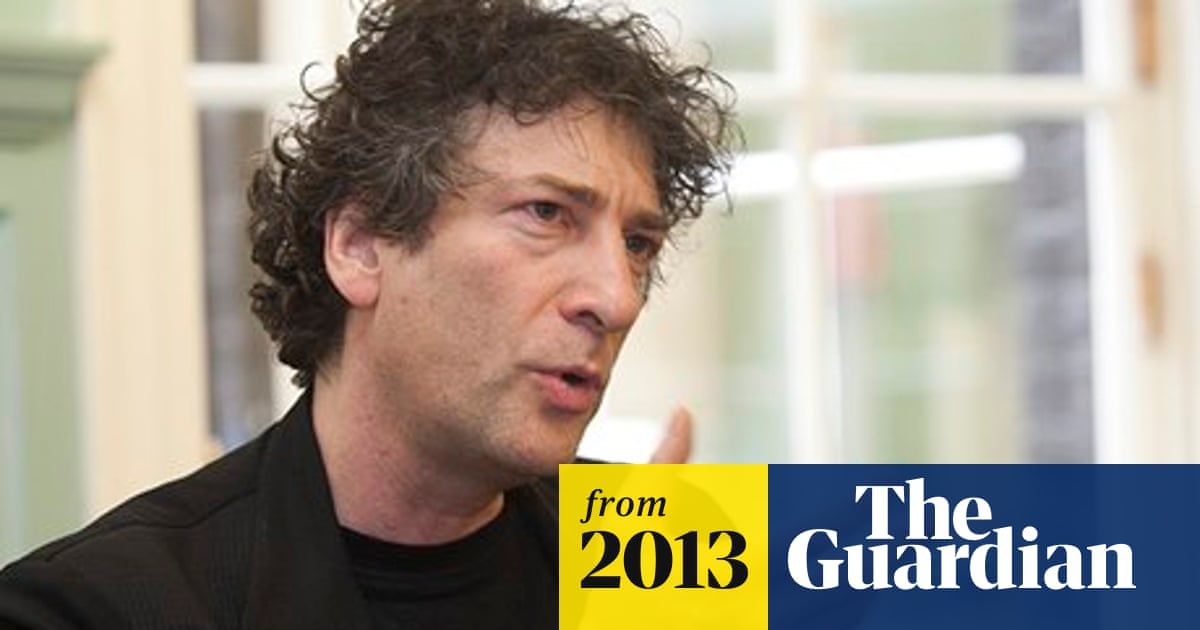
Neil Gaiman: Why our future depends on libraries, reading and daydreaming
A lecture explaining why using our imaginations, and providing for others to use theirs, is an obligation for all citizens
"To Be Thy Adam": Agency, Activism & Collective Intelligence in the Ruins of the Human
Ultra-Processed Minds: The End of Deep Reading and What It Costs Us
A reflection on the reading life. What formed it, what threatens it, and what remains.