


From Munchausen by Tiktok to wellness apps to online communities to AI, the DISCO Network explores the possibilities that technoskepticism can create. This is a book about possibility and refusal in relation to new technologies. Though refusal is an especially powerful mode—particularly for those who have historically not been given the option to say no—people of color and disabled people have long navigated the space between saying yes and saying no to the newest technologies. Technoskepticism relates some of these stories to reveal the possibilities skepticism can create. The case for technoskepticism unfolds across three sections: the first focused on disability, the creative use of wellness apps, and the desire for diagnosis; the second on digital nostalgia and home for Black and Asian users who produced communities online before home pages gave way to profiles; and the third focused on the violence inherent in A.I.-generated Black bodies and the possibilities for Black style in the age of A.I. Acknowledging how the urge to refuse new technologies emerges from specific racialized histories, the authors also emphasize how care can look like an exuberant embrace of the new.
Crip Technoscience Manifesto
As disabled people engaged in disability community, activism, and scholarship, our collective experiences and histories have taught us that we are effective agents of world building and dismantling toward more socially just relations.The grounds for social justice and world remaking, however, are frictioned;technologies, architectures, and infrastructures are often designed and implemented without committing to disability as a difference that matters. This manifesto calls attention to the powerful, messy, non-innocent, contradictory, and nevertheless crucial work of what we name as “crip technoscience,” practices of critique, alteration, and reinvention of our material-discursive world. Disabled people are experts and designers of everyday life. But we also harness technoscience for political action, refusing to comply with demands to cure, fix, or eliminate disability. Attentive to the intersectional workings of power and privilege, we agitate against independence and productivity as requirements for existence. Instead, we center technoscientific activism and critical design practices that foster disability justice.
The Social Meaning of the Personal Computer: Or, Why the Personal Computer Revolution Was No Revolution
This essay presents a processual model of the personal computing movement that depicts the PC's birth within the context of complex and often contradictory social strategies, each of which used the meaning of computer technology in a distinctive way. It suggests that innovators are constrained by such processes to depict new artifacts in culturally meaningful ways, so that it is difficult for them to conceive of their technologies in radical terms. The rhetoric of "revolution" aside, innovators found it expedient to draw from the stock of meanings at hand as they created new meaning-frameworks for their artifacts. The result is that the new artifacts did not express a coherent or effective political vision and failed to have the intended social effects. This study implies that new technologies frequently reproduce existing social and meaning systems; if they do bring about social change, the changes may differ from those intended by the innovators.
The Social Meaning of the Personal Computer: Or, Why the Personal Computer Revolution Was No Revolution
This essay presents a processual model of the personal computing movement that depicts the PC's birth within the context of complex and often contradictory social strategies, each of which used the meaning of computer technology in a distinctive way. It suggests that innovators are constrained by such processes to depict new artifacts in culturally meaningful ways, so that it is difficult for them to conceive of their technologies in radical terms. The rhetoric of "revolution" aside, innovators found it expedient to draw from the stock of meanings at hand as they created new meaning-frameworks for their artifacts. The result is that the new artifacts did not express a coherent or effective political vision and failed to have the intended social effects. This study implies that new technologies frequently reproduce existing social and meaning systems; if they do bring about social change, the changes may differ from those intended by the innovators.
Technoableism
Technoableism is a belief in the power of technology that considers the elimination of disability a good thing, something we should strive for. It’s a classic form of ableism—bias against disabled people, bias in favor of nondisabled ways of life. Technoableism is the use of technologies to reassert those biases, often under the guise of empowerment.

Technopoly: The Surrender of Culture to Technology
A witty, often terrifying that chronicles our transform…

Disability Dongle
Disability Dongles are contemporary fairy tales that appeal to the abled imagination by presenting a heroic designer-protagonist whose prototype provides a techno-utopian (re)solution to the design problem. Disability Dongle rhetoric instills in students the value of a quick fix over structural change, thus preventing them from seeking out, participating in, and contributing to existing inquiry. By labeling these material-discursive phenomena—the designed artifacts and the discourse through which their meaning is constituted—we work to shift the focus from their misguided concern about our bodies to their under-analyzed intentions and ambitions.
Anthropology and ableism
Abstract This article continues the tradition of writing about embodied knowledge production to highlight the underanalyzed issue of ableism, providing an opening for a disciplinary reckoning with oppressive legacies towards creating collective access in anthropology and academia. Building on the creative and collaborative labor of disabled and allied anthropologists, I argue that ableism is inherent to anthropology's disciplinary formations—especially expectations pertaining to fieldwork. I make a series of claims related to this argument: The continuation of fieldwork practices from the colonial model naturalizes able bodyminds, and without intervention, reproduces ableist anthropology. The normate anthropologist has always had a “nondisabled” bodymind, but once disability became a proper object for anthropology, a line was solidified between “anthropologist” and “the disabled,” thereby making disabled anthropologist a seemingly conceptual impossibility. The effect of the anthropological gaze turning towards disability introduced a “corporeal unconscious” in the discipline; the specter of becoming disabled (becoming subject to the anthropological gaze rather than being its source) haunts fieldwork and heightens the anxious relation of anthropology to disability. Illuminating the normative underpinnings of anthropology and embracing the unbearable possibility that we all might be(come) disabled should move us to collectively consider what anthropology might be otherwise. , Resumen Este artículo continúa la tradición de escribir acerca de la producción de conocimiento corporeizado para enfatizar la cuestión insuficientemente analizada de la discriminación o prejuicio contra los discapacitados, capacitismo, proveyendo una apertura para un lidiar disciplinario con legados opresivos hacia la creación de acceso colectivo en antropología y la academia. Construyendo sobre la labor creativa y colaborativa de antropólogos discapacitados y aliados, argumento que el capacitismo es inherente a las formaciones disciplinarias de la antropología –especialmente las expectativas pertenecientes al trabajo de campo–. Realizo una serie de aseveraciones relacionadas con este argumento: la continuación de las prácticas de trabajo de campo del modelo colonial naturaliza los cuerposmentes capaces, y sin intervención, reproduce una antropología capacitista. El antropólogo normate ha sido siempre un cuerpomente “no discapacitado”, pero una vez la discapacidad se convirtió en un objeto propio para la antropología, una línea fue solidificada entre “el antropólogo” y “el discapacitado”, haciendo de este modo al antropólogo discapacitado aparentemente una imposibilidad conceptual. El efecto de la mirada antropológica dirigiéndose hacia la discapacidad introdujo un “inconsciente corporal” en la disciplina; el espectro de llegar a ser discapacitado (llegar a estar sujeto a la mirada antropológica en vez de ser su fuente) ronda el trabajo de campo y realza la relación ansiosa de la antropología con la discapacidad. Iluminar los fundamentos normativos de la antropología y aceptar la insoportable posibilidad que todos podemos (llegar) a ser discapacitados debería movernos a considerar colectivamente lo que podría ser la antropología de otra manera. [ capacitismo, discapacidad, trabajo de campo, ethnograph, accesibilidad ]

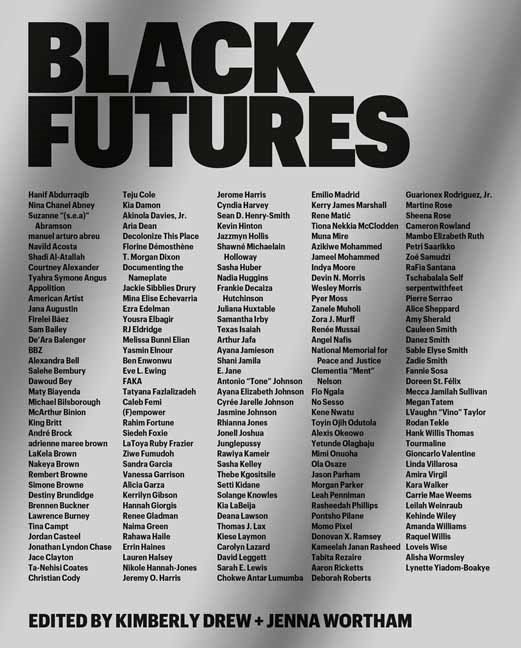
Black Futures
Check out Black Futures - <b><b>“A literary experience unlike any I’ve had in recent memory . . . a blueprint for this moment and the next, for where Black folks have been and where they might be going.”—<i>The New York Times Book Review</i> (Editors’ Choice)</b><br><br></b><i><b>What does it mean to be Black and alive right now?</b></i><br><br>Kimberly Drew and Jenna Wortham have brought together this collection of work—images, photos, essays, memes, dialogues, recipes, tweets, poetry, and more—to tell the story of the radical, imaginative, provocative, and gorgeous world that Black creators are bringing forth today. The book presents a succession of startling and beautiful pieces that generate an entrancing rhythm: Readers will go from conversations with activists and academics to memes and Instagram posts, from powerful essays to dazzling paintings and insightful infographics.<br><br> In answering the question of what it means to be Black and alive, <i>Black Futures</i> opens a prismatic vision of possibility for every reader. by Jenna Wortham and Kimberly Drew on Bookshop.org UK!
‘No & ...’ : A Forum on Technological Refusal - Home
This forum begins from the idea that refusal is, among other things, a rejection of one’s current relationship to technology (as an individual and/or as part of a collective) and a simultaneous commitment to another way of being in the world. The ‘no’ is accompanied by a ‘yes’ to another path. In this sense, refusal demands a careful articulation of what needs to change as well as a vision for a future that can (and should) be worked towards.
WE ALL WE GOT
Welcome to We All We Got: A Digital Green Book for the Culture—a guide for navigating the ever-growing wave of digital manipulation aimed at dividing, deceiving, and discouraging Black communities.
#LiberatingWebinars: Disability Justice & Crip Technoscience: Racism & Ableism in AI
Oakland is a Vibe: Blackness, Cultural Framings and Emancipations of The Town
Author(s): Heitz, Kaily | Advisor(s): Scott Lewis, Jovan | Abstract: In this dissertation, I examine the ways that developers and Black community organizers in Oakland, California, utilize a situated concept of Black culture to produce value in the city. This value is constituted by a politics of Blackness rooted both in racial capitalism, shifting structures of community care, and their affective articulations. The affective qualities of Black Oakland – which includes a sense of relationality, creativity, and resistance – are understood colloquially as “vibe.” While representations of vibe are mobilized by both developers and community organizations to respectively advance and resist gentrification, I argue that the vibe of the city is constituted by a Black sense of place that cannot be reproduced through capitalist representations of cultural value alone. This study of vibe presents an opportunity to take seriously the invitation of Black geographic scholarship to work at the intersection of poetics and historical materialism by exploring relationality as a site that coproduces racialized space and experience. Where developers leverage notions of vibe to generate value through private investment, Black organizers utilize such representations in order to reclaim the physical space necessary to the very production of vibe. The latter strategy is, I suggest, an enactment of what I call “emancipatory framing,” in which hegemonic framing is mobilized in order to create alternative spaces for liberatory praxes. This dissertation explores vibe and emancipatory framing at three different scales: the Black body, the independent business, and the grassroots collective. I conclude that vibe as a material and metaphorical asset of Blackness, is at the root of contestations over place, and sometimes contradictory imaginaries of freedom.

Ask Disabled People What They Want. It’s Not Always Technology.
While our lives are deeply entangled with technologies of all kinds, disabled people are almost never included in discussions about technology.
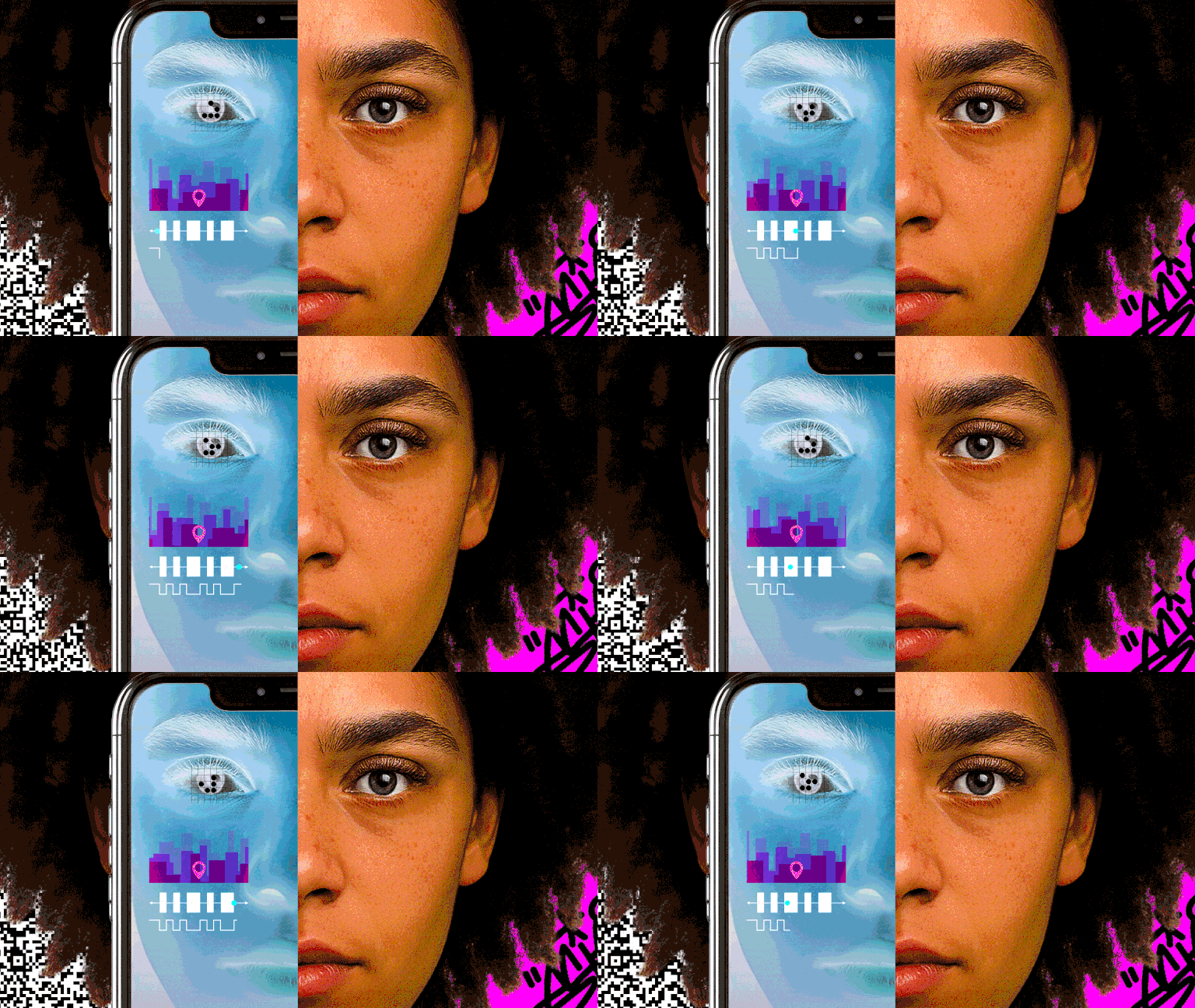
The digital exiles: Why people are abandoning their smartphones - Coda Story
A growing movement of “former screenagers” is calling for a screen-free, surveillance-free life, for a chance to build a future beyond tech capture
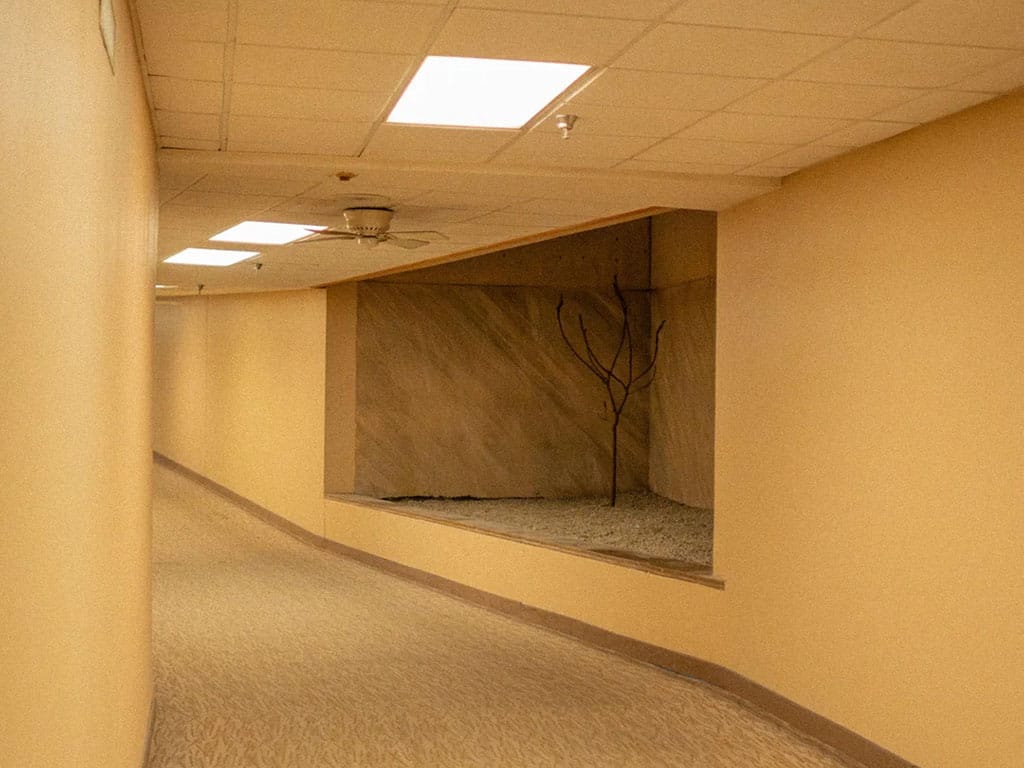
How Liminalism Became the Defining Aesthetic of Our Time
This crowd-curated digital movement is one of the most pertinent and explicit reactions to our particular slice of dystopian late capitalism.
Dec 2020 -- Jelle Bruineberg -- Embodied cognition and the attention crisis