


Every living thing has two bodies. To be an animal is to be in possession of a physical body, a body which can eat, drink and sleep; it is also to be embedded in a worldwide network of ecosystems. When every human body has an uncanny global presence, how do we live with ourselves? In this timely and elegant essay, Daisy Hildyard captures the second body by exploring how the human is a part of animal life. She meets Richard, a butcher in Yorkshire, and sees pigs turned into boiled ham; and Gina, an environmental criminologist, who tells her about leopards and silver foxes kept as pets in luxury apartments. She speaks to Luis, a biologist, about the origins of life; and talks to Nadezhda about fungi in an effort to understand how we define animal life. Eventually, her second body comes to visit her first body when the river flooded her home last year. The Second Body is a brilliantly lucid account of the dissolving boundaries between all life on earth.
Is Life Just Different? | Quanta Magazine
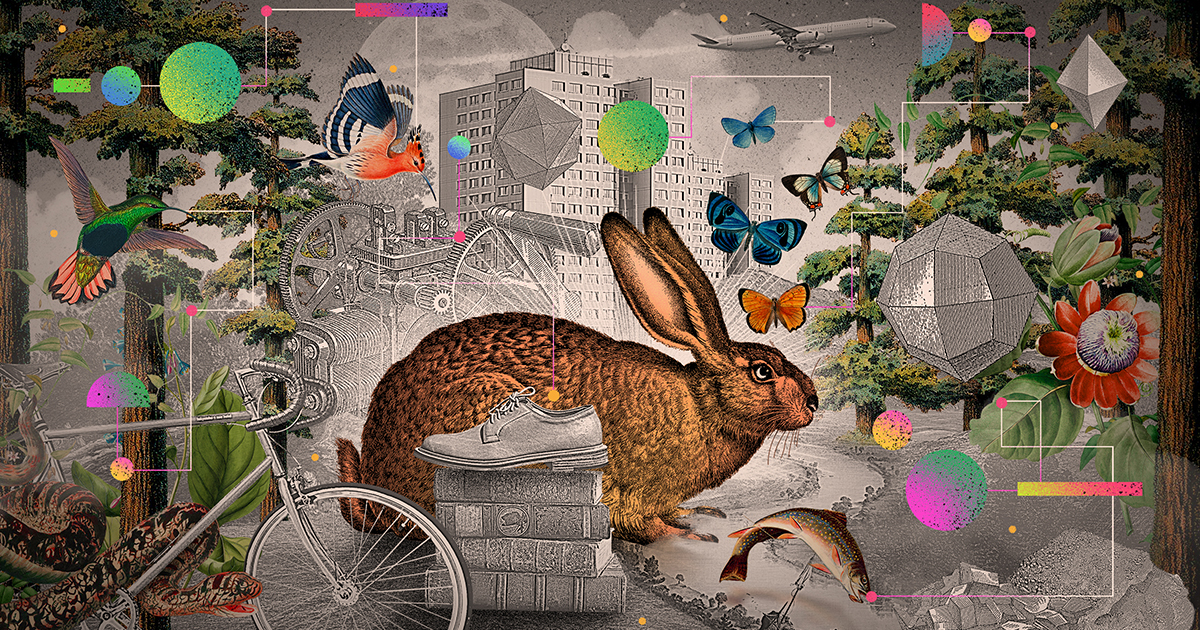
The idea of ‘biological agency’ — that life devises its own goals and behaves accordingly — complicates our understanding of what it means to be alive. But does it serve a scientific purpose?
The sentient cell: the cellular foundations of consciousness
"All species, extant and extinct, from the simplest unicellular prokaryotes to humans, have an existential consciousness. Without sentience, the first cells that emerged some 4 billion years ago would have been evolutionary dead-ends, unable to survive in the chaotic, dangerous environment in which life first appeared and evolved. In this book, Arthur Reber's theory, the Cellular Basis of Consciousness (CBC), is outlined and distinguished from those models that argue that minds could be instantiated on artificial entities and those that maintain consciousness requires a nervous system. The CBC framework takes a novel approach to classic topics such as the origin-of-life, philosophy of mind, the role of genes, the impact of cognition, and how biological information is processed by all species. It also calls for a rethinking of a variety of issues including the moral implications of the sentient capacities of all species, how welfare concerns need to be expanded beyond where they currently are, and critically, how all life is intertwined in a coordinated cognitive ecology. The Sentient Cell explores this revolutionary model, which updates the standard neo-Darwinian framework within which current approaches operate and examines the underlying biomolecular features that are the likely candidates for the "invention" of consciousness and outline their role in cellular life." --

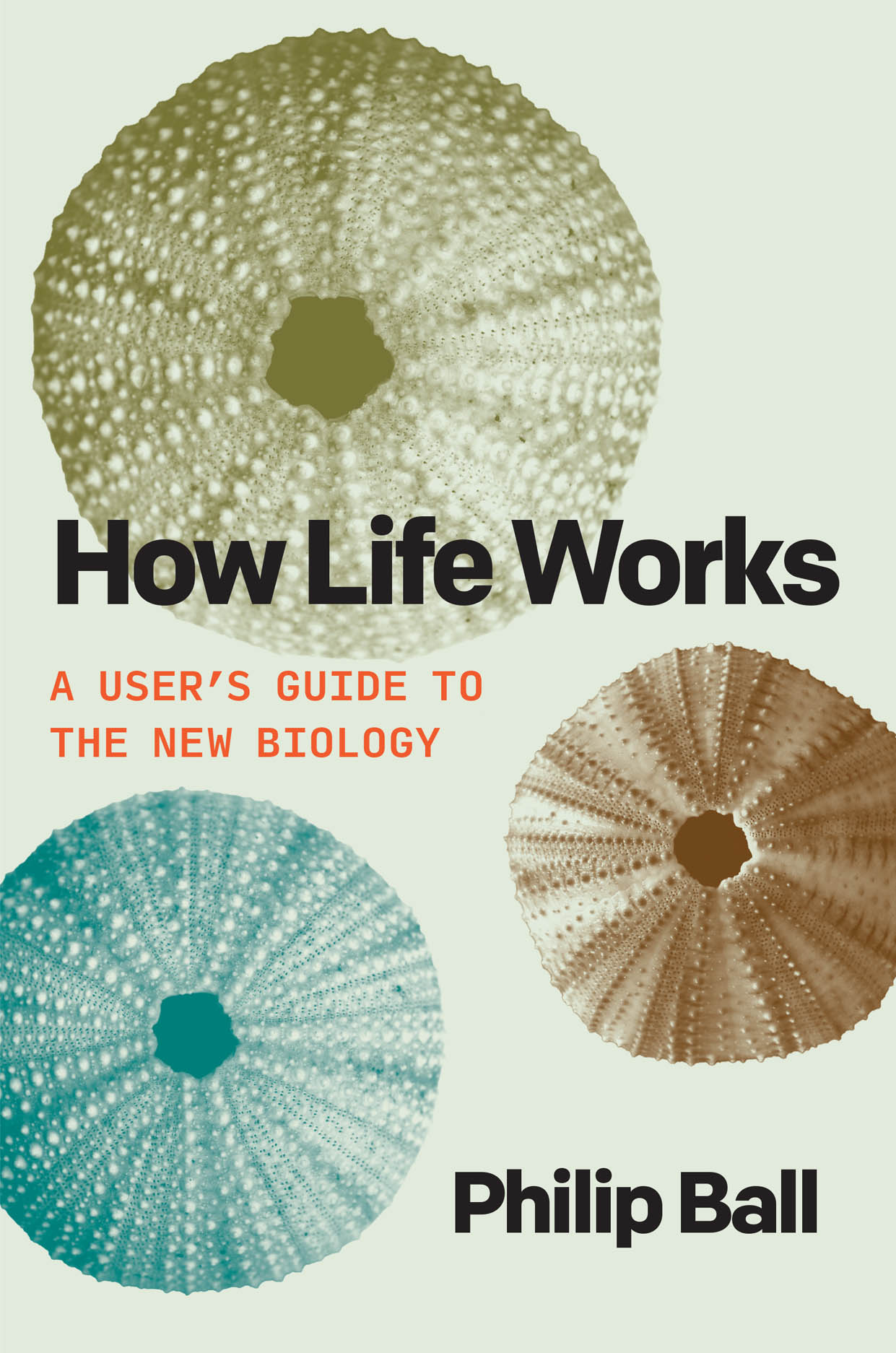
How Life Works: A User’s Guide to the New Biology
“Bold and intriguing.”—Wall Street Journal • “Penetrating. . . . Provocative and profound.”—Publishers Weekly (starred review) • “Offers plenty of food for thought.”—Kirkus Reviews (starred review) “Ball’s marvelous book is both wide-ranging and deep. . . . I could not put it down.”—Siddhartha Mukherjee, author of The Song of the Cell and the Pulitzer Prize–winning The Emperor of All Maladies A new, cutting-edge vision of biology that revises our understanding of what life itself is, how to enhance it, and what possibilities it offers. Biology is undergoing a quiet but profound transformation. Several aspects of the standard picture of how life works—the idea of the genome as a blueprint, of genes as instructions for building an organism, of proteins as precisely tailored molecular machines, of cells as entities with fixed identities, and more—have been exposed as incomplete, misleading, or wrong. In How Life Works, Philip Ball explores the new biology, revealing life to be a far richer, more ingenious affair than we had guessed. Ball explains that there is no unique place to look for an answer to this question: life is a system of many levels—genes, proteins, cells, tissues, and body modules such as the immune system and the nervous system—each with its own rules and principles. How Life Works explains how these levels operate, interface, and work together (most of the time). With this knowledge come new possibilities. Today we can redesign and reconfigure living systems, tissues, and organisms. We can reprogram cells, for instance, to carry out new tasks and grow into structures not seen in the natural world. As we discover the conditions that dictate the forms into which cells organize themselves, our ability to guide and select the outcomes becomes ever more extraordinary. Some researchers believe that ultimately we will be able to regenerate limbs and organs, and perhaps even create new life forms that evolution has never imagined. Incorporating the latest research and insights, How Life Works is a sweeping journey into this new frontier of the life sciences, a realm that will reshape our understanding of life as we know it.
Opinion | We Aren’t Built to Live in the Moment (Published 2017)
What best distinguishes human beings from other animals is our foresight, as scientists are just beginning to recognize.

Midjourney
An independent research lab exploring new mediums of thought and expanding the imaginative powers of the human species.
About — Every Object an Archive
We interview people about their experiences with technological objects that were once everywhere, but are now being replaced or redesigned. We are interested in the physical experience of living with these objects, their handfeel and relationships to our bodies. We are also interested in how they shaped our habits, relationships, and ways of being. Technologies are more than physical objects: whole worlds of infrastructure, process, policy and culture are built around them.

There Is No ‘Hard Problem Of Consciousness’
Consciousness is not separate from the physical world — our “soul” is of the same nature as our body and any other phenomenon of the world.

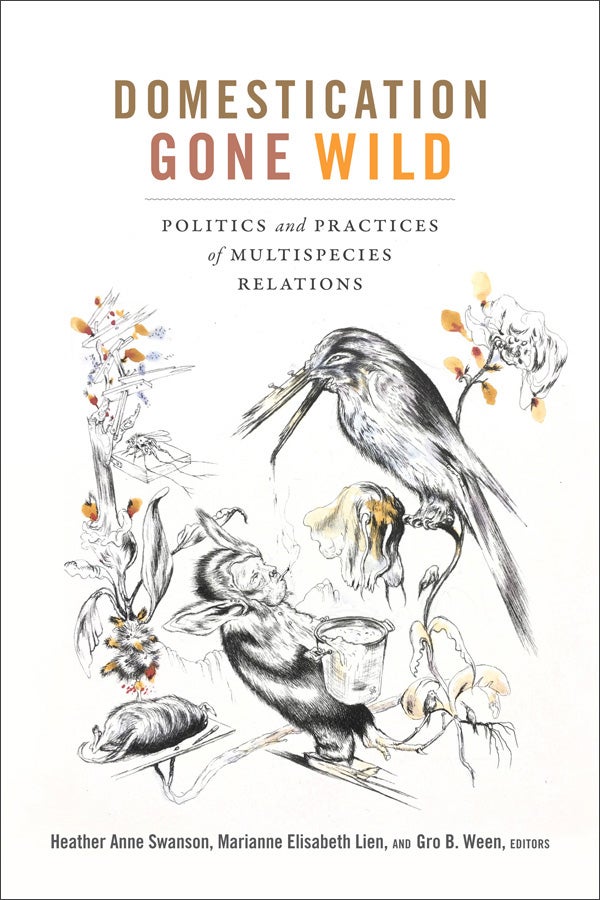
Domestication Gone Wild: Politics and Practices of Multispecies Relations
“What do Pacific salmon, British falcons, pine trees everywhere, Ifugao pigs and spirits, and Norwegian apples have in common? They perform ‘domestication’ in ways certain to change the narratives and politics of domestication for scholars of whatever discipline and for critter people all over the earth. Read this book for up-to-the-minute, deeply researched, very smart, contentious takes on the shapes of conjoined humans and nonhumans living and dying together in diverse histories of civilization, colonialism, capitalism, times-past, and times-yet-to-come. Perhaps what opens up in this book are real possibilities for caring more materially in urgent times.” - Donna J. Haraway, author of Staying with the Trouble: Making Kin in the Chthulucene
Links between the discovery of primates and anatomical comparisons with humans, the chain of being, our place in nature, and racism
- For more than a millennium humans knew more about the internal anatomy of a single monkey species than about that of their own bodies, because Galen used monkeys to infer human anatomy, in line wit...

Meaning in Life as Being Part of Cosmic Evolution
Walt Whitman Below is an excerpt of comments from an astute reader of my book, The Meaning of Life: Religious, Philosophical, Transhumanist, and Scientific Perspectives: The scope of the universe …
Lectures on Perception: An Ecological Perspective
Lectures on Perception: An Ecological Perspective addresses the generic principles by which each and every kind of life form—from single celled organisms (e.g., difflugia) to multi-celled organisms (e.g., primates)—perceives the circumstances of their living so that they can behave adaptively. It focuses on the fundamental ability that relates each and every organism to its surroundings, namely, the ability to perceive things in the sense of how to get about among them and what to do, or not

Ontology of the Accident: An Essay on Destructive Plasticity
In the usual order of things, lives run their course and eventually one becomes who one is. Bodily and psychic transformations do nothing but reinforce the permanence of identity. But as a result of serious trauma, or sometimes for no reason at all, a subject’s history splits and a new, unprecedented persona comes to live with the former person - an unrecognizable persona whose present comes from no past and whose future harbors nothing to come; an existential improvisation, a form born of the accident and by accident. Out of a deep cut opened in a biography, a new being comes into the world for a second time. <br /> <br /> What is this form? A face? A psychological profile? What ontology can it account for, if ontology has always been attached to the essential, forever blind to the <i>aléa</i> of transformations? What history of being can the plastic power of destruction explain? What can it tell us about the explosive tendency of existence that secretly threatens each one of us?<br /> <br /> Continuing her reflections on destructive plasticity, split identities and the psychic consequences experienced by those who have suffered brain injury or have been traumatized by war and other catastrophes, Catherine Malabou invites us to join her in a philosophic and literary adventure in which Spinoza, Deleuze and Freud cross paths with Proust and Duras.
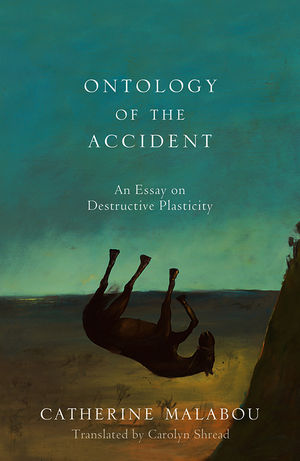
Ontology of the Accident: An Essay on Destructive Plasticity
In the usual order of things, lives run their course and eventually one becomes who one is. Bodily and psychic transformations do nothing but reinforce the permanence of identity. But as a result of serious trauma, or sometimes for no reason at all, a subject’s history splits and a new, unprecedented persona comes to live with the former person - an unrecognizable persona whose present comes from no past and whose future harbors nothing to come; an existential improvisation, a form born of the accident and by accident. Out of a deep cut opened in a biography, a new being comes into the world for a second time. <br /> <br /> What is this form? A face? A psychological profile? What ontology can it account for, if ontology has always been attached to the essential, forever blind to the <i>aléa</i> of transformations? What history of being can the plastic power of destruction explain? What can it tell us about the explosive tendency of existence that secretly threatens each one of us?<br /> <br /> Continuing her reflections on destructive plasticity, split identities and the psychic consequences experienced by those who have suffered brain injury or have been traumatized by war and other catastrophes, Catherine Malabou invites us to join her in a philosophic and literary adventure in which Spinoza, Deleuze and Freud cross paths with Proust and Duras.

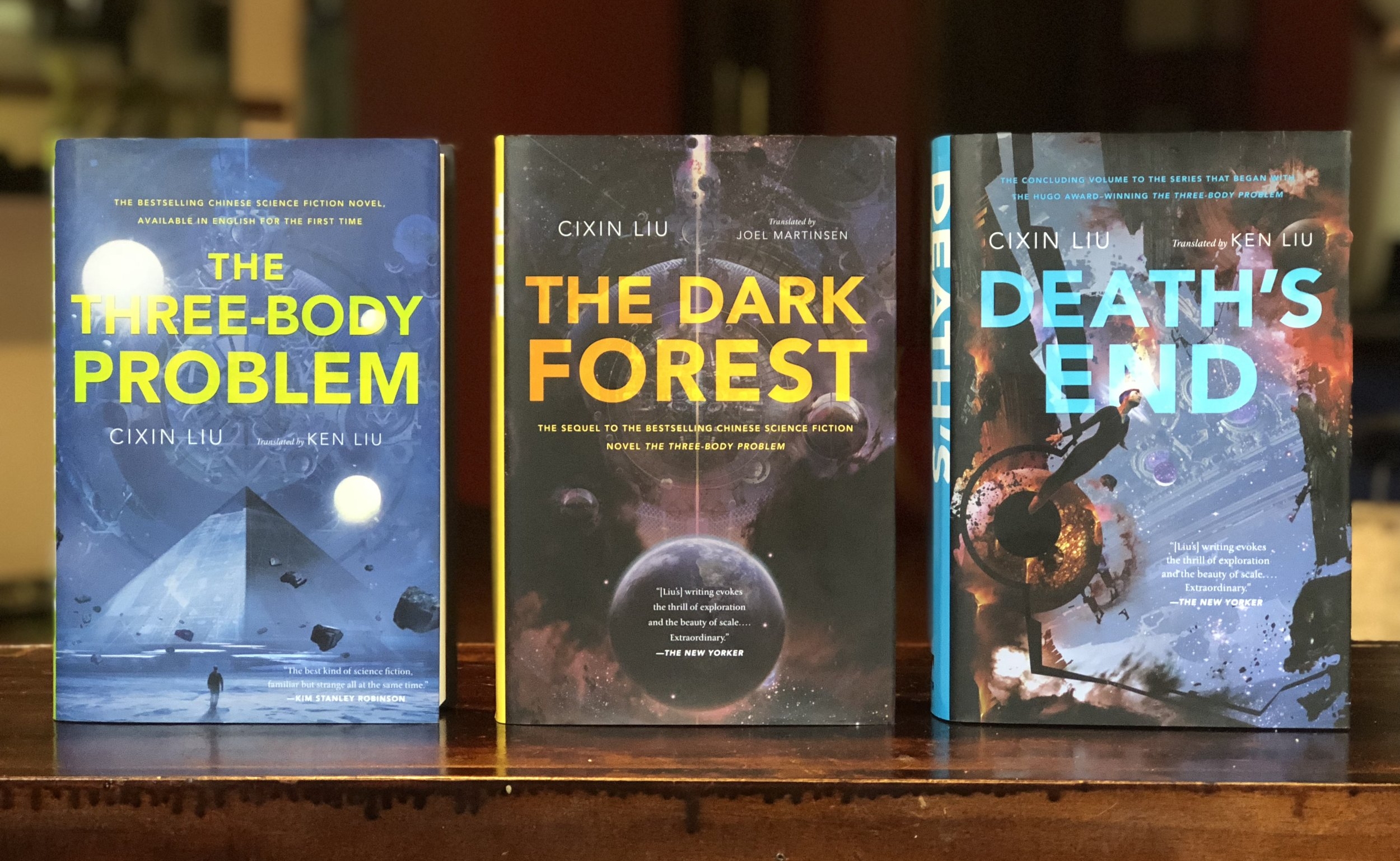
The ‘Three-Body Problem’, the Imperative of Survival, and the Misogyny of Reactionary Rhetoric | Made in China Journal
Liu Cixin’s the Three-Body Problem book trilogy is one of the world’s bestselling Chinese sci-fi series, being read and endorsed by figures such as George R.R. Martin and Barack Obama. In Chinese public debates, however, critics highlight the series’ social Darwinist, misogynistic, and totalitarian tendencies, raising concerns about how the trilogy has been used by […]
The Secret of Our Success: How Culture Is Driving Human Evolution, Domesticating Our Species, and Making Us Smarter
How our collective intelligence has helped us to evolve and prosperHumans are a puzzling species. On the one hand, we struggle to survive on our own in the wild, often failing to overcome even basic challenges, like obtaining food, building shelters, or avoiding predators. On the other hand, human groups have produced ingenious technologies, sophisticated languages, and complex institutions that have permitted us to successfully expand into a vast range of diverse environments. What has enabled us to dominate the globe, more than any other species, while remaining virtually helpless as lone individuals? This book shows that the secret of our success lies not in our innate intelligence, but in our collective brains—on the ability of human groups to socially interconnect and learn from one another over generations.Drawing insights from lost European explorers, clever chimpanzees, mobile hunter-gatherers, neuroscientific findings, ancient bones, and the human genome, Joseph Henrich demonstrates how our collective brains have propelled our species' genetic evolution and shaped our biology. Our early capacities for learning from others produced many cultural innovations, such as fire, cooking, water containers, plant knowledge, and projectile weapons, which in turn drove the expansion of our brains and altered our physiology, anatomy, and psychology in crucial ways. Later on, some collective brains generated and recombined powerful concepts, such as the lever, wheel, screw, and writing, while also creating the institutions that continue to alter our motivations and perceptions. Henrich shows how our genetics and biology are inextricably interwoven with cultural evolution, and how culture-gene interactions launched our species on an extraordinary evolutionary trajectory.Tracking clues from our ancient past to the present, The Secret of Our Success explores how the evolution of both our cultural and social natures produce a collective intelligence that explains both our species' immense success and the origins of human uniqueness.