

The Open Source movement, as championed by the OSI, prizes absolute openness above all other concerns. Openness, they claim, is an absolute good, from which all other virtues flow, not to be questioned or criticized. It doesn’t matter if that openness enables evil in the world, without openness we
Open Source is Broken
The Open Source movement, as championed by the OSI, prizes absolute openness above all other concerns...
Something Big Happened in 1998
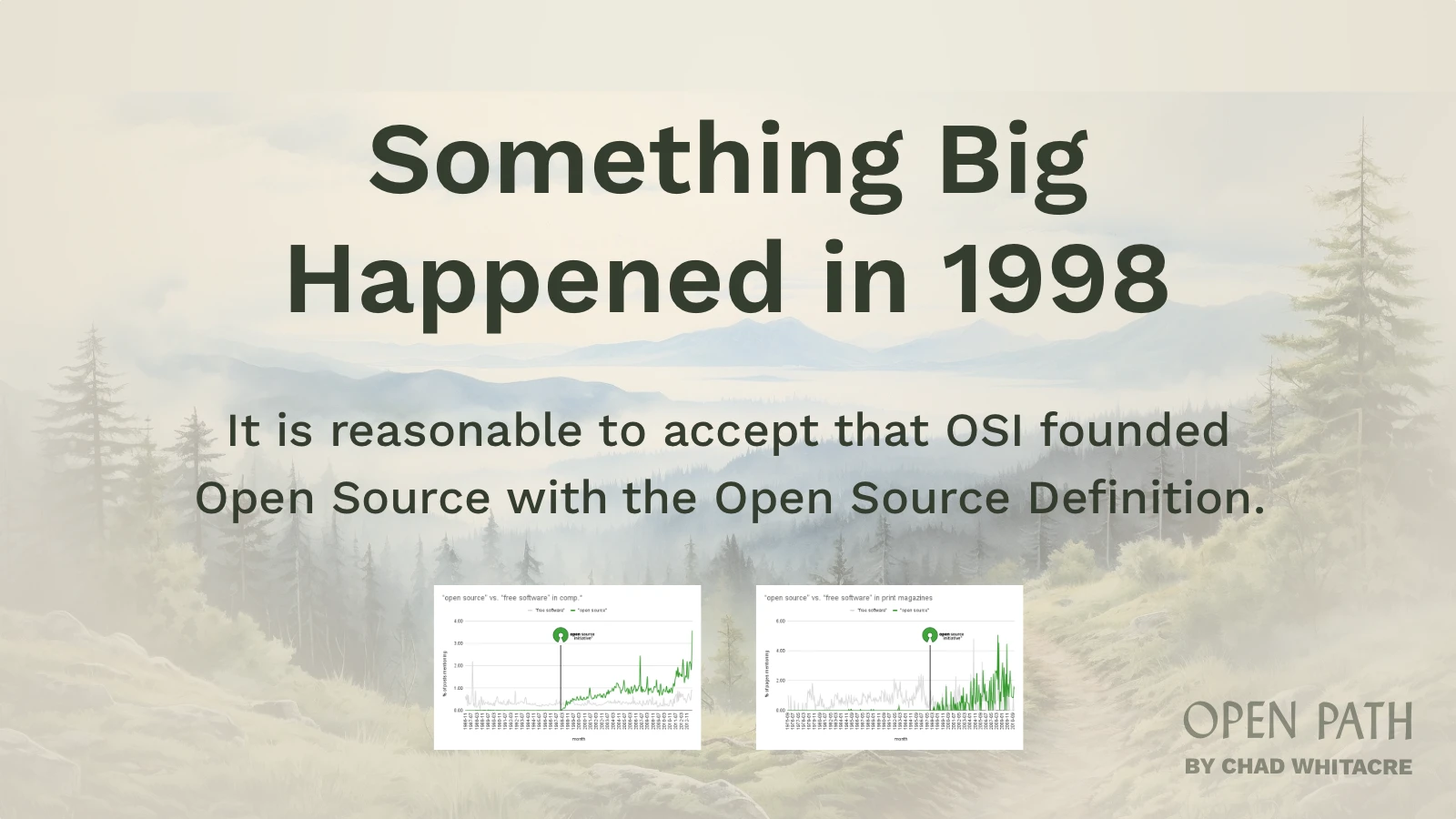
It is reasonable to accept that OSI founded Open Source with the Open Source Definition.
Open Source Explained — Open Indie
Musings on the concept of ‘open source’, in the broadest possible definition of the term. Also an invitation to become a participant in ...
Open source is a restaurant
[[Chad Whitacre]] makes a great analogy around when/how software gets paid for, vs food. Open Source is a restaurant. At a restaurant, you eat your meal fir...

Tyranny of Permissionlessness
open source’s narrow focus further empowers those with other ways to exclude

The Arguments Against Open Source AI are Very Bad | Tom Bedor's Blog
The release of Kimi K3 has opened a fresh round of angst and confused discourse. There's a loud cohort of journalists, business leaders, and politicians arguing that open source AI is a dangerous threat. OpenAI's Dean Ball:
Open Source Software and Corporate Influence — Andrew Lilley Brinker
Open source software projects are frequently enmeshed with the interests of corporations. We should update mental models of who works on open source accordingly, and build or modify power structures to be more resilient to corporate capture.
Anthony Fu
It’s not a secret that open-source projects are now a critical part of almost every software project. While most open-source projects are maintained by volunteers, the sustainability of these projects becomes a big concern. The recent xz/liblzma vulnerability accident is a great example that shows the importance of open-source projects and how severe the problem could be.
Open source is the electric vehicle of digital policy
Open source is very popular these days, not least due to the open-source strategy that the European Commission announced last week as part of the tech sovereignty package. While there is a lot to criticise about that strategy (exaggerated goals, misleading numbers etc), the one thing I would like to

Open Source is a cost-allocation system
Because the right to use the software is not tied to payment, the license does not connect the people who benefit, the people who decide, and the people who bear the costs. Projects have to build those connections deliberately through governance.

Open Source is four kinds of economic goods
Open Source code and the stewardship around it have different economics. That distinction helps show what a project might charge for, what it must budget for, and how it could fund stewardship without making the code less open.

Open Source Initiative
The steward of the Open Source Definition, setting the foundation for the Open Source Software ecosystem.

Why Open Source Failed. (If you like this essay, you may be… | by Joh…
archived 21 Apr 2023 23:58:23 UTC

Reframing “Open Source AI” with Meredith Whittaker: AI Impact Summit 2026
NSF investing in secure open-source ecosystems
Open-source software is ubiquitous, supporting artificial intelligence, data science, cloud computing, telecommunications and scientific research tools. Despite these benefits, the number of open-source developers is relatively small, and many projects lack sufficient resources, slowing the pace of innovation and making maintenance difficult. In addition, weaknesses in open-source software, such as security flaws, supply chain risks or insider threats, can spread across many connected systems. In extreme cases, these weaknesses could lead to large-scale failures that affect national or global systems.

I can see a whole lot of people agreeing with this. Kinda the same with open source in general, but few open source projects are social protocols seeking widespread adoption. It's a particular flavor of narrative disconnection from reality we have to bridge out of to get out of our own way.

⠁⠀⠀⠀⠠
Every @proto developer sounds like this to me:
