


From the Met Office to the UK Health Security Agency to the Office for National Statistics, the UK relies on independent expert bodies to generate evidence, regulate complex industries, and hold government to account. This reference guide maps how 44 of those bodies are constituted and how their independence could be eroded by a determined government.
Anthropic and OpenAI want to embed safety evaluators. Will they really be independent? | TechCrunch
Anthropic and OpenAI want to embed independent safety evaluators inside their AI labs. Researchers welcome the unprecedented access, but warn meaningful oversight requires transparency, independence, and eventually regulation.

‘Shocking’ scale of UK government’s secret files on critics revealed
Dossiers were compiled by 15 departments after scouring social media activity to vet people invited to speak at official events

‘Conditioning an entire society’: the rise of biometric data technology
The use of our bodies to unlock access to services raises concerns about the trade-off between convenience and privacy

“Just Send us Pictures of Your feet”: Consent and Biometric Extraction in the AI Supply Chain, by James Oyange
The boundary between labour and personal resource has disappeared: the human body becomes raw material.
Restrictive ID Policies: Implications for Health Equity
Official websites use .gov A .gov website belongs to an official government organization in the United States.

Brave uncovers widespread surveillance of UK citizens by private companies embedded on UK council websites | Brave
Brave has uncovered widespread surveillance of UK citizens by private companies embedded on UK council websites. "Surveillance on UK council websites", a new report from Brave, reveals the extent of private companies' surveillance of UK citizens when they seeking help for addiction, disability, and poverty from their local government authorities.

Home | Your Local Epidemiologist
Join 365k+ readers getting accurate, unfiltered, and easy-to-digest information on the rapidly changing public health landscape, so you can feel secure in making important health decisions for you and your family.
Doctored data sets could trick AI agents
Researchers warn that ‘poisoned’ information can undermine the reliability of tools that analyse data autonomously.
Briefing: Data Security + Infectious Disease Control — Unbreaking
Failed attempts to scuttle the midterms, potential corporate capture at CISA, and more preventable deaths from infectious disease.

Google AI Overviews put people at risk of harm with misleading health advice
Exclusive: Inaccurate information presented in summaries, Guardian investigation finds

Environmental epidemiology in a crossfire
Two tendencies have emerged in environmental epidemiology that hamper the translation of research findings into prevention of environmental hazards. One is the increased focus on highlighting weaknesses of epidemiology research that is clearly meant to explain away the research conclusions and weaken their possible implications for interventions to control environmental hazards. Another is the voluminous amount of information sharing that involves a substantial amount of misinformation, as part of the ongoing infodemic. In this light, the appearance of the catalogue of doubt-raising strategies, indeed the worst practices of scientific inference, is good news. Collected under the auspices of the International Network for Epidemiology in Policy, it serves to illustrate the range of possible (and impossible) forms of critique that may be raised on behalf of vested interests or other groups who for some reason disagree with the epidemiological conclusions. We believe that this systematic list will be useful in our field and help to identify critiques of policy options that are hidden and sometimes suppressed in weighing the epidemiological evidence.


The UK’s War on Anonymity Has Come to America — Effort
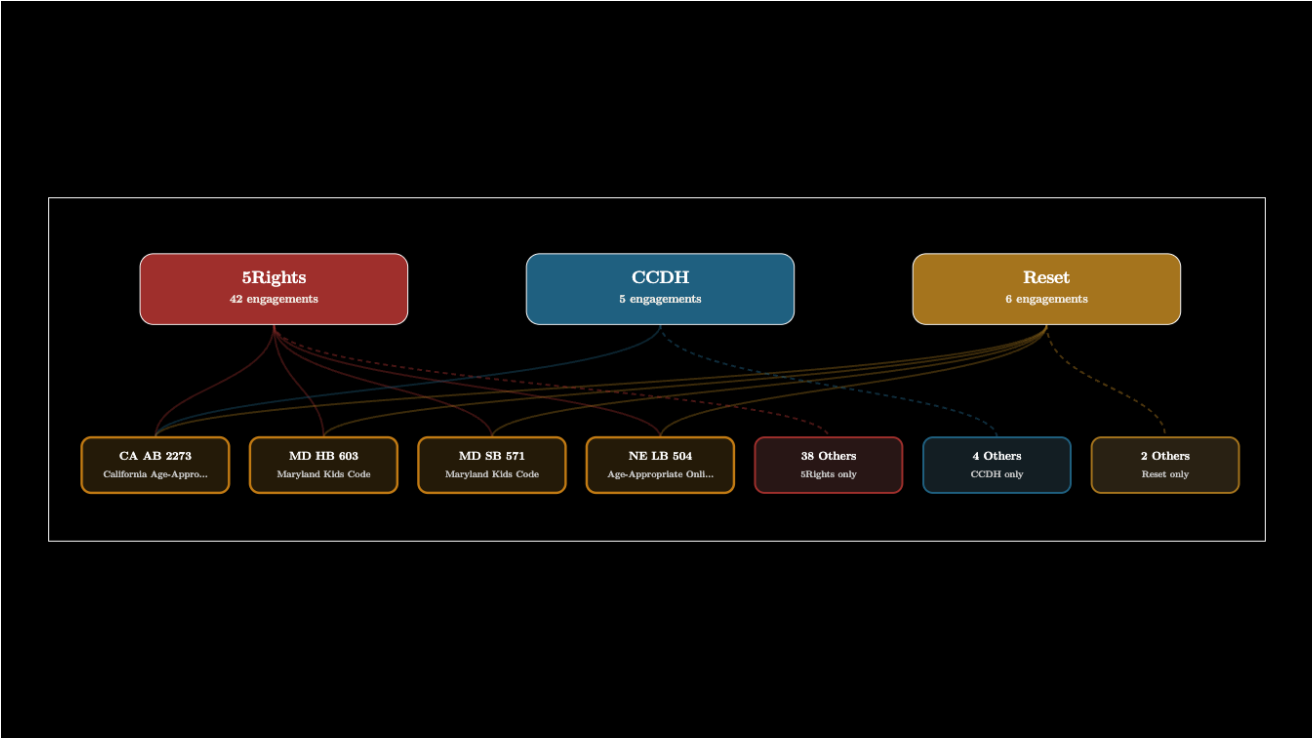
The NGOs Behind Britain's Digital ID Laws are Targeting American Statehouses
Common Knowledge: Citizen-led data governance for better cities
Key lessons from the DECODE pilots and tips on how other cities and governments can apply the technologies and methods.

The Medium is the Message: How Non-Clinical Information Shapes Clinical Decisions in LLMs | Proceedings of the 2025 ACM Conference on Fairness, Accountability, and Transparency
There has been a growing interest in the HCI community to study Health, with particular focus in understanding healthcare practices and designing technologies to support and to enhance these practices. A majority of current health studies in HCI have ...

