

japanese verb conjugation the simple hard way - underreacted
Introduction – Learn Japanese
This guide was created as a resource for those who want to learn Japanese grammar in a rational, intuitive way that makes sense in Japanese. The explanations are focused on how to make sense of the grammar not from English but from a Japanese point of view.
Marking one’s own viewpoint: The Finnish evidential verb+kseni ‘as far as I understand’ construction
This article examines evidentiality in the frame of inferential adverbs in written interaction from the perspective of Finnish, a language that does not have evidentiality as a grammatical category. The analysis focuses on six adverbs, such as käsittääkseni ‘as far as I understand’ and tietääkseni ‘to my knowledge, as far as I know’. Evidentiality and epistemic modality intertwine in their semantics, as these adverbs represent a writer’s access to information, but also indicate her evaluation of its reliability. First, this article offers a description of the interactional functions of these adverbs such as marking a writer’s opinion in contrasts, expressing slight hedging in order to anticipate corrections, to allow space for other opinions, or to create irony. Second, in the framework of cognitive grammar, the analysis focuses on the meaning of the evidential verb+kseni construction and the effect of different verb stems on it. These adverbs share similar functions in texts, which is due to their flexible constructional meaning. While varying from lexeme to lexeme, specific evidential and epistemic dimensions can either be foregrounded and relevant in a situation or remain backgrounded and not activated.
Japanese writing system basics
Explains how the Japanese writing system works by comparing it to expanding the English alphabet.

Harper | Privacy-First Offline Grammar Checker
Blazing-fast, open-source grammar & spell checking that never sends your words to the cloud.
Why You Should Keep Listening Even If You Don’t Understand | AJATT | All Japanese All The Time
Like I’ve said before…the set of tools/methods described on this site…I don’t know why it all works; looking at and thinking about how people learn their native language, it just all seemed obvious to me. In other words, I knew what I needed to do to achieve fluency…but not much more.
Home - 80/20 Japanese
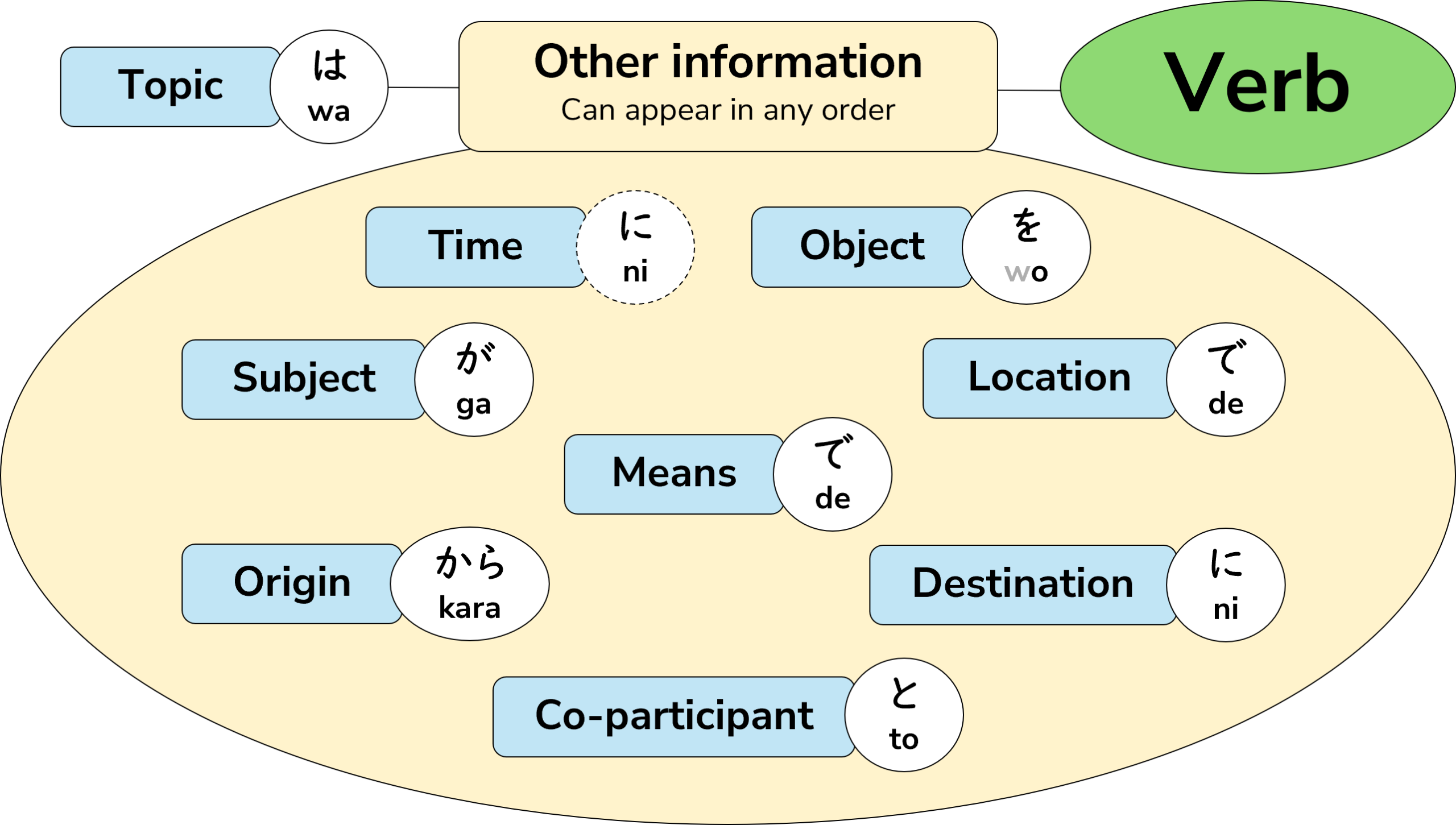
Finally make sense of Japanese grammar Master Japanese grammar through visual explanations that show you why the language works the way it does, so you can build your own sentences with confidence, not just memorize phrases. “ Your course is AMAZING! It’s a lifesaver to having me communicate properly with my coworkers and getting around […]
The Grammar Your UI Doesn't Know It Speaks - Nightflight
Learning to Simplify
Over the last few years the availability of comparable or parallel corpora of original and simplified or adapted textual material has made possible a set of approaches to learn various types of simplification operations from corpora. Notably, with the Simple English Wikipedia (SEW), in combination with the “ordinary” English Wikipedia (EW), simplification approaches which use primarily machine learning techniques have been proposed. Most of them learn lexical changes in the data although some approaches also are able to learn some syntactic transformations. The chapter starts by introducing methods which cast text simplification, in different languages, as monolingual machine translation. Then, we will overview simplification as a statistical syntactic-tree translation process with the aim of transforming complex sentences into simpler ones. We will also overview works which apply optimization techniques aimed at finding the best possible simplification by either optimizing the application of rules or by overgenerating simplification solutions. Finally, to end the chapter we will review recent work on incorporating semantic information into the simplification problem.

HOW TO SAY”WA”
Tokenization: A Survey for Modern NLP
While modern language models take raw text as their input and produce raw text as output, they do not operate over text directly. Hidden in the very first step of language model pipelines is...
🚨SYNTHOPTIC WRITING🚨 A guide to my final uni project, a linguistic experiment about how the way we... - Pedro Stolf
🚨SYNTHOPTIC WRITING🚨 A guide to my final uni project, a linguistic experiment about how the way we write can rewire how we think https://t.co/B4WeGMsigq

My take on "The AT-URI Syntax Mess": the canonical form should be percent-encoded, and today's colon syntax should stay as a defined lax input form. Longer writeup in the forum: discourse.atprotocol.community/t/the-at-uri-syntax-mess/934/…

The AT-URI Syntax Mess
discourse.atprotocol.community
bryan newbold
zick is studiously thinking through the atproto+ucan combo here: discourse.atprotocol.community/t/musing-ucans-groups-communi… @expede.wtf (ucan editor & maintainer) chiming in 💖 @dholms.at also co-authored UCANs so his input here would be greatly appreciated!

Zicklag
I'm pretty sure UCANs are awesome. They're not the easiest thing to understand how to apply, and I need to see how they work out in practice, but I'm excited about the cool things that you can do with them. They've got some cool capabilities. 😉


