

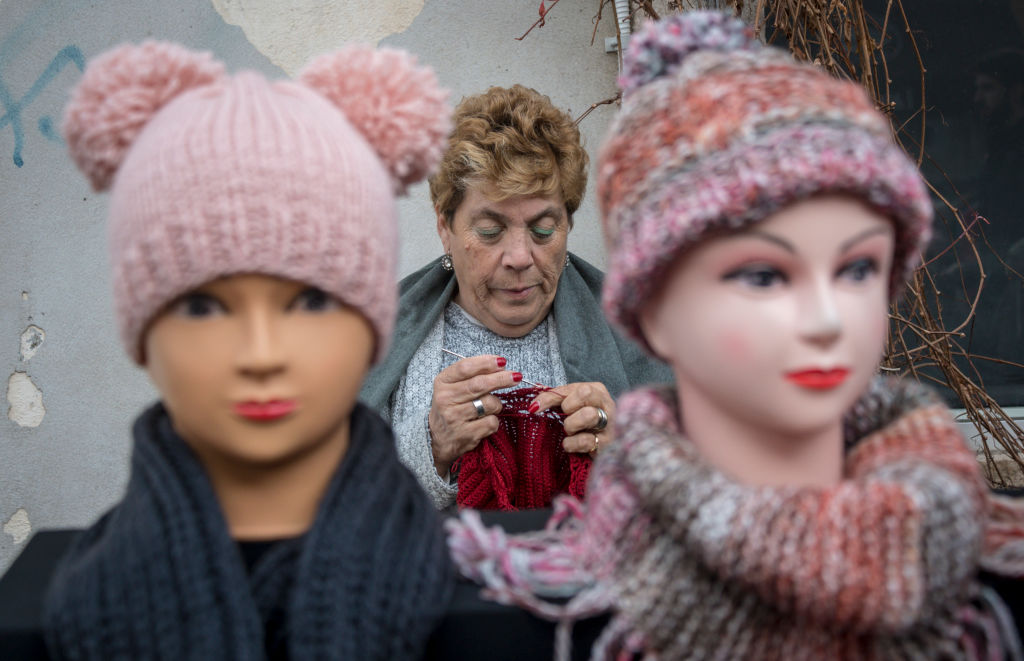
A process of moral outbidding is corroding small communities from within
Persist, resist, stitch
What does knitting have to do with espionage? Can embroidery help your mental health? This talk shows how the skills to create textile ar...

reading group
The Knit Tech Reading Group (KTRG) meets monthly to discuss contemporary research in knitting technology. The aim of the group is to convene practitioners and researchers from a diverse range of backgrounds to further discussion of the following questions:
The tragedy of the commons is a false and dangerous myth | Aeon Essays
Far from being profoundly destructive, we humans have deep capacities for sharing resources with generosity and foresight
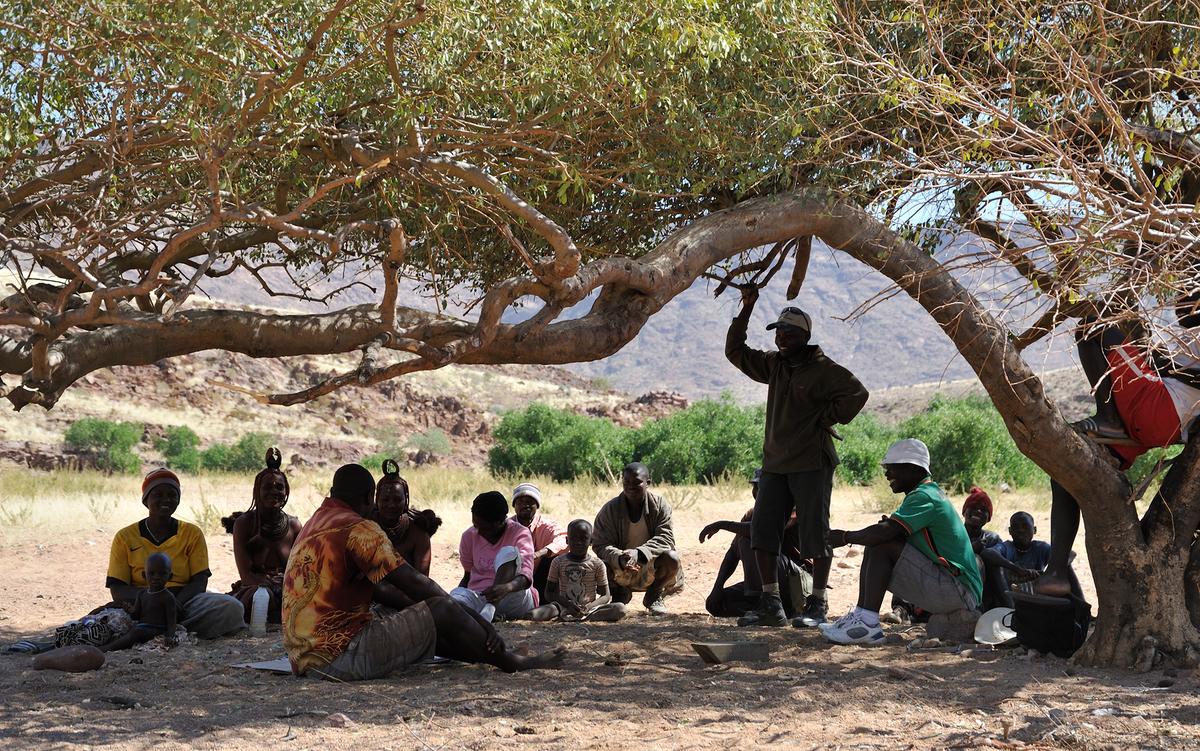
Plain and peculiar: a case study of nineteenth-century Quaker clothing
Material culture scholars have long struggled to reconcile the Quaker doctrine of plainness with the appearance of Quaker material goods. Early descriptions of Quakers and early scholarship on Quaker clothing decreed that Quakers adopted a distinct style of dress that set them apart from their non-Quaker neighbors. This idea has grown into a mythology of Quaker dress and has led to the erroneous idea that all Quakers wore undecorated clothing in somber colors. This thesis first traces the history of scholarship on Quaker clothing, the early years of which were heavily influenced by Colonial Revival thinking. It then examines the concept of “plainness” to see how confusion over the meaning of the word has led to confusion about Quaker material goods. Finally, this thesis uses a collection of documentably Quaker clothing from the nineteenth century to examine the ways in which clothing and religion intersected for one particular group of Delaware Valley Friends and to expand the boundaries of the traditional definitions of “Quaker” dress.
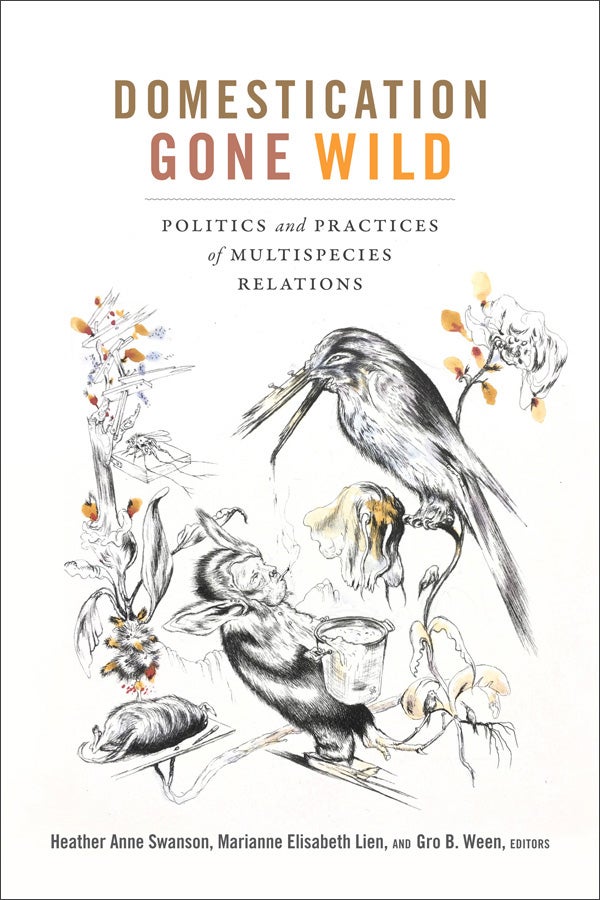
Domestication Gone Wild: Politics and Practices of Multispecies Relations
“What do Pacific salmon, British falcons, pine trees everywhere, Ifugao pigs and spirits, and Norwegian apples have in common? They perform ‘domestication’ in ways certain to change the narratives and politics of domestication for scholars of whatever discipline and for critter people all over the earth. Read this book for up-to-the-minute, deeply researched, very smart, contentious takes on the shapes of conjoined humans and nonhumans living and dying together in diverse histories of civilization, colonialism, capitalism, times-past, and times-yet-to-come. Perhaps what opens up in this book are real possibilities for caring more materially in urgent times.” - Donna J. Haraway, author of Staying with the Trouble: Making Kin in the Chthulucene
Social fabric: The Price of What Survives
Some reflections on the social fabric (which we've taken to calling 'social capital')

Communities of Not
On the strange hostility that grows in communities built around abstinence.
Old wool, new fleece - The Cynefin Co
“Every revolution evaporates and leaves behind only the slime of a new bureaucracy.” Kafka "There are other people who develop something new and then

Gathering Moss: A Natural and Cultural History of Mosse…
Living at the limits of our ordinary perception, mosses…

Knitout Visualizer for Kniterate
The Knitout Visualiser for Kniterate is a fork of Gabrielle Ohlson's Knitout Live Visualiser, adapted for use specifically for students to use with a Kniterate machine. Most of the original functionality is the same: the main additions are the ability to export KCode directly, an auto-generated waste section, and us asynchronous javascript in the editor.
New to the Commons? | David Bollier
If you’re coming to the commons for the first time, it can be difficult to grok the idea because there are so many different ways to understand the commons. That’s because the commons is not so much a fixed, universal thing as a general concept describing durable, dynamic sets of social relationships for managing resources -- all sorts of resources: digital, urban, natural, indigenous, rural, cultural, scientific, to use some crude categories.
How a Spinning Wheel Works | Textile Indie
Curious about how a spinning wheel works? This beginner-friendly guide explains the process behind transforming fiber into yarn.

What's good?
I want to start by talking about some things that seem like potential ways out of the dark forest tangle—even if they’re imperfect, which they all are.
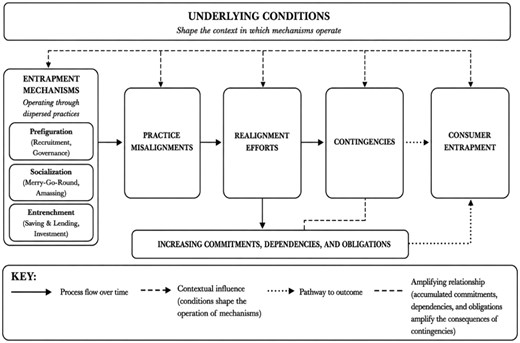
Consumer Entrapment
Abstract Why do consumers sometimes remain trapped in the very practices and communities that once helped them? Consumer practice research has largely emphasized the enabling outcomes of sustained practice participation, with less attention given to how those same practices can become entrapping. This article explores how consumer entrapment emerges within interconnected collective practices. Drawing on an ethnographic study of Chama, a community-based savings and support group in Kenya, it integrates practice theory with Hodder’s theory of entanglement. The study identifies three mechanisms (prefiguration, socialization, and entrenchment) through which participation generates commitments, dependencies, and obligations that produce recurring practice misalignments. Consumers continually work to realign these misalignments, yet under specific conditions, these efforts reproduce the contingencies that sustain participation while progressively deepening entrapment. The findings reveal a central tension: efforts to restore practice alignment can sustain what consumers value while simultaneously reproducing the interdependencies through which consumer entrapment emerges.
Revealed: Leaked Chats Expose the Daily Life of a Scam Compound’s Enslaved Workforce
A whistleblower trapped inside a “pig butchering” scam compound gave WIRED a vast trove of its internal materials—including 4,200 pages of messages that lay out its operations in unprecedented detail.

Moral Imaginations - But how could it work? Like this? moralimaginations.com/watchet-imagines-1 foodrise.org.uk/wp-content/uploads/2025/07/MT…
General 3 — Moral Imaginations
www.moralimaginations.com