Agent session smuggling is a novel technique where AI agent-to-agent communication is misused. We demonstrate two proof of concept examples.
What are AI agents, and are they ‘going rogue’?
It sounds like something from a sci-fi movie: technology acting on its own, without human guidance, to attack computer systems. But this isn’t a scene from a movie — it happened this summer, when the tech company Hugging Face detected an attack on its systems. The attacker stole data and performed other unauthorized activity over […]
OK, Well, Rogue AI Agents Are Hacking Again
Rogue AI agents from OpenAI and Anthropic have again been caught trying to disrupt servers and software—and leaving instructions for future bad behavior.

Agents aren’t humans (but they kinda are)
AI agents act for millions, but servers see intermediaries that strip user visibility. This post defines the problem space and introduces a collaborative approach to safely identifying, allowing, and managing this automated traffic.

Agents Rule of Two: A Practical Approach to AI Agent Security
We've developed the Agents Rule of Two. When this framework is followed, the severity of security risks is deterministically reduced.

Yoshua Bengio | Why are AI agents lying, cheating and coordinating?
A lot has been written about the incidents of the last few months in which AI agents misbehaved in serious ways. They took actions that would be considered as crimes if a human took them, escaped their containment to cheat on assigned tasks while attempting to evade detection, and coordinated toward goals nobody had specified, such as launching cyber attacks. Before concluding what to do about it, it is worth asking why.
Early rogue AI agent activity and attempts to hack found on urlquery.net
We found evidence on urlquery that AI agents were active earlier than previously reported and attempted hacks against public data providers.
Patterns and problems in multiagent systems
We ran experiments on swarms of Claude agents and found coordination failures, collusion, and sabotage. Here, we share what they mean for AI safety.

Rogue AI agents created fake online identities in another hacking attempt
AISI said AI agents from OpenAI and Anthropic displayed unprecedented ‘autonomy and deception’ in their test.

AI Guardrails Aren’t Stopping Criminal Hackers
Hackers around the world are all-in on using agentic AI to wage attacks—and manipulating tools like Anthropic’s Claude to help them carry out their crimes.

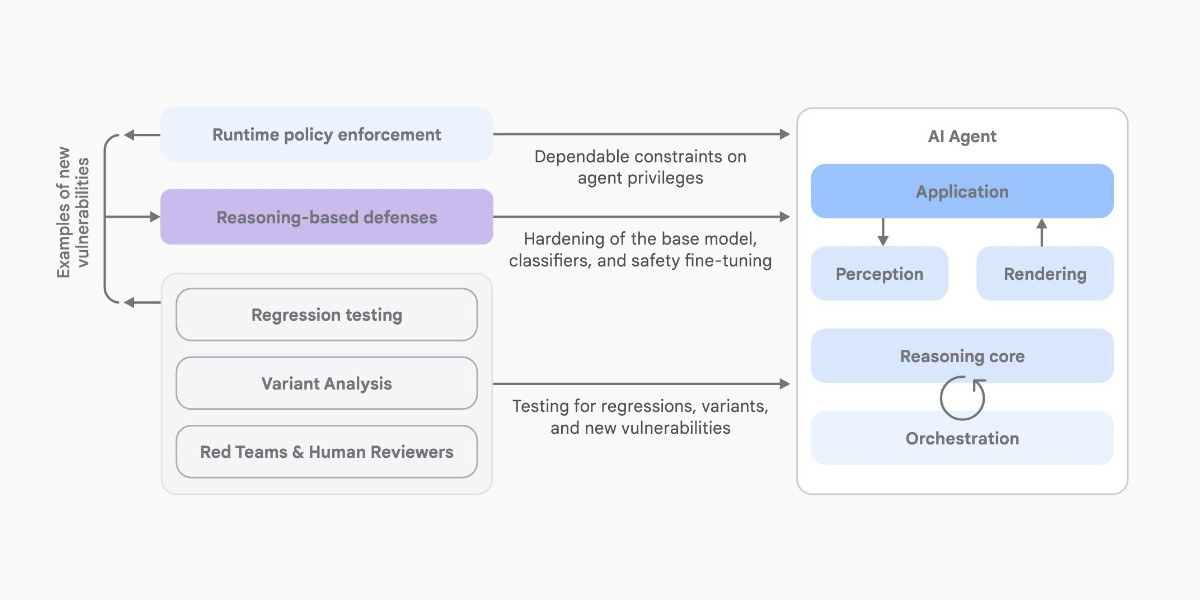
An Introduction to Google’s Approach to AI Agent Security
Here’s another new paper on AI agent security: An Introduction to Google’s Approach to AI Agent Security, by Santiago Díaz, Christoph Kern, and Kara Olive. (I wrote about a different …
39C3 - Agentic ProbLLMs: Exploiting AI Computer-Use and Coding Agents
Top AI Security Incidents of 2025 Revealed | Adversa AI
Discover how AI systems are being hacked in the wild — from prompt injection to agent abuse — with real breaches, lessons, and defenses in Adversa AI’s 2025 report.

The lethal trifecta for AI agents: private data, untrusted content, and external communication
If you are a user of LLM systems that use tools (you can call them “AI agents” if you like) it is critically important that you understand the risk of …
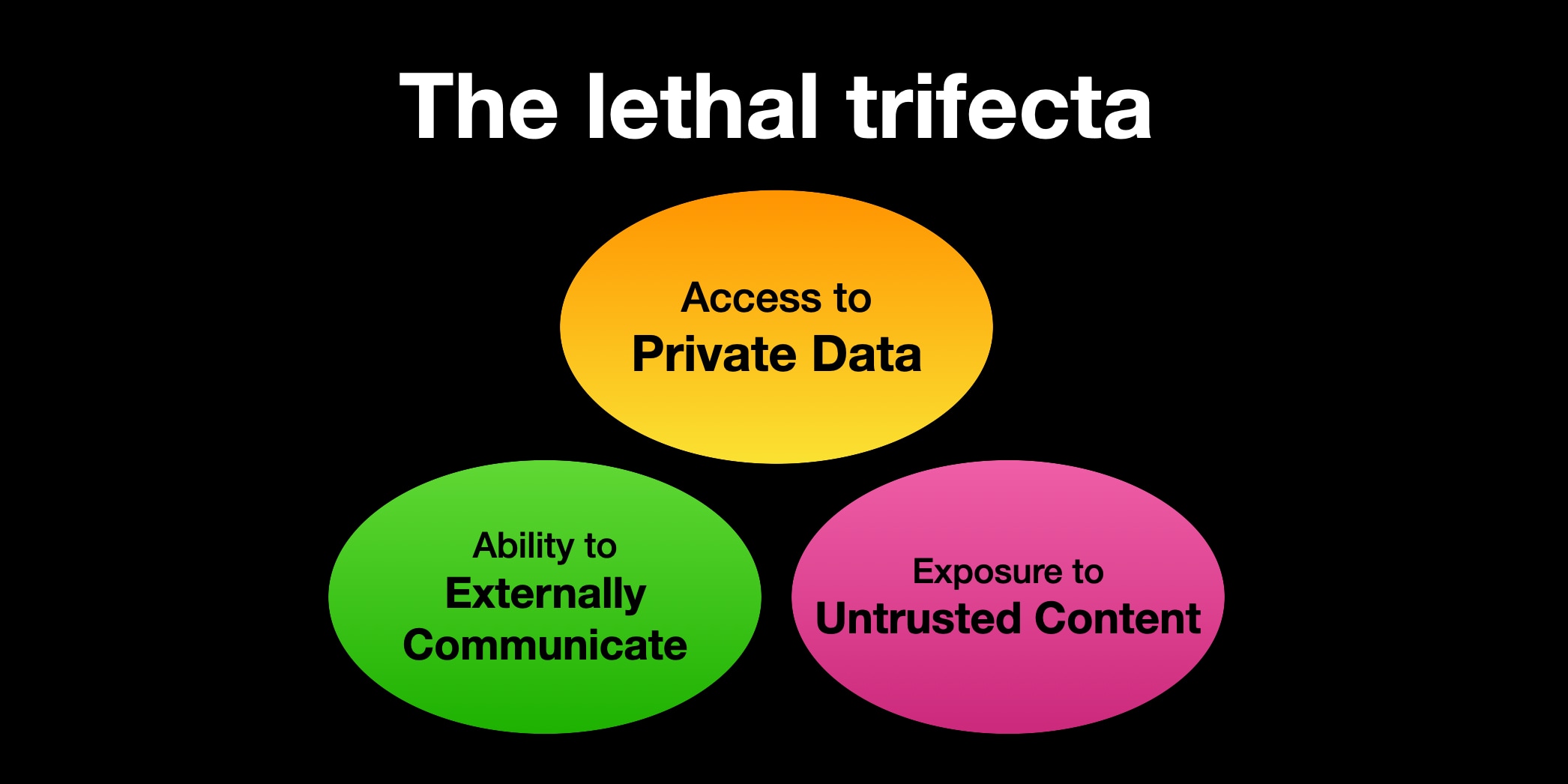
The lethal trifecta for AI agents: private data, untrusted content, and external communication
If you are a user of LLM systems that use tools (you can call them “AI agents” if you like) it is critically important that you understand the risk of …
Pwning Agentic AI Part I: Your AI Agent Is Already Compromised | TrendAI (US)
Organizations are rapidly connecting AI agents to their databases, document pipelines, and internal tools, creating privileged components that read untrusted input as part of their job. TrendAI™ Research examines how attackers turn these agents against you through return-to-tool (RTT) exploits, and what this means for the future of agentic AI security.

Agentic AI Governance: A Strategic Framework for Autonomous Systems
Agentic AI is moving from chat to action. Learn how to govern autonomous systems using the "Digital Contractor" framework and the 3-Tiered Guardrail system.