

Turn PDFs, scans, spreadsheets and 50+ file types into clean, structured data for RAG and AI agents. Use Unstructured Transform via API or MCP. Start free.
LlamaIndex | AI Agents for Document OCR + Workflows
LlamaParse is the world's best agentic OCR for processing complex documents with messy tables, charts, images, and more with human-level accuracy.
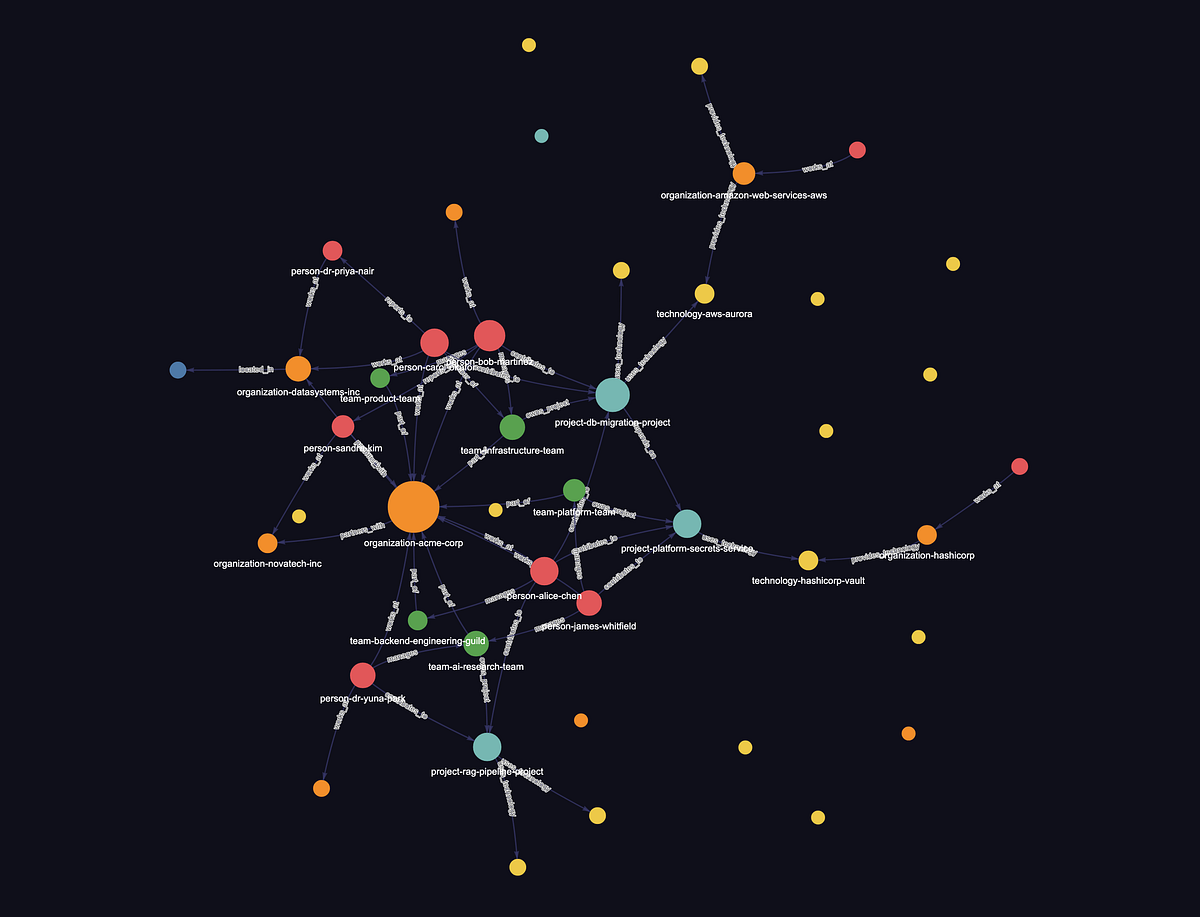
Build an LLM Wiki for Your AI Agents
Build an LLM Wiki for Your AI Agents with myKG and Obsidian How to turn a folder of mixed format documents into a typed, interlinked knowledge graph your agents can actually read — using myKG and …
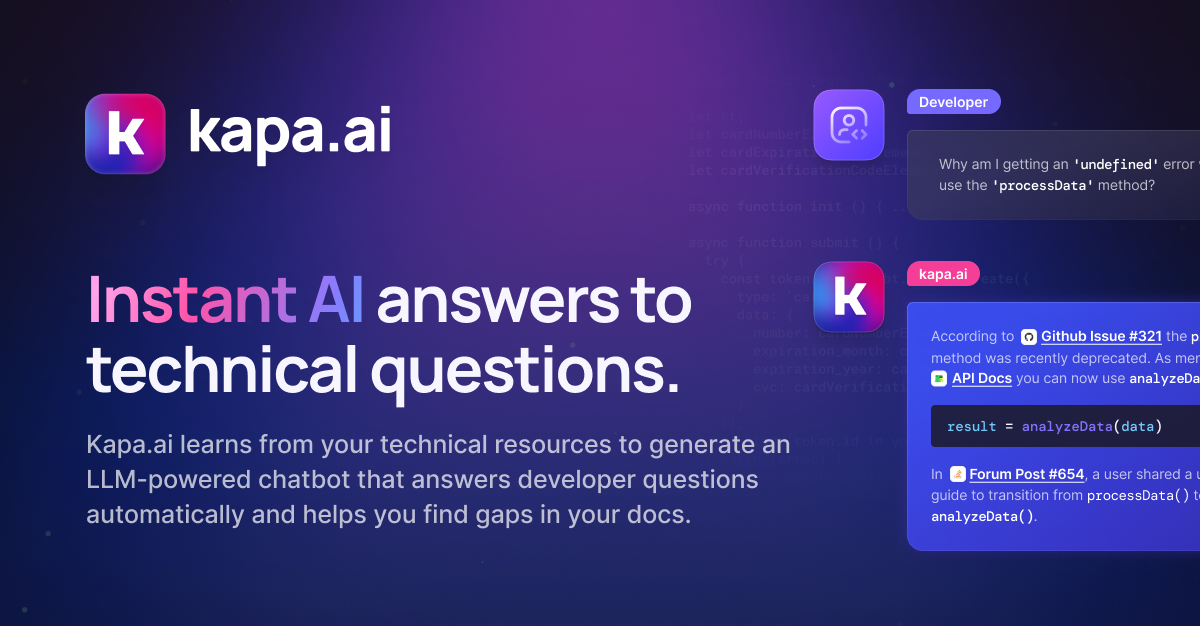
Writing documentation for AI: best practices | kapa.ai docs
Retrieval-Augmented Generation (RAG) systems like Kapa rely on your
PaperOrchestra: A Multi-Agent Framework for Automated AI Research Paper Writing
Synthesizing unstructured research materials into manuscripts is an essential yet under-explored challenge in AI-driven scientific discovery. Existing autonomous writers are rigidly coupled to specific experimental pipelines, and produce superficial literature reviews. We introduce PaperOrchestra, a multi-agent framework for automated AI research paper writing. It flexibly transforms unconstrained pre-writing materials into submission-ready LaTeX manuscripts, including comprehensive literature synthesis and generated visuals, such as plots and conceptual diagrams. To evaluate performance, we present PaperWritingBench, the first standardized benchmark of reverse-engineered raw materials from 200 top-tier AI conference papers, alongside a comprehensive suite of automated evaluators. In side-by-side human evaluations, PaperOrchestra significantly outperforms autonomous baselines, achieving an absolute win rate margin of 50%-68% in literature review quality, and 14%-38% in overall manuscript quality.

Atlas Research - AI-Powered Research Platform
Transform your research workflow with Atlas - an AI-powered platform for data analysis, PDF processing, and interactive notebooks.

deta/surf
Personal AI Notebooks. Organize files & webpages and generate notes from them. Open source, local & open data, open model choice (incl. local).
The Transformation of Documents: Repositories Are the New Unit of Knowledge Work
How will documents evolve when AI agents become ubiquitous? In a world of AI agents, does the repository become the source of truth—where humans declare intent, agents turn it into executable artif…

Memvid - Give your AI Agent Photographic Memory
Replace complex RAG pipelines with a single portable file that gives every agent instant retrieval and long-term memory.
Andrej Karpathy Stopped Using AI to Write Code. He’s Using It to Build a Second Brain Instead
His new workflow turns raw research into a self-maintaining wiki.No vector databases, no RAG pipelines, just markdown files and an LLM that…
Why are we even doing all this?
[This is a guest post by Rikab Gambhir. This blog post was initially written in a different file format and converted using AI. — T.] First, they came for the artists, and I did not speak out…

Supporting Our AI Overlords: Redesigning Data Systems to be Agent-First
Large Language Model (LLM) agents, acting on their users' behalf to manipulate and analyze data, are likely to become the dominant workload for data systems in the future. When working with data,...
Karpathy shares 'LLM Knowledge Base' architecture that bypasses RAG with an evolving markdown library maintained by AI
Karpathy proposes something simpler and more loosely, messily elegant than the typical enterprise solution of a vector database and RAG pipeline.

Introducing Unsloth Studio | Unsloth Documentation
Run and train AI models locally with Unsloth Studio.

What's the best vector database for building AI products? | Liveblocks blog
Vector databases are the backbone of retrieval-augmented generation (RAG), a key technique enabling modern AI products to deliver accurate, context-aware answers from private data. This is our comprehensive comparison of leading vector databases, including Turbopuffer, Pinecone, Qdrant, pgvector, and many more.
