

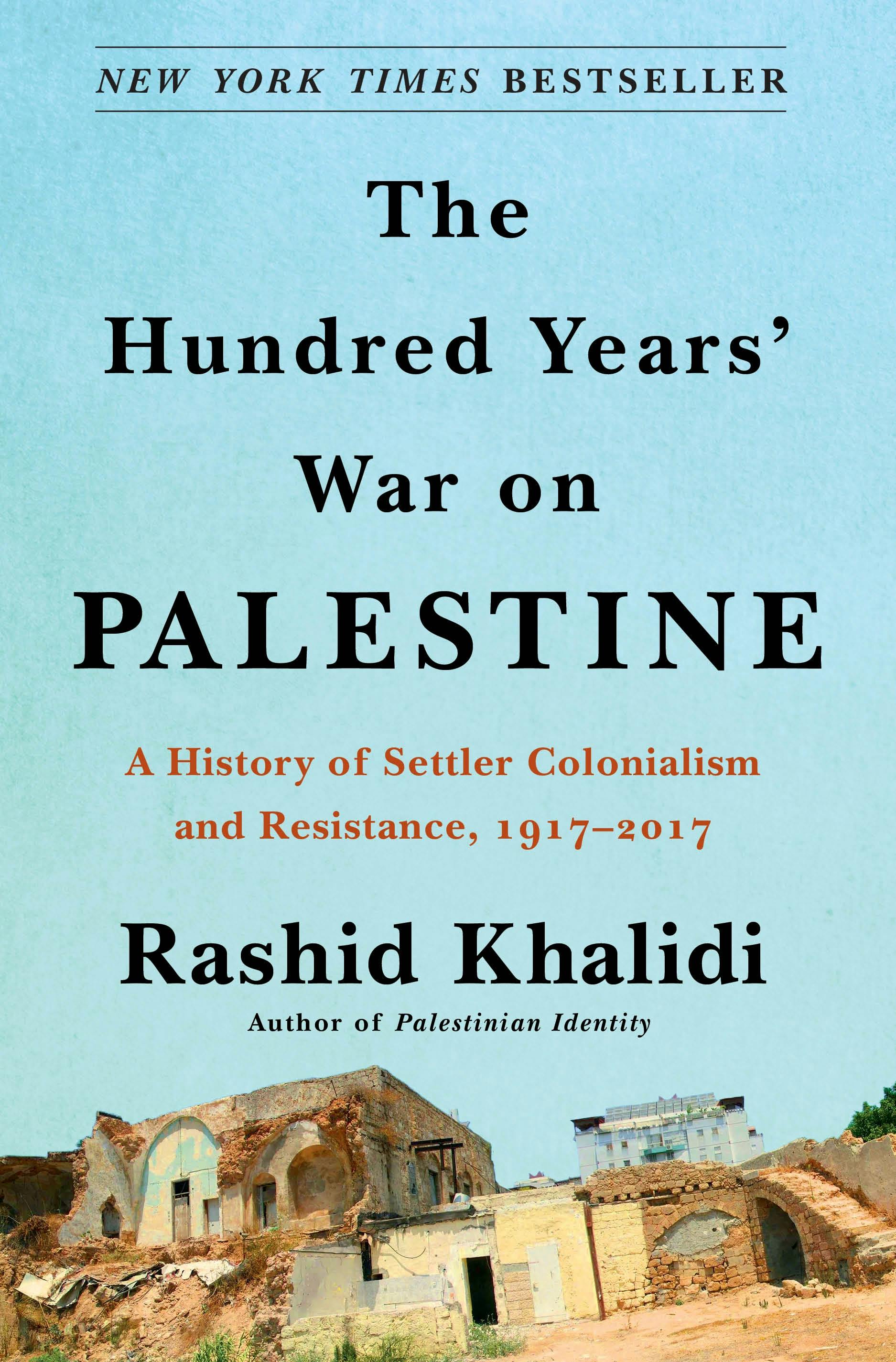
A landmark history of one hundred years of war waged against the Palestinians from the foremost US historian of the Middle East, told through pivotal events ...
The Ethnic Cleansing of Palestine | Oneworld
Renowned Israeli historian, Ilan Pappe’s groundbreaking work on the formation of the State of Israel. ‘Along with the late Edward Said, Ilan Pappe is the most eloquent writer of Palestinian history.’ NEW STATESMAN Between 1947 and 1949, over 400 Palestinian villages were deliberately destroyed, civilians were massacred and around a million men, women, and […]

Where the Palestinian Political Project Goes from Here
For decades, Hamas and Israel have maintained a violent equilibrium. How will the war change that paradigm?
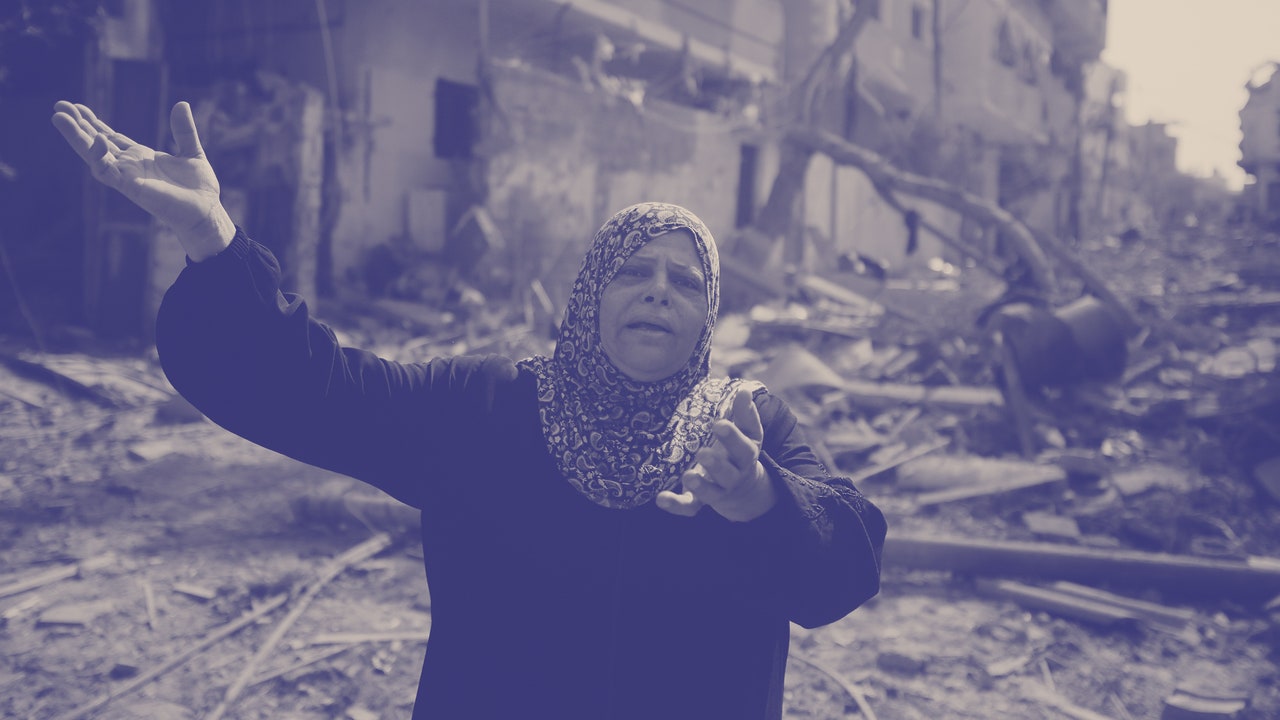
Britain’s Palestine failure and the collapse of the international rules-based order
Britain dithers on the sidelines instead of seizing the opportunity to address a century-old injustice inflicted on the Palestinian people

The Future Is Peace: A Shared Journey Across the Holy Land
Two lifelong peace activists and guides to Israel/Palestine, both of whom have lost family in the conflict, take readers on a revealing life-changing journey across this holy, bloodstained land and discover the mythic, political, and personal history that divides but also binds them and their peoples

The Iran War Is About Palestine
By helping Israel demolish what’s left of international legal constraint, the Iran war is hastening the dissolution of the Palestinian question.
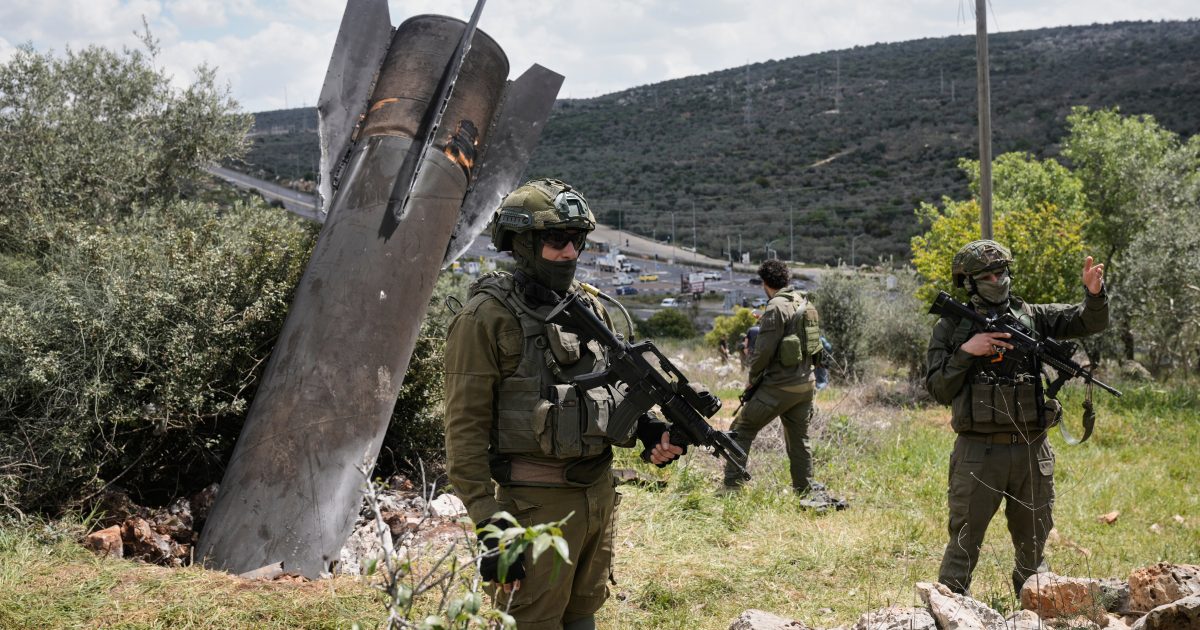
It Can Be Lonely to Have a Middle-of-the Road Opinion on the Middle East (Published 2024)
Some college students and faculty members are seeking space for nuanced perspectives on the Israel-Hamas war on deeply divided campuses.

US Labor & Imperialism Pt. 2: Zionism w/ Jeff Schuhrke (Palestine Pt. 16)
Men of Capital in Mandate Palestine
This essay examines Palestinian “men of capital” in British-ruled Palestine. It lays out their historical erasure as the product of settler colonialism; the historiographic dominance of the aristoc...

A Theory of Forced Labour Migration
This book focuses on labour dislocation and migration of Palestinians between 1967 and 1990. In particular, it highlights the social transformations in the occupied Palestinian territory where Palestinian labour was permitted to work in Israel from 1968 onwards.
The Palestinian Nakba and its Continuous Repercussions
Adel Manna', The Palestinian Nakba and its Continuous Repercussions, Israel Studies, Vol. 18, No. 2, Summer 2013, Shared Narratives—A Palestinian-Israeli Dialogue / Guest Editors: Paul Scham, Benjamin Pogrund, and As'ad Ghanem
A/81/249: Report of the Special Rapporteur on the situation of human rights in the Palestinian territories occupied since 1967, Francesca Albanese - Truth under the rubble: media in the time of genocide
SummaryThis report examines how the destruction of truth has become integral to the destruction of a people.
Israel: What Went Wrong?
A leading Israeli American scholar of the Holocaust explores and explains his native country's intensifying turn toward violence and exclusion.The distinguished historian Omer Bartov was born on a kibbutz, grew up in Tel Aviv, and served in the Israel Defense Forces during the Yom Kippur War. He went on to become a leading scholar of the German army and the Holocaust, before turning his attention to his native country.In Israel: What Went Wrong?, Bartov sketches the tragic transformation of Zionism, a movement that sought to emancipate European Jewry from oppression, into a state ideology of ethno-nationalism. How is it possible, he asks, that a state founded in the immediate aftermath of the Holocaust, an event that gave legitimacy to a national home for the Jews, stands credibly accused of perpetrating large-scale war crimes? How do we come to terms with the fact that Israel’s war of destruction is being conducted with the support, laced with denial and indifference, of so many of its Jewish citizens?Tracing the roots of the violent events currently unfolding in Israel and the occupied territories, Bartov tracks his country's moral tribulations and considers the origins of Zionism, the intertwining of Israel’s independence with Palestinian displacement, the politics of the Holocaust, controversies over the term "genocide," and the uncertain future. The result is a searing and urgent critique that addresses today’s debates over Zionism and the future of Israel with rigor and depth.
'Zionism Led to Genocide. It Must Disappear': Omer Bartov's New Book …
archived 25 Apr 2026 07:22:14 UTC

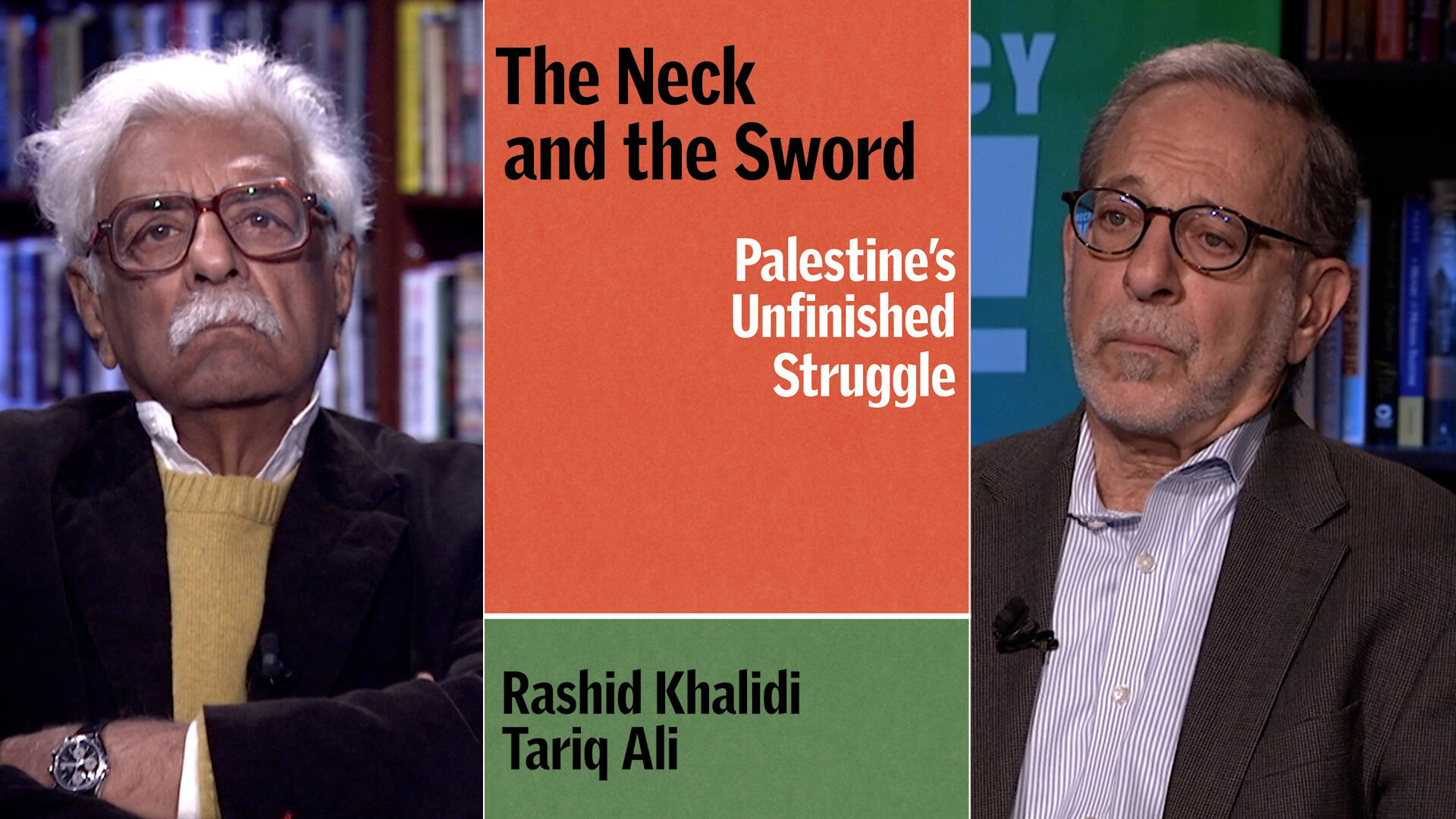
Israeli Elections to Global Movements: Tariq Ali, Rashid Khalidi on New Book “The Neck and the Sword”
We get analysis of the Israeli elections, the upcoming U.S. midterms, the pro-Palestine movement and more from Palestinian American scholar Rashid Khalidi and Pakistani British writer Tariq Ali. They are co-authors of the new book The Neck and the Sword: Palestine’s Unfinished Struggle. The book, an extended conversation between Khalidi and Ali over two years, offers an overview of Palestinian intellectual and political history, drawing its title from a famous phrase used by the renowned Palestinian writer Ghassan Kanafani to describe the futility of “peace talks” between occupier and occupied, saying it was akin to a “conversation between the sword and the neck.” Kanafani was assassinated by Israel in 1972, “murdered simply because his words were too dangerous for Israel to tolerate,” says Khalidi. Public opinion about Israel has grown increasingly negative in the United States and across much of the world in the wake of the genocide in Gaza, and it’s “not going to shift back,” says Khalidi. “People have seen something that cannot be unseen. They’ve seen genocide. They’ve seen slaughter. And Israel has no defense.” “Even in countries with no history of a Palestine solidarity movement, suddenly the Palestine flag emerges,” says Ali. “Why? Because their governments are trying to stop dissent on this issue, so they are defying their governments.”

Palestinians Risked Their Lives to Document Gaza, Then Came The Algorithm
In Gaza, survival unfolds alongside a fight to be seen in a digital world increasingly shaped and manipulated by algorithms.
