

Includes the world's most comprehensive and detailed democracy ratings. The latest version of the dataset and associated reference documents can be downloaded free of charge below.
Democracy Tracker | The Global State of Democracy
Each report describes an event that affects the state of democracy in a given country, with assessments made relative to that country's context, not as comparisons or rankings between countries.
Database
Find the right digital tool for your project thanks to Democracy Technologies' database, a collection of tools for participation, i-voting, and more.
Nira Data – DPI Report
The Democracy Perception Index (DPI) is a cornerstone of the Copenhagen Democracy Summit, providing the most comprehensive global snapshot of public opinion on democracy.
The Global State of Democracy 2026: Democracy in an Age of Conflict
In the face of increasing political and societal fragmentation, the Global State of Democracy 2026 explains the patterns that define the direction of democratization around the world. Drawing on the latest data from the Global State of Democracy Indices, the report documents both democratic stagnation and key declines in indicators that measure the credibility of elections, the effectiveness of legislatures, respect for freedoms of expression and the press, and access to justice. These phenomena affect countries across thespectrum of democratic performance.
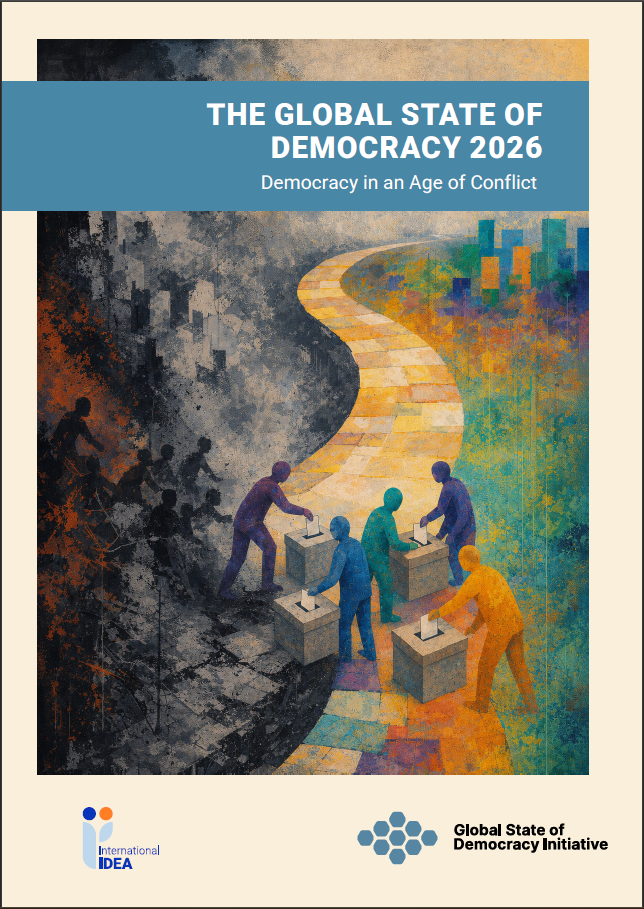
The Global State of Democracy 2026: Democracy in an Age of Conflict
In the face of increasing political and societal fragmentation, the Global State of Democracy 2026 explains the patterns that define the direction of democratization around the world. Drawing on the latest data from the Global State of Democracy Indices, the report documents both democratic stagnation and key declines in indicators that measure the credibility of elections, the effectiveness of legislatures, respect for freedoms of expression and the press, and access to justice. These phenomena affect countries across thespectrum of democratic performance.
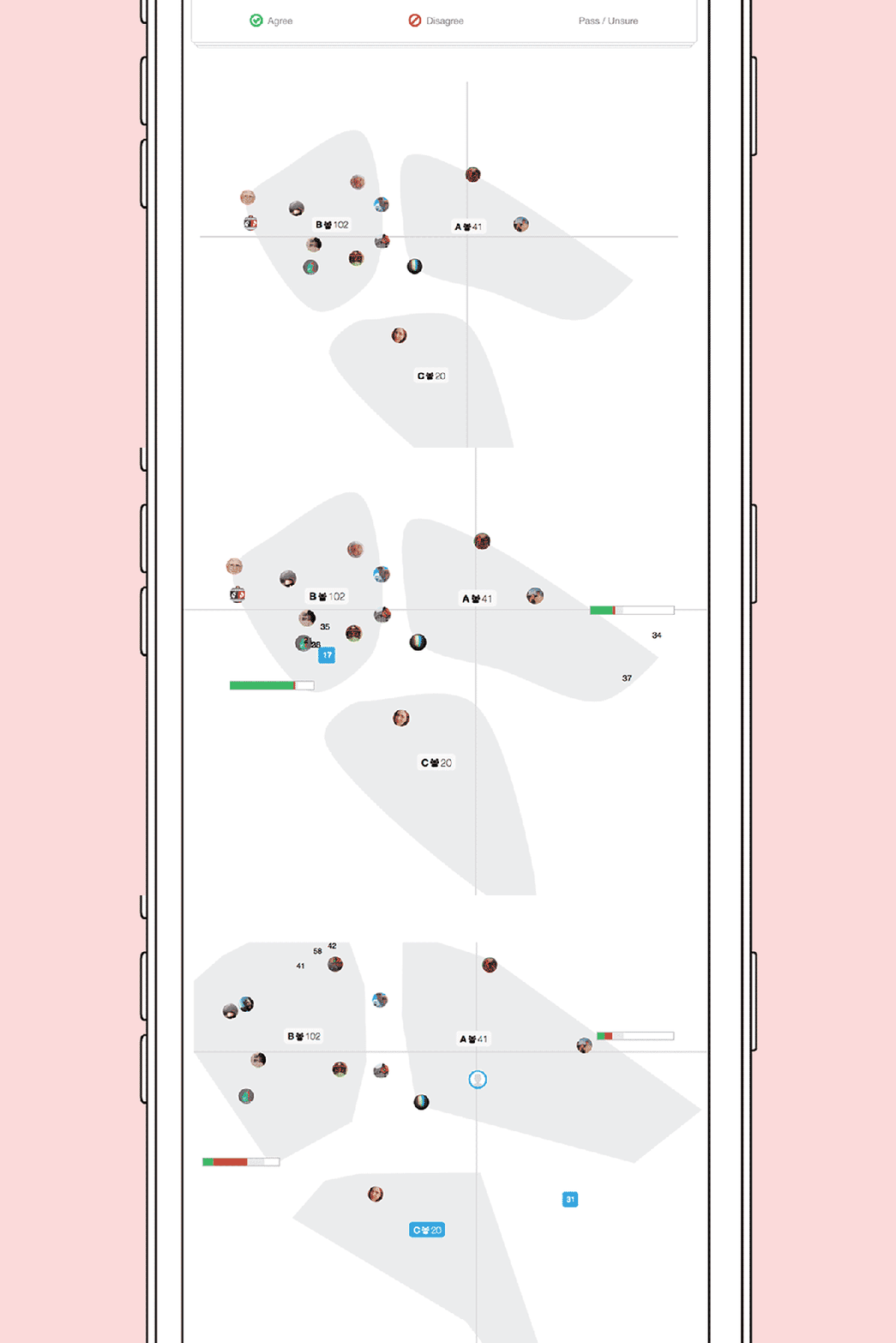
The Internet Doesn’t Have to Be Bad for Democracy
A new form of online survey uses crowdsourcing and data visualization to reveal the hidden nuances in partisan debates.
Democracy as a Scaled Collective Intelligence Process: Points of Vulnerability and Augmentation
As part of the Digital Library's transition to Open Access, new features for researchers are available in the Premium Edition. Click here to learn more.

Five Dimensions of Scaling Democratic Deliberation: With and Beyond AI
DemocracyNext's new paper on Five dimensions of scaling democratic deliberation: With and beyond AI
Democracy indicators in US at lowest levels for 50 years, data shows
Trump administration undermining rule of law at home and worldwide, according to intergovernmental report

Homepage
DemocracyNext is an international non-profit, non-partisan research and action institute.
Democracy Now!
A daily TV/radio news program, hosted by Amy Goodman and Juan Gonzalez, pioneering the largest community media collaboration in the U.S.
We Need To Rethink Democracy
Verifying information about elections
We can help you check the facts behind election information you receive.

Democracy x AI Cohort | Mozilla Foundation
The Democracy x AI cohort is founded on the hypothesis that, if built differently, AI could strengthen democracy rather than erode it.

Liquid Democracy: True Democracy for the 21st Century
Liquid Democracy, a subset of Delegative Democracy, is a powerful voting model for collective decision making in large communities. Liquid…