

Documentation for @vanishing.page/simple-aes
Dead Simple Sites — Minimal Web Design Inspiration & Gallery
A curated gallery of the most minimal, clean websites on the internet. No animations, no scroll jacking — just pure, simple web design inspiration. Updated weekly.

Yet another snippet extension
Contains an introduction, installation instructions and other important notes.
LEAF: Compact and Efficient Blind Signature from Code-based Assumptions
Recently, recent advancement in Asiacrypt'25, gives new blind signature frameworks, collectively named Tanuki(s), built upon cryptographic group actions. Their work introduces novel techniques and culminates in a concurrently secure blind signature framework. Straightforward instantiations based on CSIDH (CSI-FiSh) and LESS yield signature sizes of 4.5 KB and 64 KB respectively, providing the first efficient blind signatures in the isogeny-based and code-based literature allowing concurrent executions. In this work, we improve the code-based instantiations by using the canonical form of linear equivalent codes by a careful treatment. However, the canonical form does not naturally support a group action structure, which is central to the security proofs of Tanuki(s). Consequently and unfortunately, the original security guarantees do not directly apply. To address this, we develop two distinct non-black-box reductions for both blindness and the one-more unforgeability. In the end, the improvements do not compromise the security. This results in a concurrently secure code-based blind signature scheme with a compact signature size of 4.4 KB, which is approximately 1% smaller than the isogeny-based one. We also provide a C implementation where the signing time in 99ms and 268 Mcycles on an Intel i7 2.3~GHz CPU. We also look forward to our approaches benefiting advanced constructions built on top of LESS in the future.
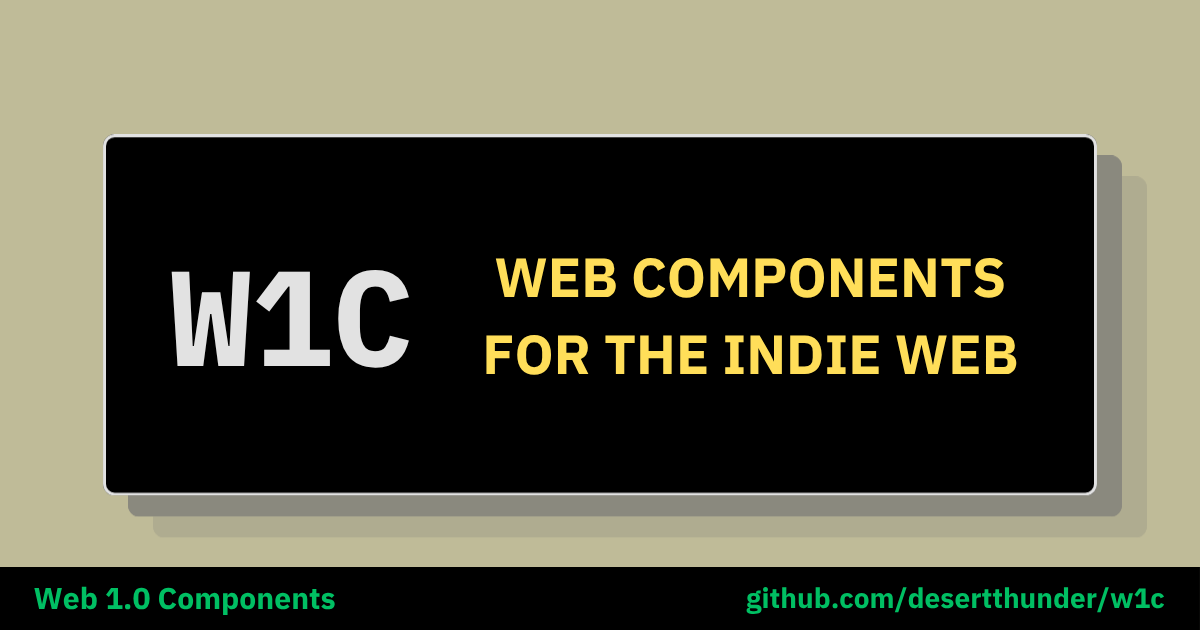
Everything I'll forget about Evals | Hrishi Olickel
An actually actionable guide on how to do them
Practical Common Lisp
This page, and the pages it links to, contain text of the Common Lisp book Practical Common Lisp published by Apress These pages now contain the final text as it appears in the book. If you find errors in these pages, please send email to book@gigamonkeys.com. These pages will remain online in perpetuity—I hope they will serve as a useful introduction to Common Lisp for folks who are curious about Lisp but maybe not yet curious enough to shell out big bucks for a dead-tree book and a good Common Lisp tutorial for folks who want to get down to real coding right away. However, don't let that stop you from buying the printed version available from Apress at your favorite local or online bookseller. For the complete bookstore browsing experience, you can read the letter to the reader that appears on the back cover of the treeware edition of the book.

Elicitation - Model Context Protocol
Use this file to discover all available pages before exploring further.
Featherless - Serverless LLM Hosting
Freedom to reliably deploy any open model effortlessly.
Wikipedia:Orphan
In the Wikipedia glossary, an orphan is defined as "an article with no links from other pages in the main article namespace". These pages can still be found by searching Wikipedia, but it is preferable that they can also be reachable by links from related pages; it is therefore helpful to add links from other suitable pages with similar or related information. De-orphaning articles is an important aspect of building the web.
this is also a thing, but separate from the basic website stuff anna is talking about. the at:// potential is sort of about navigating to that sort of URI in browser bar. but I think more realistically, having anchor links. <a atref="at://..."> (or more realistically: data-atp="at://...")
Sure seems like there’s nothing stopping @ghost.org from hopping on board the AT train now at very low dev cost. Would love for our existing Ghost blog to magically turn @standard.site compatible overnight.

Bryan (they/them)
My first Leaflet!! You can now publish TO @standard.site lexicons from @astro.build sites using my new plugin! As sites like @pckt.blog and @leaflet.pub and @offprint.app add support for the site.standard lexicon, this plugin will let you publish to and pull from those other sites! #atproto #atdev
Discovered a ghost-atproto plugin today that was developed by @goldavelez.org & co. which could now be greatly simplified with the introduction of @standard.site Give some ❤️ here if you want Ghost in the atmosphere 👇 github.com/Cooperation-org/ghost-atproto…

Erlend Sogge Heggen
Sure seems like there’s nothing stopping @ghost.org from hopping on board the AT train now at very low dev cost. Would love for our existing Ghost blog to magically turn @standard.site compatible overnight.
