

Ante has taken the first step towards something we all thought was impossible: blending reference counting and borrow checking without run-time crashes. 0
Enabling the next iteration of the borrow checker on nightly | Rust Blog
Empowering everyone to build reliable and efficient software.

Structured merge with auto-tuning: balancing precision and performance
Software-merging techniques face the challenge of finding a balance between precision and performance. In practice, developers use unstructured-merge (i.e., line-based) tools, which are fast but imprecise. In academia, many approaches incorporate information on the structure of the artifacts being merged. While this increases precision in conflict detection and resolution, it can induce severe performance penalties. Striving for a proper balance between precision and performance, we propose a structured-merge approach with auto-tuning. In a nutshell, we tune the merge process on-line by switching between unstructured and structured merge, depending on the presence of conflicts. We implemented a corresponding merge tool for Java, called JDime. Our experiments with 8 real-world Java projects, involving 72 merge scenarios with over 17 million lines of code, demonstrate that our approach indeed hits a sweet spot: While largely maintaining a precision that is superior to the one of unstructured merge, structured merge with auto-tuning is up to 12 times faster than purely structured merge, 5 times on average.

Palomar – a registry of Lean verified mathematics
In recent months there has been a proliferation of AI-generated proofs of various old and new results, some of which have been formalized in the proof assistant language Lean. However, checking tha…

Signals and Threads
Stephen Dolan works on Jane Street’s Tools and Compilers team where he focuses on the OCaml compiler. In this episode, Stephen and Ron take a trip down memory lane, discussing how to manage computer memory efficiently and safely. They consider trade-offs between reference counting and garbage collection, the surprising gains achieved by prefetching, and how new language features like local allocation and unboxed types could give OCaml users more control over their memory.

FAIR Metadata Check (Extended): the FAIR rubric for any repository
Checkers Is Solved
The game of checkers has roughly 500 billion billion possible positions (5 × 10²⁰). The task of solving the game, determining the final result in a game with no mistakes made by either player, is daunting. Since 1989, almost continuously, dozens of ...

QuickRef.ME - Quick Reference Cheat Sheet
Share quick reference and cheat sheet for developers

Inference Time Memory Module | Research | Tiles
Simple inference-time memory module that treats memory management as a series of LLM calls and agent loops over a markdown-based file tree.
HalluCiteChecker: A Lightweight Toolkit for Hallucinated Citation Detection and Verification in the Era of AI Scientists
We introduce HalluCiteChecker, a toolkit for detecting and verifying hallucinated citations in scientific papers. While AI assistant technologies have transformed the academic writing process, including citation recommendation, they have also led to the emergence of hallucinated citations that do not correspond to any existing work. Such citations not only undermine the credibility of scientific papers but also impose an additional burden on reviewers and authors, who must manually verify their validity during the review process. In this study, we formalize hallucinated citation detection as an NLP task and provide a corresponding toolkit as a practical foundation for addressing this problem. Our package is lightweight and can perform verification in seconds on a standard laptop. It can also be executed entirely offline and runs efficiently using only CPUs. We hope that HalluCiteChecker will help reduce reviewer workload and support organizers by enabling systematic pre-review and publication checks. Our code is released under the Apache 2.0 license on GitHub and is distributed as an installable package via PyPI. A demonstration video is available on YouTube.

WiCER: Wiki-memory Compile, Evaluate, Refine Iterative Knowledge Compilation for LLM Wiki Systems
The LLM Wiki pattern, to compile and provide domain knowledge into a persistent artifact and serve it to LLMs via KV cache inference, promises context access at sub-second latency with zero retrieval failure. Realizing this requires solving the compilation gap: LLM compilation distilling raw documents into a wiki without catastrophically discarding critical facts. We characterize this gap across 17 RepLiQA domains (6,800 questions): we observe that full context KV cache inference outperforms RAG on curated knowledge (4.38 vs. 4.08 out of 5, 7.3 faster TTFT) but degrades below RAG at scale due to attention dilution, and blind compilation fails entirely (2.14 to 2.32 vs. 3.46, 53 to 60% catastrophic failure rate). To address the compilation gap, we propose WiCER (Wiki-memory Compile, Evaluate, Refine), an iterative algorithm inspired by counterexample-guided abstraction refinement (CEGAR) that closes this gap. WiCER evaluates compiled wikis against diagnostic probes, identifies dropped facts, and forces their preservation in subsequent compilations. One to two iterations recover 80% of lost quality (mean 3.24 vs. 3.47 for raw full-context across the 15 topics with baselines), reducing catastrophic failures by 55% relative. An ablation across all 17 topics confirms that targeted diagnosis (+0.95), not generic pinning (+0.16), drives the gains. All code and benchmarks are released for reproducible research.
Fine-grained and accurate source code differencing | Proceedings of the 29th ACM/IEEE International Conference on Automated Software Engineering
As part of the Digital Library's transition to Open Access, new features for researchers are available in the Premium Edition. Click here to learn more.

Cosmik Lab Notes 003: Semble Updates - Discover, Collection Preview, Sorting, and more - Cosmik Labs
An overview of some recent enhancements to Semble (with a poll for next features!)
Semble Lexicon Reference | Semble Docs | Cosmik
This document provides a complete reference for Semble’s ATProto lexicons (data schemas).
Tree Borrows | Proceedings of the ACM on Programming Languages
The Rust programming language is well known for its ownership-based type system, which offers strong guarantees like memory safety and data race freedom. However, Rust also provides unsafe escape hatches, for which safety is not guaranteed automatically ...

Free Tiers/Trials/Credits for Inference

potential for coding etc
Coding w/ AI - References/Resources/Tools
Free Tiers/Trials/Credits for Inference (by Bee 🐝) — Semble
Monthly Subscription Coding Plans (by Bee 🐝) — Semble

Best LLM for Coding 2026 | AI Coding Model Rankings & Benchmarks
VibeBench - Track the real-time vibe of AI models
Getting a Gemini API key is an exercise in frustration | Hacker News

[DS] Homepage

Cloudflare Workers AI | Open-source AI inference

NVIDIA NIM for Developers

SambaNova | The Fastest AI Inference Platform
Pricing | Mistral AI
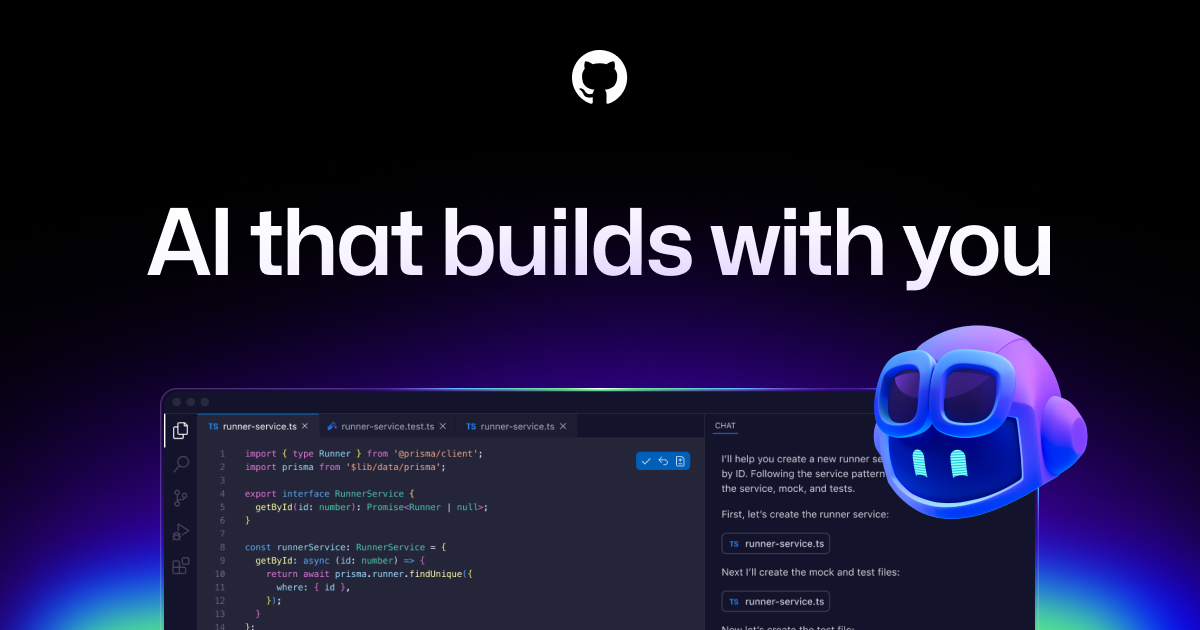
GitHub Copilot · Plans & pricing

JetBrains AI Plans & Pricing