


This text was published in social media in January 2017 in a series of improvised, spontaneous tweets, which reached 3 million views within one month. Their common element was their trademark signature, “- With love, your Eastern European friends”, and the accompanying hashtag #LearnFromEurope. Excerpts and summaries were published by various on-line media, but this is the first time it is published as a whole.
LiberationValues
LibertationValues is a political quiz aimed at anti-authoritarian leftists
LiberationValues
LibertationValues is a political quiz aimed at anti-authoritarian leftists
(PDF) Authoritarian Neoliberalism from Below: Subjectivity and Platform Capitalism in Argentina and Brazil
PDF | We are witnessing a worldwide resurgence of reactionary ideologies and movements, combined with an escalating assault on democratic institutions... | Find, read and cite all the research you need on ResearchGate

Here's a PDF Version of the CIA Guide to Sabotaging Fascism
A 404 Media reader made a PDF version of the World War II-era manual that's going viral right now.
Whitepaper — The Collective Intelligence Project
I. Capitalist Acceleration: Sacrificing safety for progressII. Authoritarian Technocracy: Sacrificing participation for safetyIII. Shared Stagnation: Sacrificing progress for participation

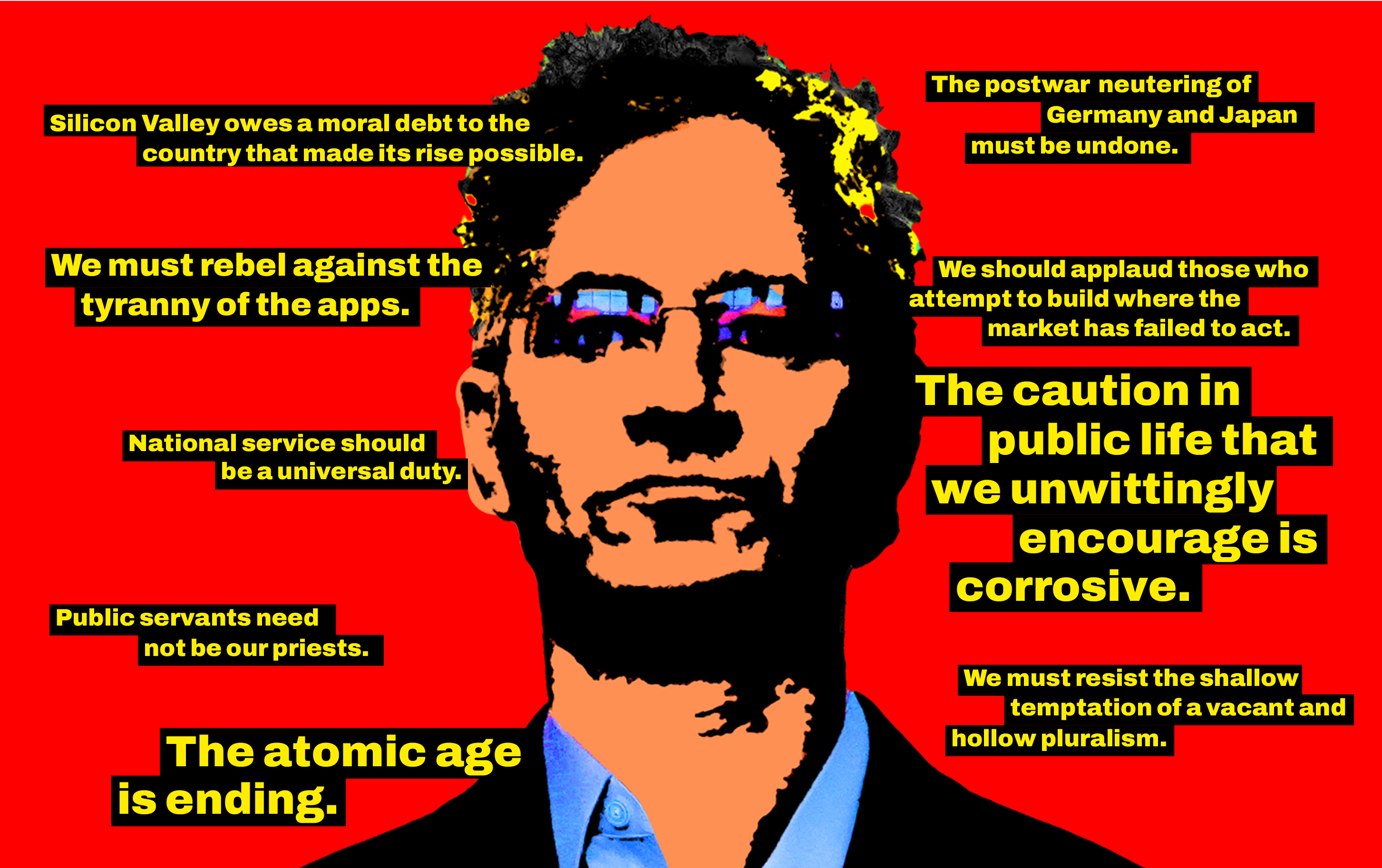
Palantir's social media manifesto is a blueprint for technofascism
The surveillance firm’s viral X post calls for hard power, conscription and the end of pluralism. AI expert and academic Mark Coeckelbergh on what happens when technology becomes the gateway to authoritarianism
Media Media
The authoritarians are winning, we can all see that. It wouldn't be the worst thing if the pro-democracy camp stopped being naive about social media.

Social Media Vs Democracy
The rise of AI sovereignty: Authoritarian technological imaginaries as a form of reflexive control
Recent literature increasingly examines generative artificial intelligence's (AI's) role in disinformation and propaganda as a key driver of digital authoritarianism. Yet, less attention has been paid to how authoritarian regimes may influence the global governance of AI itself. This essay addresses this gap by analysing the impact of authoritarian technological imaginaries, focusing on the rise of ‘AI sovereignty’ as a central concept shaping global AI governance. It adopts a conceptual framework that combines the notion of imaginaries with the concept of reflexive control, originating in Soviet strategic thought and referring to influencing an adversary's perceptions so they act in ways aligned with the initiator's goals, to study authoritarian diffusion and the global politics of AI. Through an examination of public statements by the Russian president, the study shows how Russia constructs an AI imaginary that extends Cold War logics of nuclear competition into the digital era, framing AI as a matter of security and survival rather than ethics or rights. Drawing on the Russian case, the analysis identifies three frames that underpin the authoritarian AI imaginary: AI as a tool for power and domination; Western AI as a cultural threat; and AI as a guarantor of state efficiency. The article argues that such imaginaries shape the cognitive environment of global policy debates, promoting sovereignty-centred and securitised approaches to AI governance. It suggests that recognising the role of reflexive control in authoritarian diffusion helps distinguish legitimate Global South concerns from authoritarian influence and supports more inclusive and resilient models of AI governance.

The rise of AI sovereignty: Authoritarian technological imaginaries as a form of reflexive control
Recent literature increasingly examines generative artificial intelligence's (AI's) role in disinformation and propaganda as a key driver of digital authoritarianism. Yet, less attention has been paid to how authoritarian regimes may influence the global governance of AI itself. This essay addresses this gap by analysing the impact of authoritarian technological imaginaries, focusing on the rise of ‘AI sovereignty’ as a central concept shaping global AI governance. It adopts a conceptual framework that combines the notion of imaginaries with the concept of reflexive control, originating in Soviet strategic thought and referring to influencing an adversary's perceptions so they act in ways aligned with the initiator's goals, to study authoritarian diffusion and the global politics of AI. Through an examination of public statements by the Russian president, the study shows how Russia constructs an AI imaginary that extends Cold War logics of nuclear competition into the digital era, framing AI as a matter of security and survival rather than ethics or rights. Drawing on the Russian case, the analysis identifies three frames that underpin the authoritarian AI imaginary: AI as a tool for power and domination; Western AI as a cultural threat; and AI as a guarantor of state efficiency. The article argues that such imaginaries shape the cognitive environment of global policy debates, promoting sovereignty-centred and securitised approaches to AI governance. It suggests that recognising the role of reflexive control in authoritarian diffusion helps distinguish legitimate Global South concerns from authoritarian influence and supports more inclusive and resilient models of AI governance.
[UNLOCKED] How Fascism Works (a Michael Parenti Reading)
Trump Action Tracker | Keeping a tally of Trump's actions
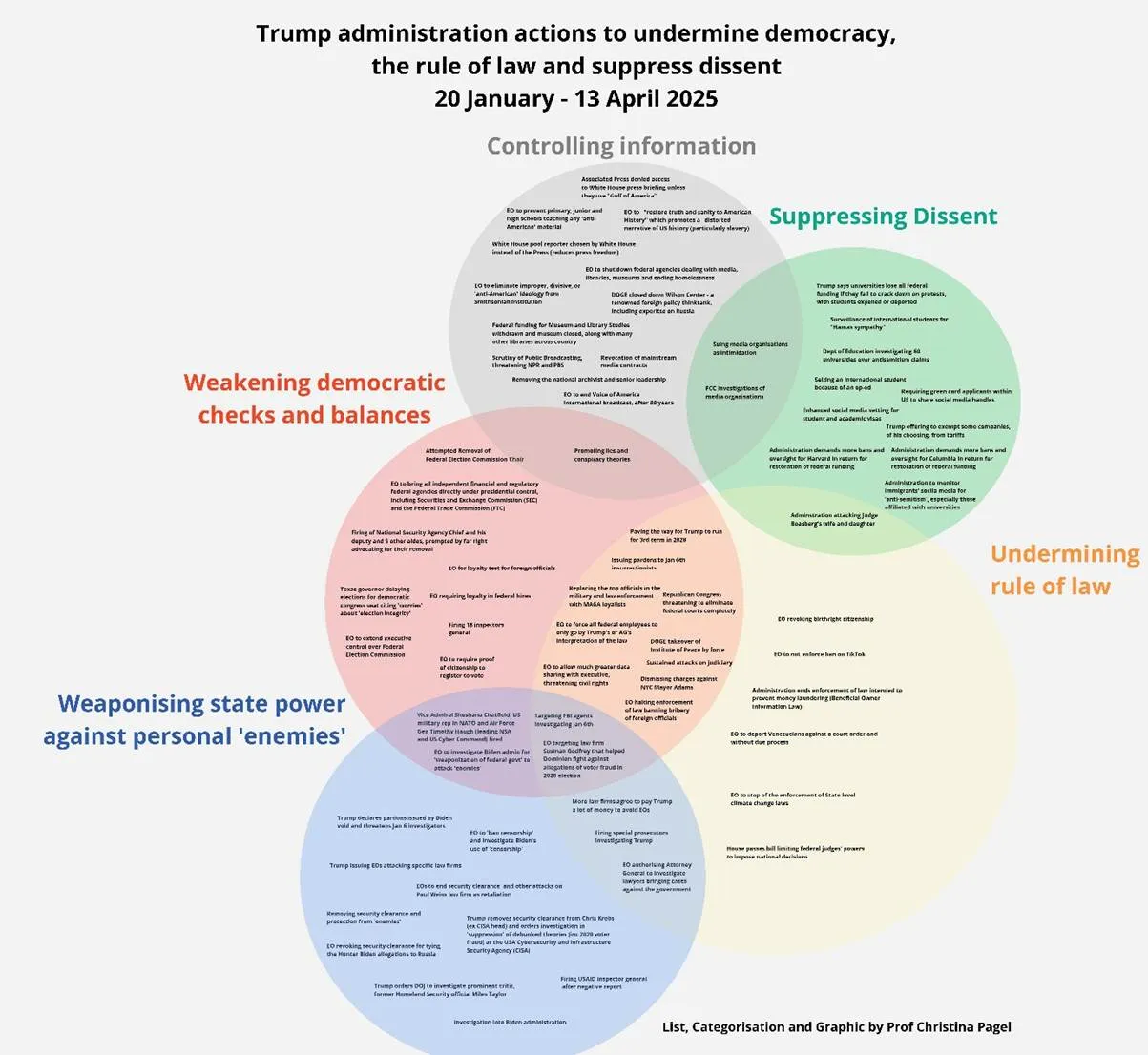
Free and independent tracker documenting Trump-related actions using verified news sources. Statements & plans mapped to authoritarianism domains.
Trump Action Tracker | Keeping a tally of Trump's actions
Free and independent tracker documenting Trump-related actions using verified news sources. Statements & plans mapped to authoritarianism domains.
You Can’t Post Your Way Out of Fascism
Authoritarians and tech CEOs now share the same goal: to keep us locked in an eternal doomscroll instead of organizing against them, Janus Rose writes.

The authoritarians are winning, we can all see that. Maybe, just maybe, it wouldn't be the worst thing if pro-democracy people stopped being ridiculously naive about social media. berjon.com/media-media/

Media Media
berjon.comIt can also be argued that authoritarianism is just politically superior at administering a political economy of broken promises and stagnating or falling standards of living. hup.harvard.edu/books/9780674976788

The Triumph of Broken Promises — Harvard University Press
www.hup.harvard.edu
