


Water for farmers who irrigate, not speculators. Farmland protected from industrial energy projects, local timber backed, Labor's fisheries job cuts reversed.
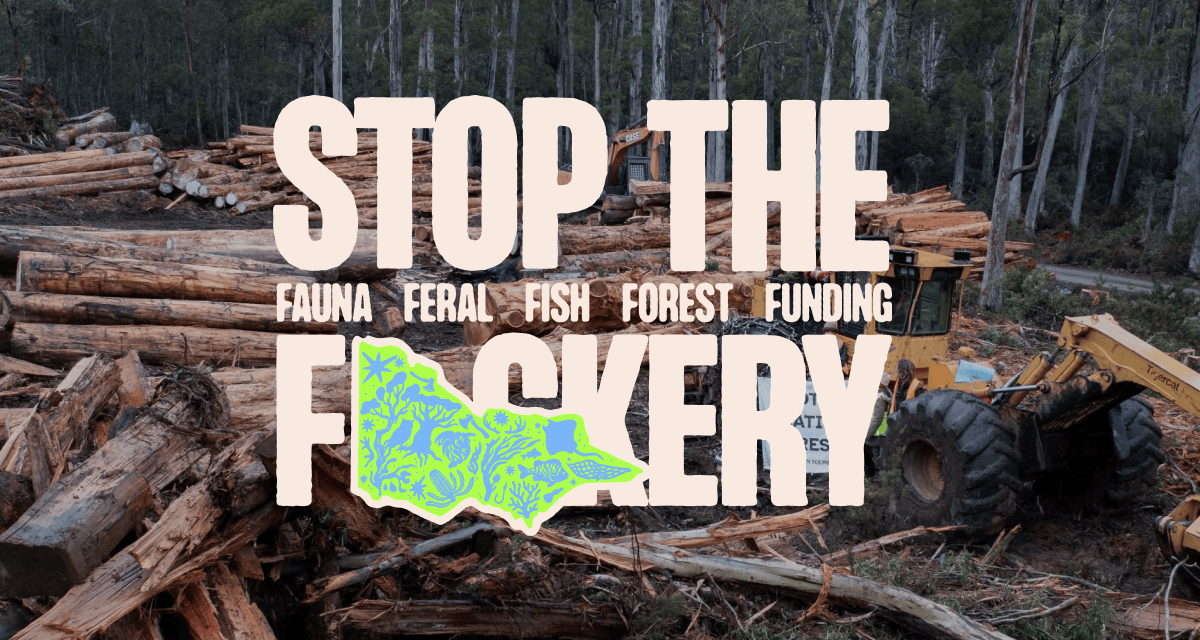
Our Allies | Stop The Fuckery
Victorians for Nature exists to hold governments and corporations to account for the systematic destruction of nature in Victoria. And to demand better.
State of the Water Industry
What topics and trends are driving the water community forward? Read the AWWA State of the Water Industry Report for data-driven insights into key issues.

Energy - One Nation Victoria
Victoria sits on coal, gas and uranium. Scrapping net-zero targets, putting Victorian gas first, ending the nuclear ban, and getting power bills back down.

A fair go for rural and regional Victoria – Victorian Socialists
Regional communities deserve the same opportunities. We want to rebuild regional transport, secure sustainable jobs, and end the exploitation of rural workers.
Agriculture research summaries
Read short summaries of agricultural studies tailored to B.C. farmers and producers.
Governing The Commons: The Evolution of Institutions for Collective Action
The governance of natural resources used by many individuals in common is an issue of increasing concern to policy analysts. Both state control and privatization of resources have been advocated, but neither the state nor the market has been uniformly successful in solving common-pool resource problems. After critiquing the foundations of pol icy analysis as applied to natural resources, Elinor Ostrom here provides a unique body of empirical data to explore the conditions under which common-pool resource problems have been satisfactorily or unsatisfactorily solved. Dr. Ostrom first describes three models most frequently used as the foundation for recommending state or market solutions. She then outlines theoretical and empirical alternatives to these models in order to illustrate the diversity of possible solutions. In the following chapters she uses institutional analysis to examine different ways - both successful and unsuccessful - of governing the commons. In contrast to the propositions of the " tragedy of the commons" argument. common-pool problems sometimes are solved by voluntary organizations rather than by a coercive state. Among the cases considered are communal tenure in meadows and forest, irrigation communities and other water rights. and fisheries. Governing the Commons makes a major contribution to the analytical literature on institutions and to our understanding of human cooperation. Elinor Ostrom is co-director of the Workshop in Political Theory and Policy Analysis and professor of political science at Indiana University.

The Seas Will Save Us: How an Army of Ocean Farmers are Starting an Economic Revolution
I’m a fisherman who dropped out of high school in 1986 at the age of 14. Over my lifetime, I’ve spent many nights in jail. I’m an…

Grassroots Economics — Community-Powered Economies
Empowering communities across the World with community currencies, ecosystem restoration, and commitment pooling since 2010.
A social-ecological framework for analyzing and designing integrated crop–livestock systems from farm to territory levels
Integrated crop–livestock systems are often considered a promising way to address agricultural sustainability issues. Many authors claim that complementarities and synergies between crops and livestock can improve nutrient cycling and delivery of ecosystem services (ES) in agricultural systems. They have analyzed effects of interactions at the farm level and affirmed the potential advantage of developing crop–livestock interactions at the territory level. However, potential benefits of developing synergies beyond the farm level have not been clearly identified. Thus, we developed a conceptual framework that can be used to analyze, design and perform integrated assessment of crop–livestock systems at the territory level. To address crop–livestock interaction issues, we define it as a social-ecological system called the territorial crop–livestock system (TCLS). The ecological system is represented as three interacting components, crops, grasslands and animals, allowing description of various land uses and their potential effects on nutrient cycling and ES. The social system, represented as farmers interacting with natural-resource managers and agro-food chain actors, determines land use and the nature and intensity of ES delivered. We highlight the importance of coordination and learning among actors to support implementation of complex adaptive systems such as TCLSs. We illustrate the expressive power of our conceptual framework through development of a generic typology of crop–livestock systems. Then we show how our conceptual framework can be used as an intermediary object with stakeholders in participatory design approaches. We illustrate this process by representing four archetypal TCLSs. We provide an example of the design approach implemented in Southwestern France to address severe recurrent water shortages, which includes analysis of land use in the current crop–livestock system and the associated key metabolic and ES issues, identification of options for change and multi-criteria analysis of these options. We conclude that this framework shows great potential to support development of sustainable farming systems at the territory level.
Diversification and ecosystem services for conservation agriculture: Outcomes from pastures and integrated crop–livestock systems | Renewable Agriculture and Food Systems | Cambridge Core
Diversification and ecosystem services for conservation agriculture: Outcomes from pastures and integrated crop–livestock systems - Volume 28 Issue 2
The brutal trade-off that will decide the future of food
A growing number of thinkers say factory farming can help save the planet. Are they right?

Addressing climate change and protecting our environment – Victorian Socialists
The climate crisis is driven by the profit motive. We need a shift to 100 percent publicly owned renewable energy and an end to old-growth logging.
Cost of Living - One Nation Victoria
Winding back Labor's land tax hikes, lifting the payroll tax threshold, abolishing stamp duty on insurance, and cutting the cost built into every new home.

The answer to national security is not militarism; it’s food sovereignty. - Landworkers Alliance
We are a union of farmers, growers, foresters and land-based workers with a mission to improve the livelihoods of our members and create a better food and land-use system for everyone.
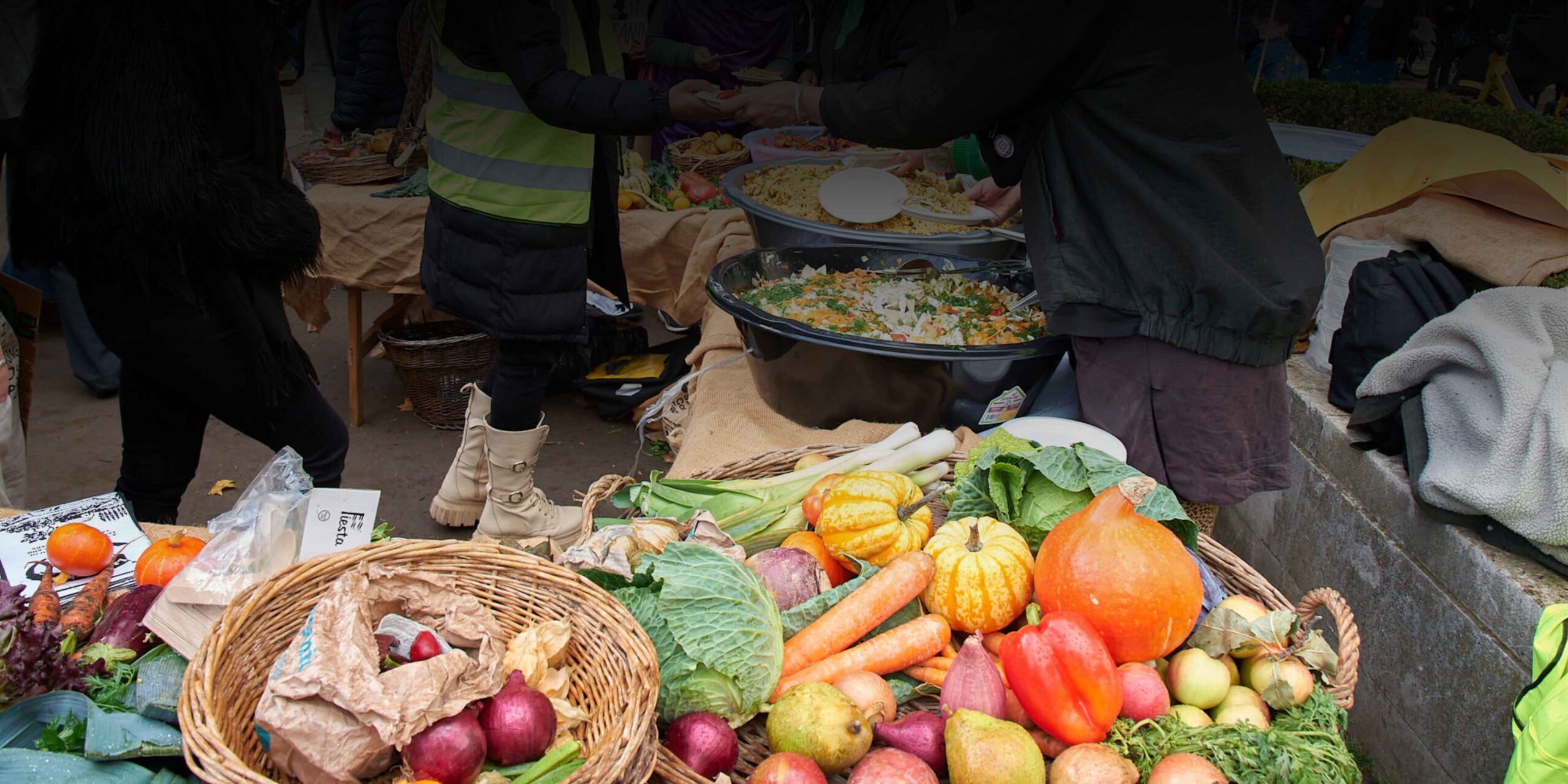
Policies - One Nation Victoria
One Nation Policies on Issues Affecting Australia and Australians today.

Bioregionalism, Commoning, and Relationalized Finance | David Bollier
Have you noticed how the term “bioregional” is becoming a new eco-buzzword and greenwashing term? At the same time, many ordinary people are genuinely excited about the idea of bioregionalism as a constructive way to focus activism and socioeconomic innovation. Bioregionalism offers a practical, politically accessible space for addressing climate change, social inequality, the eclipse of democracy, out-of-control oligarchs, and capitalist growth.