


What happens when we collect too much data?
Your Data Is Made Powerful By Context (so stop destroying it already)
In logs as in life, the relationships are the most important part. AI doesn't fix this. It makes it worse.

Logging Sucks - Your Logs Are Lying To You
Why traditional logging fails and how wide events can fix your observability
Dropping to log-level
Logs are invaluable when things spin out of control.

Observability 2.0 — Observability Is About Asking Any Question | alok87.in
For years, the observability industry has been telling developers two contradictory things: "Build reliable systems" and "Log less, it's too expensive." This post is about a different shape of data — wide events — that gives you more answers for less money.
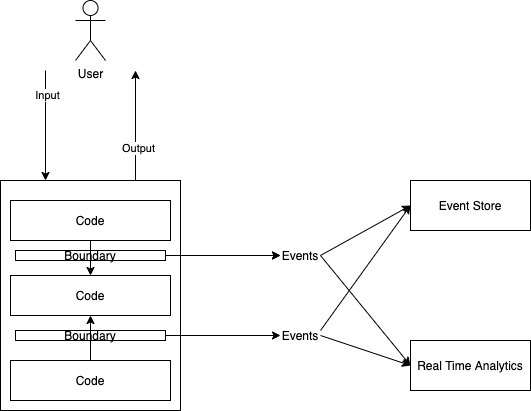
Publish events, not logs
Don't think about logs for observability. Think about system boundaries and events.
Data Supply Chains
Data is a critical resource. Like oil, gold, or lithium, both companies and countries covet data. Ultimately, like oil, data’s flow can enrich those that posses

An argument for logging off - Aaron Francis
It might be time to log off, or at least to drastically reduce your information intake.
The Limits of Data
Policymakers want to make decisions based on clear data, but important factors are lost when we rely solely on data. A philosopher writes:
Should We Treat Data as Labor? Moving Beyond “Free”
Should We Treat Data as Labor? Moving beyond "Free" by Imanol Arrieta-Ibarra, Leonard Goff, Diego Jiménez-Hernández, Jaron Lanier and E. Glen Weyl. Published in volume 108, pages 38-42 of AEA Papers and Proceedings, May 2018, Abstract: In the digital economy, user data is typically treated as capi...
All you need is Wide Events, not “Metrics, Logs and Traces”
This quote from Charity Majors is probably the best summary of the current state of observability in the tech industry - a total, mass confusion.

Who owns your data?
A Supreme Court case about a bank robbery could redefine your digital rights.

7. Death, and how tech forgot about mortality / Michael Kibedi / FFConf 2024
Living in Data: A Citizen's Guide to a Better Information Future (Paperback)
Jer Thorp’s analysis of the word “data” in 10,325 New York Times stories written between 1984 and 2018 shows a distinct trend: among the words most closely associated with “data,” we find not only its classic companions “information” and “digital,” but also a variety of new neighbors—from “scandal” and “misinformation” to “ethics,” “friends,” and “play.”To live in data in the twenty-first century
Nonrivalry and the Economics of Data
(September 2020) - Data is nonrival: a person's location history, medical records, and driving data can be used by many firms simultaneously. Nonrivalry leads to increasing returns. As a result, there may be social gains to data being used broadly across firms, even in the presence of privacy considerations. Fearing creative destruction, firms may choose to hoard their data, leading to the inefficient use of nonrival data. Giving data property rights to consumers can generate allocations that are close to optimal. Consumers balance their concerns for privacy against the economic gains that come from selling data broadly.
Feminist Data Manifest-No
1. We refuse to operate under the assumption that risk and harm associated with data practices can be bounded to mean the same thing for everyone, everywhere, at every time. We commit to acknowledging how historical and systemic patterns of violence and exploitation produce differential vulnerabilities for communities.
Aye > Data Ownership as a conversation changes when data resides primarily with people (..). > Instead of arguing for what kinds of data we ought to be able to download from the corporate silos, the platforms should be asking us what kinds of data they may copy from *our* servers.

Erlend Sogge Heggen
The web can be made personal again. blog.muni.town/personal-data-storage-idea/