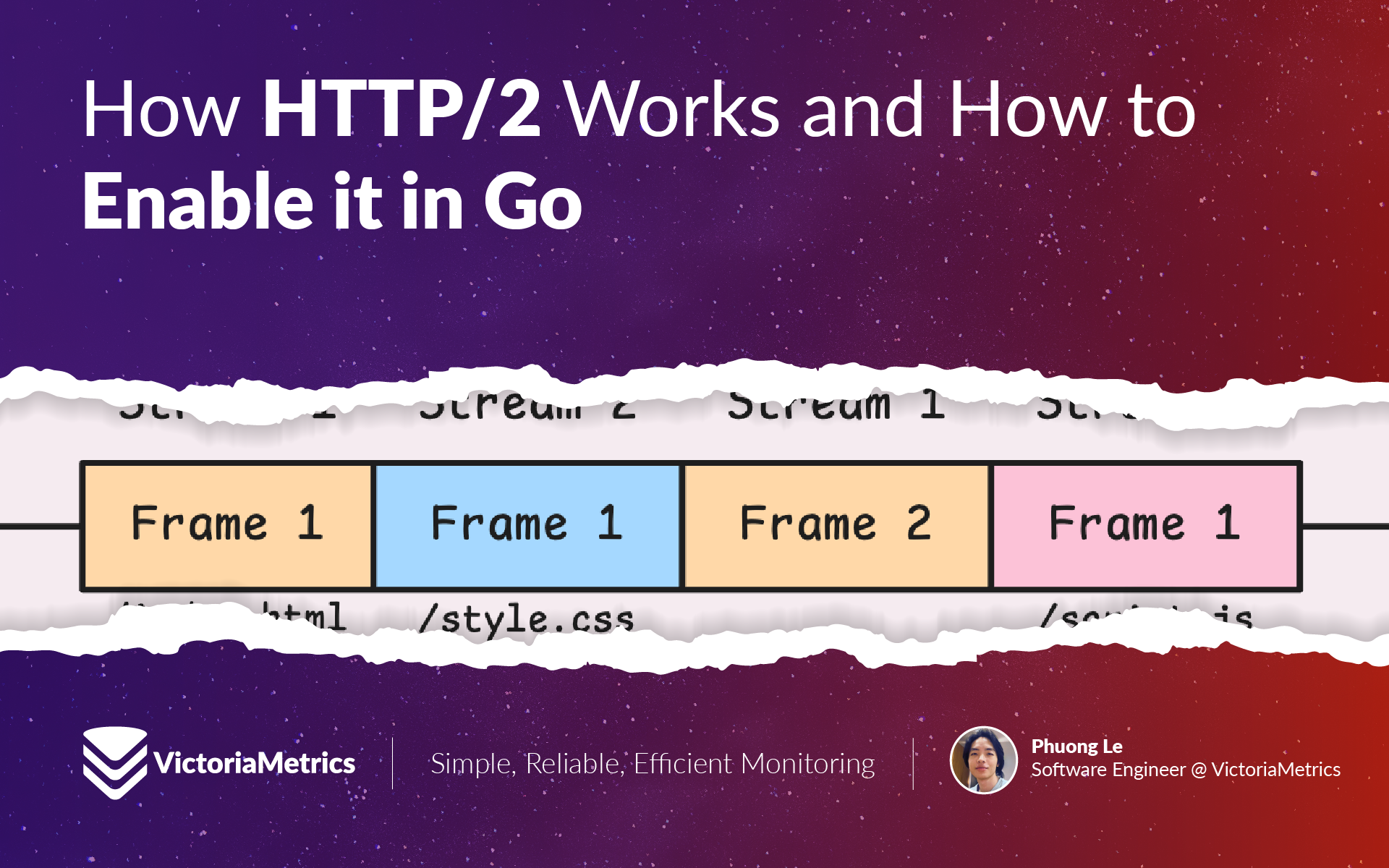
HTTP/2 solves head-of-line blocking at the application layer by multiplexing multiple streams over a single TCP connection. While HTTP/1.1 requires requests to be processed sequentially, HTTP/2 allows parallel processing through independent streams, each with its own ID. The Go standard library supports HTTP/2 out of the box when using HTTPS, and with some configuration, it can work over plain HTTP too
Reorganizing Website Architecture for HTTP/2 and Beyond
This document discusses reorganizing website architecture for HTTP/2 and beyond. It summarizes some issues with HTTP/2 including errors in prioritization where some browsers fail to specify resource priority properly. It also discusses the problem of TCP head-of-line blocking where pending data in TCP buffers can delay higher priority resources. The document proposes solutions to these issues such as prioritizing resources on the server-side and writing only what can be sent immediately to avoid buffer blocking. It also examines the mixed success of HTTP/2 push and argues the server should not push already cached resources. - Download as a PDF or view online for free

Add Go 1.24+ native H2C support examples by AndrianBdn · Pull Request #6 · thrawn01/h2c-golang-example
Starting from Go 1.24, HTTP/2 Cleartext (H2C) is supported natively in the standard library, eliminating the need for golang.org/x/net/http2/h2c package or workarounds. Since this repository ranks ...

HTTP/2 Cleartext (H2C) Client Example in Go
Since my internet foo failed me, and the only workable example of a H2C client I can find was in the actual go test suite I’m going to lay…
WWW
Even though HTTP is a simple protocol and the basic HTML is a simple format, the current standards are bloated and only a few web browser engines are able to support them at the commonly required level.
Building a simple load balancer in Go
Load balancers are crucial in modern software development. If you've ever wondered how requests are...

HTTP: The Protocol Every Web Developer Must Know—Part 1
Learning the fundamentals of the World Wide Web is crucial, especially if you are planning to build web apps. And HTTP is at the heart of any web application you could build. HTTP stands for...

Go 1.7 is released - The Go Programming Language
Go 1.7 adds faster x86 compiled code, context in the standard library, and more.

Why Did Google Choose To Implement gRPC Using HTTP/2?
Why Did Google Choose To Implement gRPC Using HTTP/2? Understand the story behind the design of gRPC and its mission. Background gRPC is an open-source high-performance RPC framework developed by …

Some notes about HTTP/3
HTTP/3 is going to be standardized. As an old protocol guy, I thought I'd write up some comments. Google (pbuh) has both the most popular ...
HTTP Semantics
The Hypertext Transfer Protocol (HTTP) is a stateless application-level protocol for distributed, collaborative, hypertext information systems. This document describes the overall architecture of HTTP, establishes common terminology, and defines aspects of the protocol that are shared by all versions. In this definition are core protocol elements, extensibility mechanisms, and the "http" and "https" Uniform Resource Identifier (URI) schemes. This document updates RFC 3864 and obsoletes RFCs 2818, 7231, 7232, 7233, 7235, 7538, 7615, 7694, and portions of 7230.
Notes on structured concurrency, or: Go statement considered harmful — njs blog
Every concurrency API needs a way to run code concurrently. Here's some examples of what that looks like using different APIs:
Go Web Programming
Build scalable, high-performance web apps in Go with modern design principles.

The Go Programming Language
Go is an open source programming language that makes it simple to build secure, scalable systems.
Optimizing Protocol Buffers in Go Applications
If you’ve ever wondered why your Go service is eating memory like it’s at an all-you-can-eat buffet, chances are you haven’t optimized your Protocol Buffers usage. I’ve been there, watching heap profiles with the kind of horror usually reserved for checking your bank account after a night out. But here’s the good news: Protocol Buffers in Go can be wickedly fast and memory-efficient when you know the tricks. Let me walk you through the optimization techniques that transformed my services from memory-hungry monsters into lean, mean, serialization machines.