

Engineers Invent Programming Language To Build Synthetic DNA - Slashdot
vinces99 writes "Chemists soon could be able to use a structured set of instructions to 'program' how DNA molecules interact in a test tube or cell. A team led by the University of Washington has developed a programming language for chemistry that it hopes will streamline efforts to design a network...

Crafting Interpreters
Despite using them every day, most software engineers know little about how programming languages are designed and implemented. For many, their only experience with that corner of computer science was a terrifying "compilers" class that they suffered through in undergrad and tried to blot from th...

The Rust Programming Language - The Rust Programming Language
by Steve Klabnik, Carol Nichols, and Chris Krycho, with contributions from the Rust Community
eurucamp 2015 - Programming as a Performance by Joseph Wilk
The Next 7000 Programming Languages
Landin’s seminal paper “The next 700 programming languages” considered programming languages prior to 1966 and speculated on the next 700. Half-a-century on, we cast programming languages in a Darwinian ‘tree of life’ and explore languages, their features (genes) and language evolution from the viewpoint of ‘survival of the fittest’.
Sourcegraph — Code Understanding, Oversight and Evolution
Give humans and agents complete context to understand, oversee, and evolve the world's largest, most complex codebases.

Coding agents as the new compilers - Anil Dash
A blog about making culture. Since 1999.


Open Interpreter - The New Computer Update II
Official changelog for the open-source Open Interpreter project.

Resugaring | Proceedings of the 35th ACM SIGPLAN Conference on Programming Language Design and Implementation
Syntactic sugar plays a crucial role in engineering programming languages. It offers convenient syntax and higher-level of abstractions, as witnessed by its pervasive use in both general-purpose and domain-specific contexts. Unfortunately, the ...

Pony
An open-source, object-oriented, actor-model, capabilities-secure, high-performance programming language.
The Topos of Programming | Yon
A topos-oriented programming language. Native via MLIR and LLVM, with a content-addressed heap on the Leech lattice.
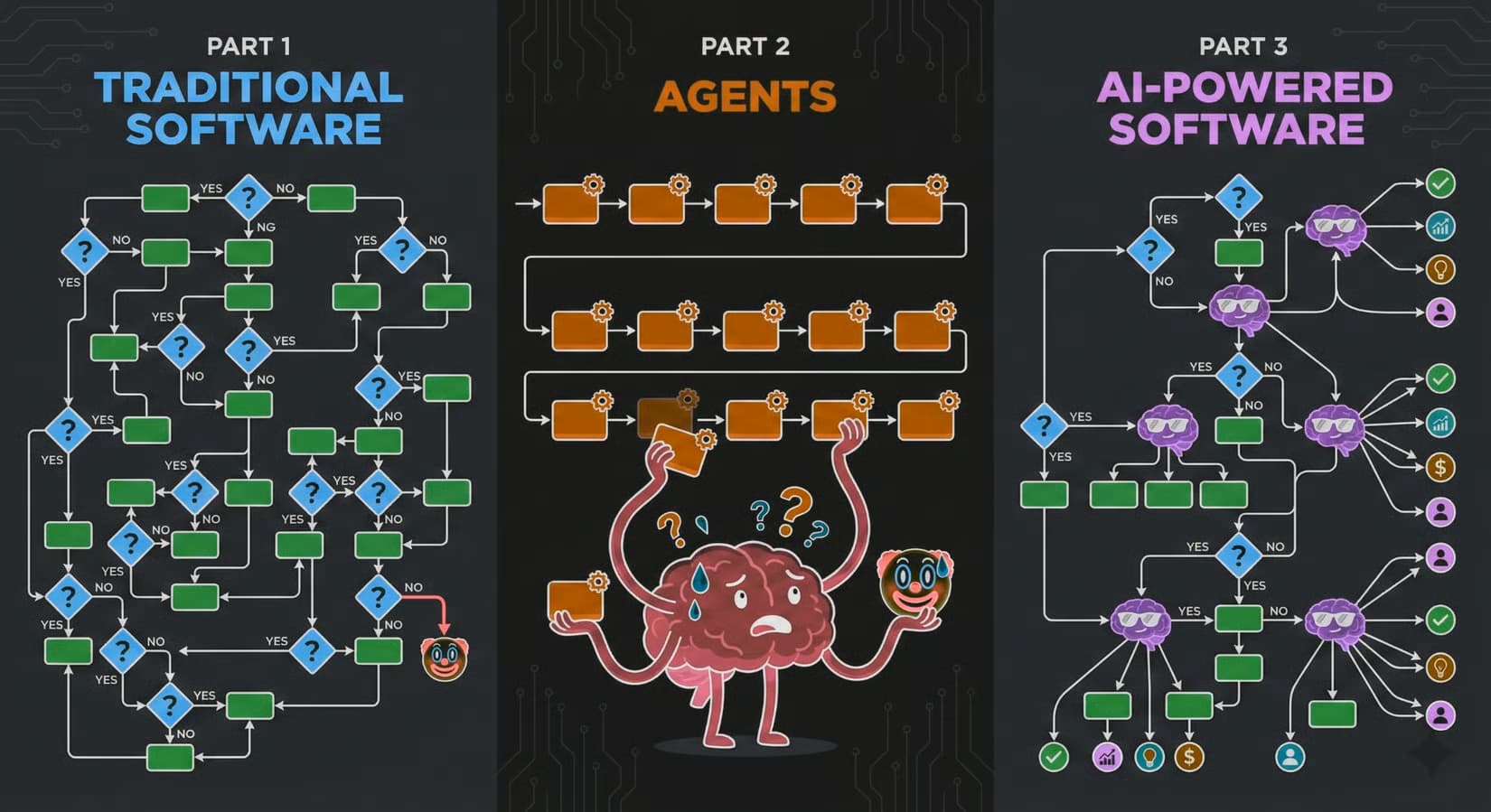
Coding After Coders: The End of Computer Programming as We Know It - …
archived 16 Mar 2026 15:14:04 UTC

Boomerang | Proceedings of the 35th annual ACM SIGPLAN-SIGACT symposium on Principles of programming languages
Bidirectional programming languages are a practical approach to the view update problem. Programs in these languages, called lenses, define both a view and an update policy - i.e., every program can be read as a function mapping sources to views as well ...
