


Adam Wathan, the creator of Tailwind CSS, has been speaking about how LLMs have made his project more popular than ever…while also making it fall apart financially, causing him to fire 75% of his engineers. “I think AI is a huge reason why our business is struggling, even though it’s making Tailwind more popular than ever.” — Adam Wathan (12:03) How is this possible? A major cause is that LLMs are blocking Tailwind’s creators and users from forming a relationship with each other.
The two worlds of programming: why developers who make the same observations about LLMs come to opposite conclusions
Writing at the end of the world, from Hveragerði, Iceland
Dan Shipper 📧 on Twitter / X
this is true and is a big reason why you don’t need to be a highly technical researcher to use LLMs in surprising and novel ways https://t.co/TuxNzXzToU— Dan Shipper 📧 (@danshipper) July 27, 2025
Aaron Boodman on Twitter / X
There is this tension in dev tooling right now: Lots of people want to self-host, and not depend on a service. Lots of people also want the vibes of open source - being part of an open development community, having the code, etc.But builders still need to make a living...— Aaron Boodman (@aboodman) January 23, 2024
The Zig project's rationale for their firm anti-AI contribution policy
Zig has one of the most stringent anti-LLM policies of any major open source project: No LLMs for issues. No LLMs for pull requests. No LLMs for comments on the …
The Zig project's rationale for their firm anti-AI contribution policy
Zig has one of the most stringent anti-LLM policies of any major open source project: No LLMs for issues. No LLMs for pull requests. No LLMs for comments on the …
"Useful" is not sufficient
So Linus Torvalds, head of the Linux kernel development, put his foot down on the Linux Kernel development mailing list when someone was bringing up criticism of LLMs: “Linux is not one of those anti-AI projects, and if somebody has issueswith that, they can do the open-source thing and fork it. Or just walk away. […]

The Missing Middle of Open Source
Why serious, maintainer-driven projects struggle to sustain themselves—and what it will take to fix it.
If You’re Going To Defend AI And Whine About Its Critics, You Should Probably Be Honest About Its Actual Harms
I think this recent post by AI industry CEO Matt Shumer is worth a read. In it, he basically explains how quickly LLMs (large language models) are evolving to supplant many developers and prog…

State of AI 2025: 100T Token LLM Usage Study | OpenRouter
Read OpenRouter's 2025 State of AI report — an empirical 100 trillion token study of real LLM usage, model trends, and developer insights.
Open Source Software and Corporate Influence — Andrew Lilley Brinker
Open source software projects are frequently enmeshed with the interests of corporations. We should update mental models of who works on open source accordingly, and build or modify power structures to be more resilient to corporate capture.
LLMs reward expertise
In the 2010s, if you had technical gaps (say, you couldn’t write CSS), you had to either rely on a skilled colleague or just hope that the answer to your exact problem was out there on the internet. Today, everyone can write sort-of-okay CSS by delegating the task to an LLM. LLMs make everybody into a generalist.

Front page · Saturday, June 6, 2026
On ThinkStack: Linux kernel adopts no-embargo policy as LLMs flood maintainers with CVEs · Evan You ships Vite Plus to unify Rollup, Oxlint, Oxformat, and Vitest into one Rust/Go toolchain · 88% of firms use AI coding tools but only 5.5% see business impact, PlatformCon study fin
Reframing “Open Source AI” with Meredith Whittaker: AI Impact Summit 2026
Harnessing Collective Intelligence better than LLMs w/ Sean Geobey
Extensible Software in the age of LLMs | Jeremy Morrell
Solid core + capability-based sandboxes + LLMs = Users with superpowers
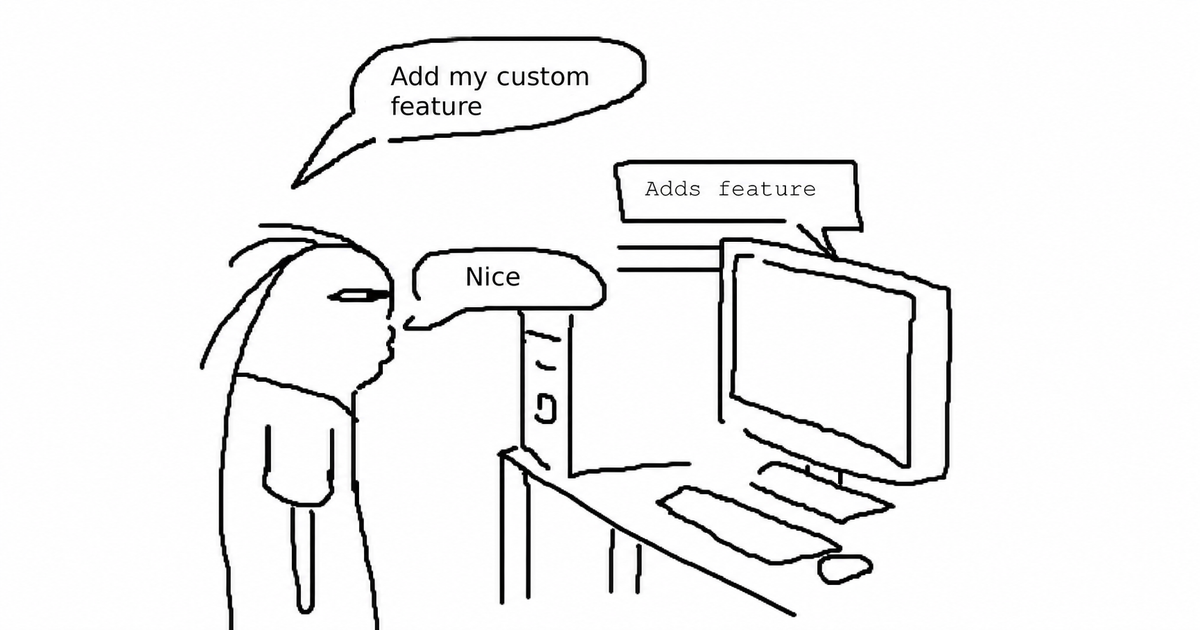
"AI makes it cheaper to contribute to Open Source, but it's not making life easier for maintainers. More contributions are flowing in, but the burden of evaluating them still falls on the same small group of people. That asymmetric pressure risks breaking maintainers." also relevant to slop science
