

Back in 1952 a group of people formed the Victorian National Parks Association as part of a successful campaign for a national parks system that would ensure the protection of our precious wild places.
National Park Service: Public Use of the National Park System (1872-2000): Chapter 9
The first part of this section reviews basic ideas for dispersing visitors outside the System. While merit is seen in some of these ideas, the conclusion is reached that at best they can make only a limited contribution to regulating mounting park travel because there is no substitute for a visit to a national park. The second part of this section then reviews concepts and methods for regulating public use inside the parks through park developments, land classification, including wilderness area designations, and vehicular controls, including new transportation systems.
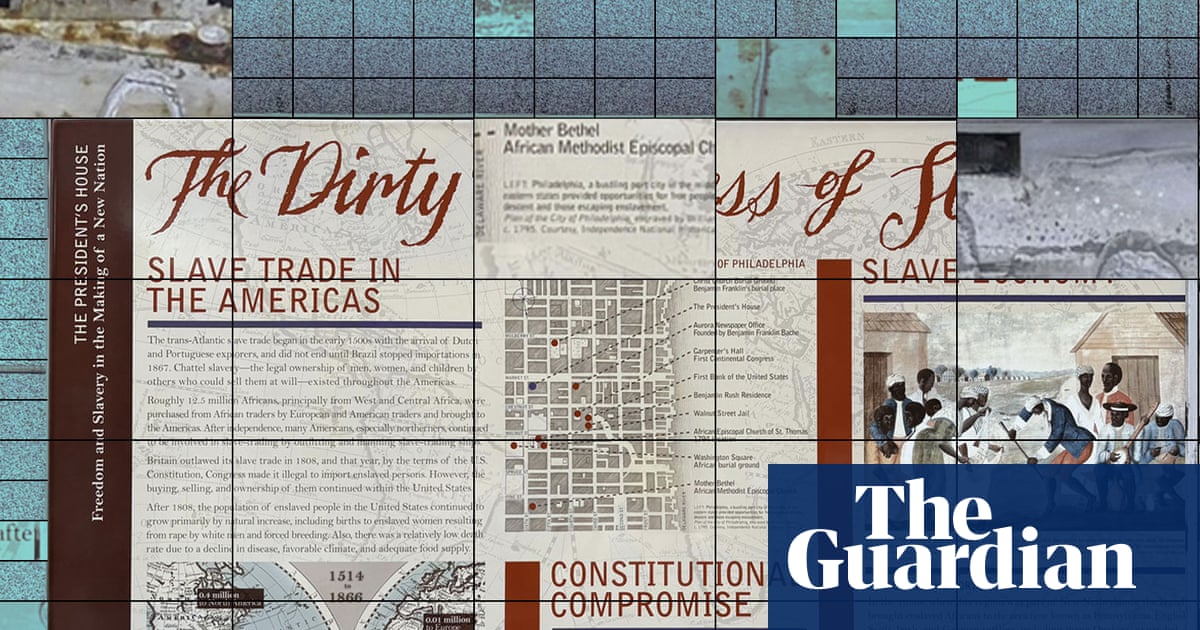
Meet the army of amateur archivists racing to save US history in national parks
Save Our Signs aims to document every sign in the more than 400 national parks and historic sites across the country before the Trump administration removes them
Volunteer for us - Climate Council
Volunteers are critical to the Climate Council’s impact.

Ground Control: Volunteer where it counts
We've evaluated hundreds of organizations to find opportunities open to anyone, immediately impactful, and ready to accept your help.

Volunteer with the Victorian Greens
Volunteer and join our movement for a better world. We're fighting for a better politics - for climate justice, affordable housing for all, tackling the cost of living, and more.
Volunteering and Civic Action: Boundaries Blurring, Boundaries Redrawn
The aim of this introduction to the special issue is to call into question the presumed conceptual divide between volunteering and civic action and suggest an analytical tool and four perspectives that bring to light the varying meanings of popular engagement. Volunteering and civic action are laden with different moral meanings, are associated with different theoretical approaches and, just as important, have been assigned different roles in society. This conceptual divide is reflected in the academic debate. Only rarely, however, has the academic debate explored and discussed how the meaning of volunteering and civic action has changed historically. Therefore, we argue for a contextual and relational interpretation of the different forms of popular engagement instead of the application of essentialist definitions of volunteering and civic action. In order to examine the variety of popular engagement without being caught up in pre-made or taken-for-granted conceptualisations of volunteering and civic action as two separate forms of popular engagement, we propose approaching variations of popular engagement with respect to two criteria: first, to what degree popular engagement is enacted in institutionalised spheres of politics or in social public spheres and, second, to what degree actions of popular engagement are controversial or operating in line with what is widely agreed upon and dominant in public opinion. Moreover, we argue that history, discourses, politics and a relational approach are four crucial perspectives in order to reveal the varying meanings of popular engagement.
Campaign for nature and a safe climate in the Victorian State Election
Campaign for nature and a safe climate in the Victorian State Election

Volunteer – Socialists
We are a people-powered movement - we depend on the energy and enthusiasm of our supporters to get our message out. Every contribution, even the smallest, will make a difference.
Citizen Participation (@oliverescobar.bsky.social)
Professor of Public Policy and Democratic Innovation | University of Edinburgh | Working on #democracy #participation #deliberation #commons #governance #power #research | RT≠ endorse | Own views | Profile: https://www.sps.ed.ac.uk/staff/oliver-escobar
Forest Practices Code of British Columbia Act -- FOREST RECREATION REGULATION
Part 4 — Use of Recreation Sites, Recreation Trails, Interpretive Forest Sites and Wilderness Areas
Tiny Publics: Small Groups and Civil Society
It has been conventional to conceptualize civic life through one of two core images: the citizen as lone individualist or the citizen as joiner. Drawing on analyses of the historical development of the public sphere, we propose an alternative analytical framework for civic engagement based on small-group interaction. By embracing this micro-level approach, we contribute to the debate on civil society in three ways. By emphasizing local interaction contexts-the microfoundations of civil society-we treat small groups as a cause, context, and consequence of civic engagement. First, through framing and motivating, groups encourage individuals to participate in public discourse and civic projects. Second, they provide the place and support for that involvement. Third, civic engagement feeds back into the creation of additional groups. A small-groups perspective suggests how civil society can thrive even if formal and institutional associations decline. Instead of indicating a decline in civil society, a proliferation of small groups represents a healthy development in democratic societies, creating cross-cutting networks of affiliation.
Victorian Climate Action Network – VCAN Australia
The Victorian Climate Action Network is a communication network linking over 100 community groups – climate groups as well as groups campaigning on renewable energy, public transport, or coal and gas in Victoria, Australia.
Community groups' 'vital' disaster recovery work undervalued, report finds
A new Western Sydney University report finds grassroots organisations are often the first and last responders, but often face burnout.
Neighborhood Steward Fellowship | New_ Public
An eight-week program bringing together leaders of local-oriented online spaces to experiment with fun new practices and ideas

Assessing nature's contributions to people
Recognizing culture, and diverse sources of knowledge, can improve assessments , A major challenge today and into the future is to maintain or enhance beneficial contributions of nature to a good quality of life for all people. This is among the key motivations of the Intergovernmental Science-Policy Platform on Biodiversity and Ecosystem Services (IPBES), a joint global effort by governments, academia, and civil society to assess and promote knowledge of Earth's biodiversity and ecosystems and their contribution to human societies in order to inform policy formulation. One of the more recent key elements of the IPBES conceptual framework ( 1 ) is the notion of nature's contributions to people (NCP), which builds on the ecosystem service concept popularized by the Millennium Ecosystem Assessment (MA) ( 2 ). But as we detail below, NCP as defined and put into practice in IPBES differs from earlier work in several important ways. First, the NCP approach recognizes the central and pervasive role that culture plays in defining all links between people and nature. Second, use of NCP elevates, emphasizes, and operationalizes the role of indigenous and local knowledge in understanding nature's contribution to people.
