
In new research, data scientist Alex de Vries-Gao estimates that AI servers could generate 131–224.8 kilotonnes of e-waste per year by 2030.
AI E-Waste May be 40 to 60 Times What Has Been Estimated, New Analysis Finds
Email from Basel Action Network First-of-its-kind full-infrastructure analysis by Basel Action Network projects 395 to 617 million tonnes of AI-driven electronic equipment could be retired between 202

AI E-Waste May be 40 to 60 Times What Has Been Estimated, New Analysis Finds
Email from Basel Action Network First-of-its-kind full-infrastructure analysis by Basel Action Network projects 395 to 617 million tonnes of AI-driven electronic equipment could be retired between 202
AI E-Waste May be 40 to 60 Times What Has Been Estimated, New Analysis Finds — Basel Action Network
First-of-its-kind full-infrastructure analysis by Basel Action Network projects 395 to 617 million tonnes of AI-driven electronic equipment could be retired between 2025 and 2050. If packed into shipping containers and placed end to end, they would circle the Earth about six times.

The AI data center e-waste problem is huge — and getting bigger
It’s even bigger than previously thought.

E-waste challenges of generative artificial intelligence
Generative artificial intelligence (GAI) requires substantial computational resources for model training and inference, but the electronic-waste (e-waste) implications of GAI and its management strategies remain underexplored. Here we introduce a computational power-driven material flow analysis framework to quantify and explore ways of managing the e-waste generated by GAI, with a particular focus on large language models. Our findings indicate that this e-waste stream could increase, potentially reaching a total accumulation of 1.2–5.0 million tons during 2020–2030, under different future GAI development settings. This may be intensified in the context of geopolitical restrictions on semiconductor imports and the rapid server turnover for operational cost savings. Meanwhile, we show that the implementation of circular economy strategies along the GAI value chain could reduce e-waste generation by 16–86%. This underscores the importance of proactive e-waste management in the face of advancing GAI technologies.
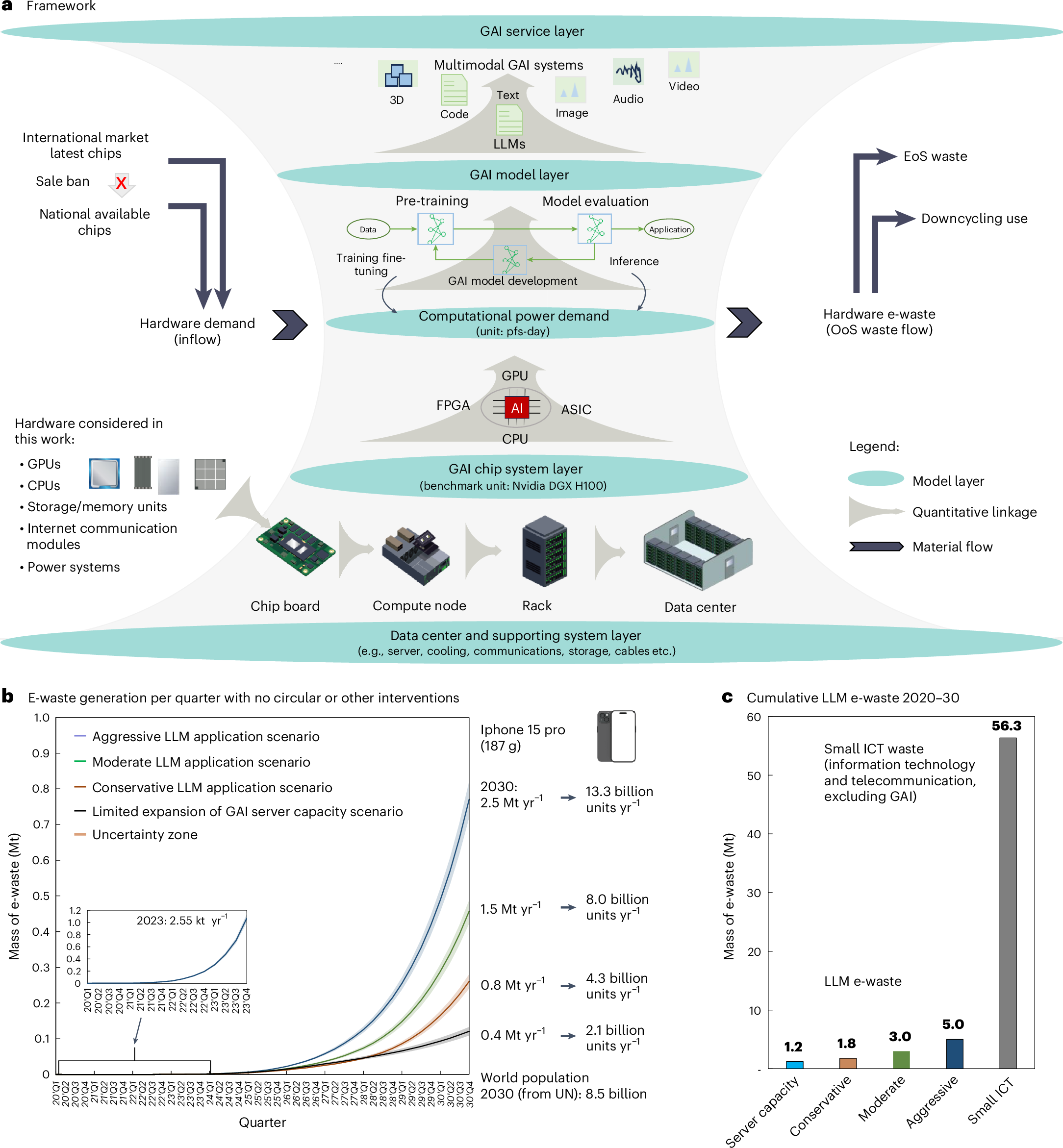
E-waste challenges of generative artificial intelligence
Generative artificial intelligence (GAI) requires substantial computational resources for model training and inference, but the electronic-waste (e-waste) implications of GAI and its management strategies remain underexplored. Here we introduce a computational power-driven material flow analysis framework to quantify and explore ways of managing the e-waste generated by GAI, with a particular focus on large language models. Our findings indicate that this e-waste stream could increase, potentially reaching a total accumulation of 1.2–5.0 million tons during 2020–2030, under different future GAI development settings. This may be intensified in the context of geopolitical restrictions on semiconductor imports and the rapid server turnover for operational cost savings. Meanwhile, we show that the implementation of circular economy strategies along the GAI value chain could reduce e-waste generation by 16–86%. This underscores the importance of proactive e-waste management in the face of advancing GAI technologies.
We did the math on AI’s energy footprint. Here’s the story you haven’t heard.
The emissions from individual AI text, image, and video queries seem small—until you add up what the industry isn’t tracking and consider where it’s heading next.

Over 50 Percent of the Internet Is Now AI Slop, New Data Finds
New research from the firm Graphite found that around half of all articles on the internet are AI generated.

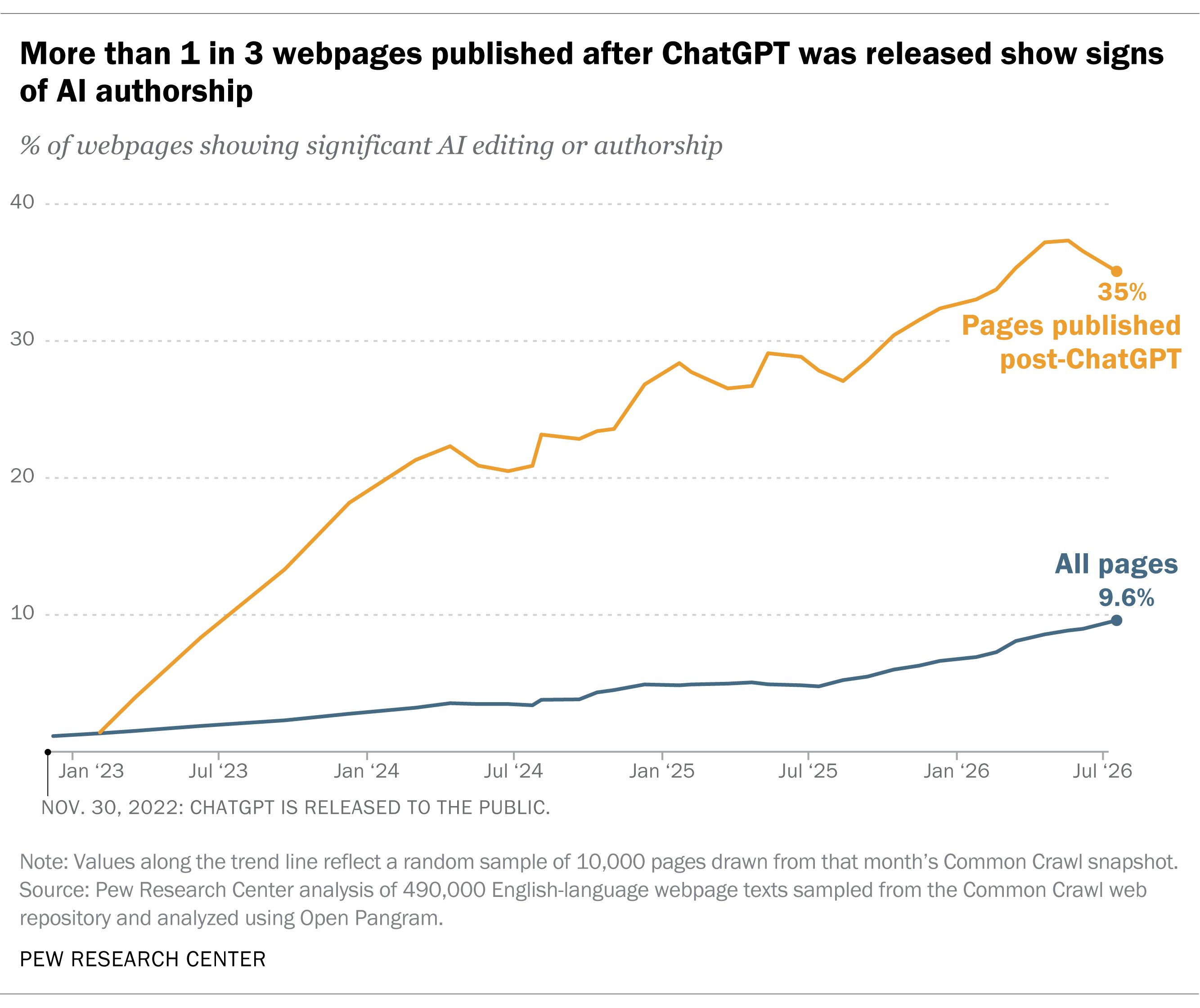
How Much of the Internet Is Written With AI?
In a random sample of 10,000 webpages collected in July 2026, one-in-ten show signs of being written or substantially edited by AI.
State of AI 2025: 100T Token LLM Usage Study | OpenRouter
Read OpenRouter's 2025 State of AI report — an empirical 100 trillion token study of real LLM usage, model trends, and developer insights.
Abundance vs. Scarcity: Who Controls the Internet After AI?
AI is straining the open web, forcing a choice between abundance with redistribution and scarcity built on paywalls, writes Paul Keller.

Will AI really consume more electricity than the US produces? - Poynter
President Trump said AI could need nearly twice the nation’s electricity, but credible projections put its future share at no more than 25%
AI’s energy usage is less than previously thought | Waterloo News
Contrary to popular belief, new research finds that the use of artificial intelligence has a minimal effect on global greenhouse gas emissions and may actually benefit the environment and the

State of AI 2026 | The Industry-Defining Report
Explore how AI is shaping the digital economy in 2026, with 80+ pages of data on ad spend, app downloads, web behavior, user demographics, and so much more.
Visualising AI spending: How does it compare with history’s mega projects?
AI spending is projected to reach $2.5 trillion in 2026, surpassing the largest scientific and infrastructure projects.

Data center guzzled 30 million gallons of water and nobody noticed for months
Can AI save us from the AI industry’s endless thirst for water? Outlook not so good.