

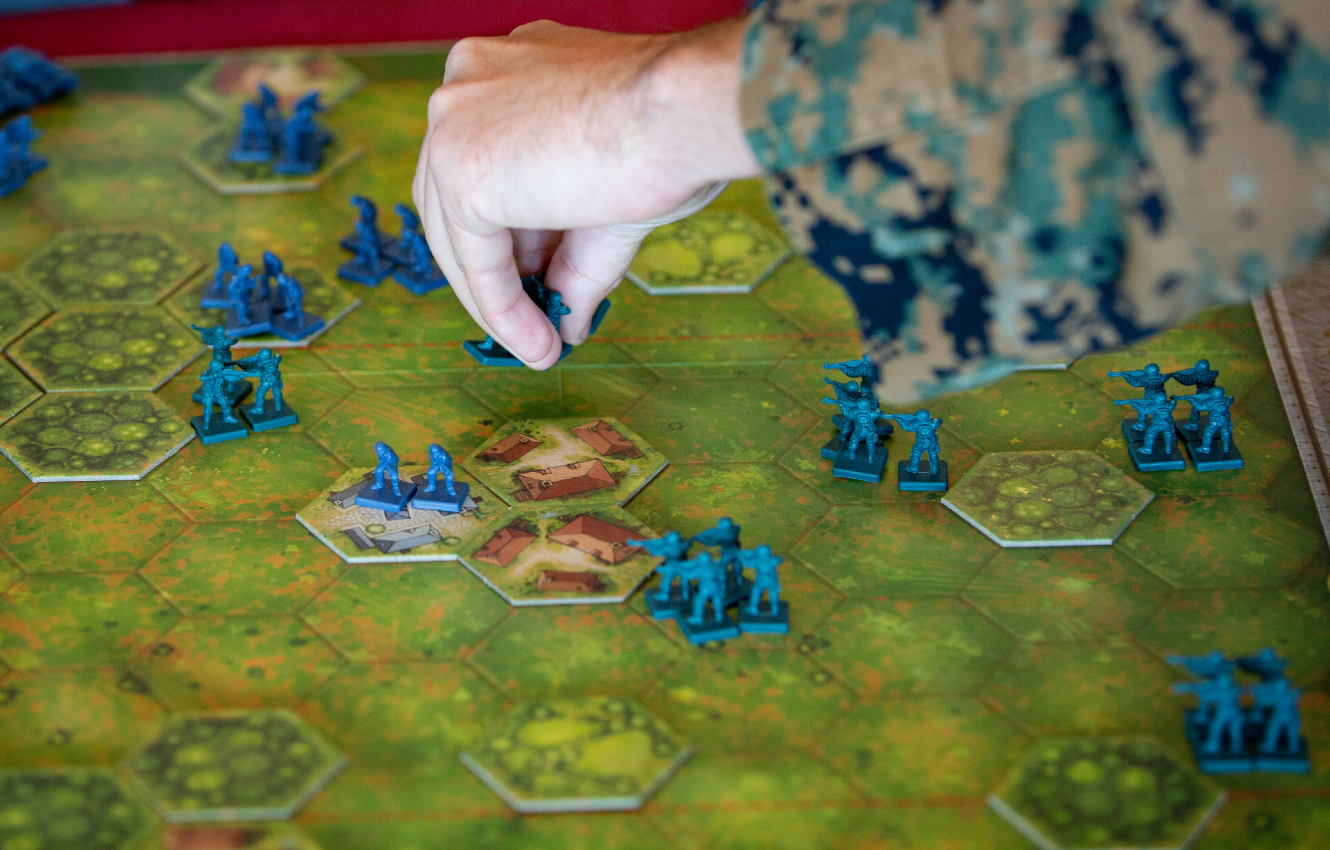
Disaster loomed for the hard-pressed U.S. Strategic Command team and the nascent U.S. Space Force. Negotiators toiled to maintain an international
The closed world: Systems discourse, military strategy and post WWII American historical consciousness
This essay proposes a cultural and historical explanation for the American Military's fascination with computing. Three key elements of post-WWII US political culture — apocalyptic struggle with the USSR, subsuming all other conflicts: a long history of antimilitarist sentiment in American politics; and the rise of science-based military power — contributed to a sense of the world as a closed system accessible to American technological control. A developing scientific systems discourse, centrally including computer science and AI, was adopted for strategic thinking and military technology. The Strategic Computing and Strategic Defense Initiatives are discussed as contemporary examples of this conjunction.

How the U.S. Military Learned to Embrace AI Warfare
A review of Katrina Manson, “Project Maven: A Marine Colonel, His Team, and the Dawn of AI Warfare” (Norton, 2026).

Position: AI Is Not Ready for Strategic Conflicts
Open-ended strategic wargames are high-stakes LM-based social simulations: they model adversaries, institutions, escalation, plan brittleness, doctrine, and crisis response. Language models (LMs) are attractive because they can play agents, generate scenario branches, adjudicate ambiguous actions, and summarize lessons, but the same affordances make open-ended roles dangerous: model language determines both what an actor attempts and what becomes simulated reality. This position paper argues that no LM-enabled wargame should inform planning, doctrine, policy, or crisis response without an auditable safety case, and that the proper use of open-ended wargames today is to stress-test decision-influencing LM agents. We identify five failure modes: decision laundering, adjudication opacity, role collapse, escalation-through-adjudication, and failure of strategic imagination. Ordinary benchmarks cannot establish safety for these settings. Wargames can expose failures as stress tests; they are not themselves safety cases for consequential use.

No One Wins in Nuclear War: Social Simulations of High-stakes Military Decision-making
WOPR is a social-simulation environment for studying how organizations make high-stakes decisions, built on a deterministic, replay-validated rules engine and using wargames as the vehicle. We instantiate it first with the published card game Nuclear War, traced against its published rules. We start with military decision-making because of its safety implications and because it needs further study, but the design is not specific to it: the decision- point contract that exposes the engine to agents is reusable across verifiable rule systems. Existing social-simulation work emphasizes persona fidelity and synthetic opinion, but lacks a verifiable rules engine with replay-checkable mechanics and private-channel negotiation. WOPR supplies that engine, and its contract makes every strategic choice an explicit agent decision. The method is agnostic to social-simulation frameworks; we adopt Concordia as the default harness for driving the game. On the same engine, WOPR layers a four-rung press ladder from silence to private single- recipient channels with structured commitments, and instantiates each faction as a collective command-and-control system rather than a single agent. We make all code, example configurations, and replay data publicly available at https://github.com/eilab-gt/wopr.
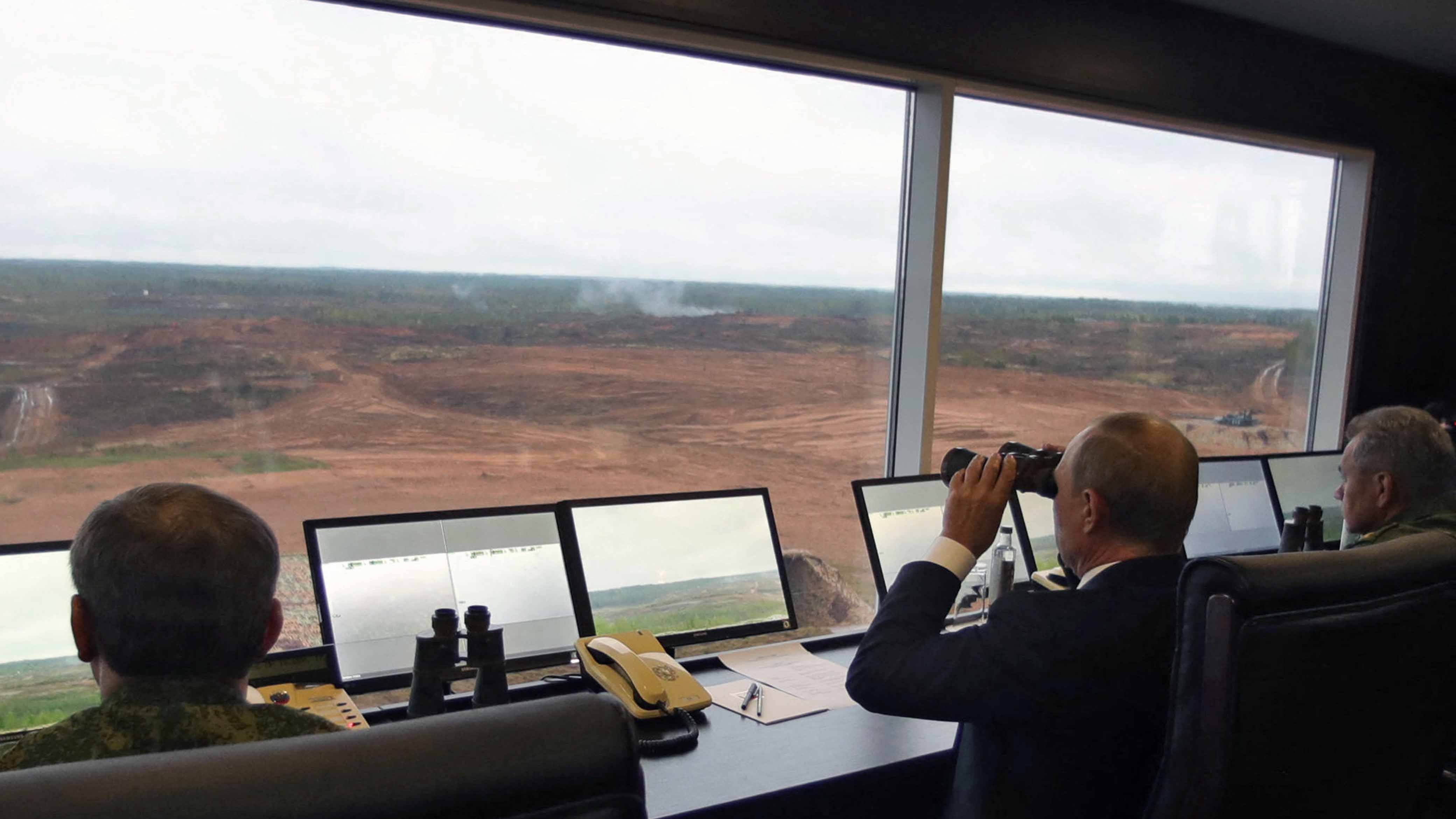
How Russia Is Reshaping Command and Control for AI-Enabled Warfare
Kateryna Bondar examines how Russia conceptualizes, builds, and adapts its command and control (C2) architecture under wartime pressures, in the first installment of a series on Russia’s use of AI in military operations.
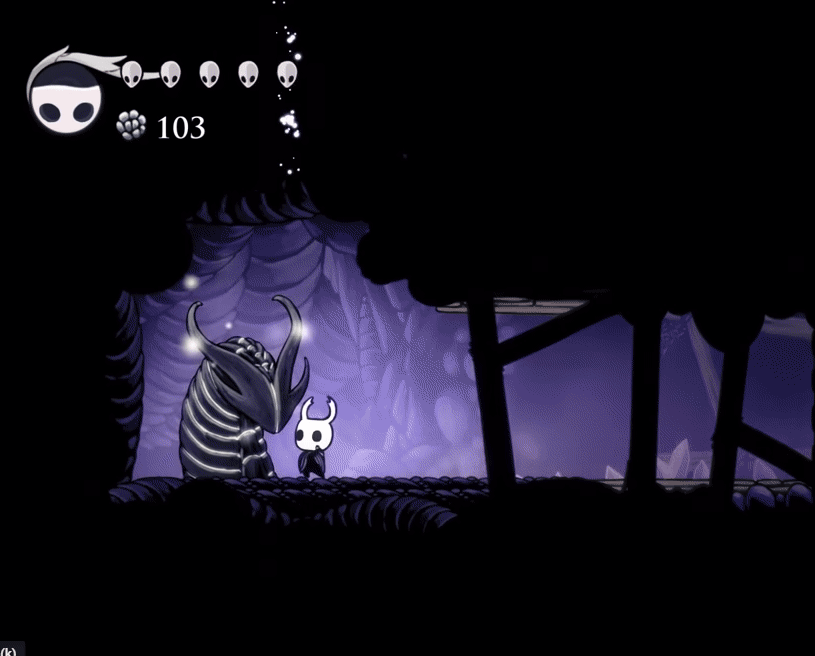
The UX of video game tutorials
What decisions a designer will run into while designing learning experiences.
Dispersed, Disguised, and Degradable: The Implications of the Fighting in Ukraine for Future U.S.-Involved Conflicts
Wars reveal new information about warfighting and can spur changes in how foreign observers prepare for future conflicts. In this report, the authors make eight novel or notable observations about the Russia-Ukraine war and forecast how these observations might translate to a potential NATO-Russia or U.S.-China war. The authors also identify broader tactical, operational, and strategic implications for U.S. policymakers.

Position: AI Is Not Ready for Strategic Conflicts
Open-ended strategic wargames are high-stakes LM-based social simulations: they model adversaries, institutions, escalation, plan brittleness, doctrine, and crisis response. Language models (LMs) are attractive in these settings because they can play agents, generate scenario branches, adjudicate ambiguous actions, and summarize lessons. The same affordances make open-ended player and adjudicator roles dangerous: model language can determine both what an actor attempts and what subsequently becomes simulated reality. This position paper argues that no LM-enabled wargame should inform high-stakes planning, doctrine, policy, or crisis response without an auditable safety case, and that the proper use of openended wargames today is to stress-test decision-influencing LM agents. We identify five failure modes: decision laundering, adjudication opacity, role collapse, escalation-through-adjudication, and failure of strategic imagination. Ordinary benchmarks cannot establish safety for these settings. Wargames can expose failures as stress tests; they are not themselves safety cases for consequential use. Until such safety cases exist, AI is not ready for strategic conflicts.
We need an international alliance against the US and its tech industry
The United States must face consequences for economic warfare

Curriculum Guide
Riot Games’ Game Design Curriculum is an entry-level course that teaches high school students the fundamental elements of game design using a framework and interactive workshops created by our own game designers. Students will ultimately utilize their newfound knowledge of core game design concepts like goals, types of fun, opposition, rules, interaction, and balance to create a paper prototype of a multiplayer game.

The shifting battlefield: technology, tactics, and the risk of blurring lines in warfare - Humanitarian Law & Policy Blog
The accelerating integration of emerging technologies into armed conflict is transforming not only the tools of war, but its tactics, geography, participants and impact. Technological developments – from commercial drones to artificial intelligence, electronic warfare to the military use of civilian infrastructure – risk undermining boundaries between military and civilian domains. These changes challenge long-held...
The Strategic Foresight Book — IFRC Solferino Academy
Ready to shape the future? Download the Foresight Book This book will help you engage with uncertainty, navigate complex challenges, and build more resilient organisations and communities.

As Epic goes all in on AI game development, maybe it’ll be the kids who ultimately decide the fate of the games industry | Respec
How the young audience reacts to the upcoming Star Wars x Marvel shooter and Fortnite may well dictate AI’s future in game dev.

Vibe Check: Effort, Risk, and Games in The Atmosphere - rpg.actor Updates
What Do "Real" Devs Think? — We left our bubble to chat with some world-class indie developers and experienced a sharp whiplash from The Atmosphere back to terra firma and developed a better understanding of the future both near and far in terms of game development on the AT Protocol.
‘Absolute s–t’: EU’s Microsoft Teams alternative draws bad reviews from officials
The U.S. would “instantly” win a hypothetical tech war, an official moaned.
