

In the digital world, especially on the web, we’re used to things being stacked vertically. Scrolling, scrolling, through boxes of content,
CSS Scroll Snap | 12 Days of Web
Tips, tricks and grab-n-go demos for elegant and well-orchestrated scroll experiences.

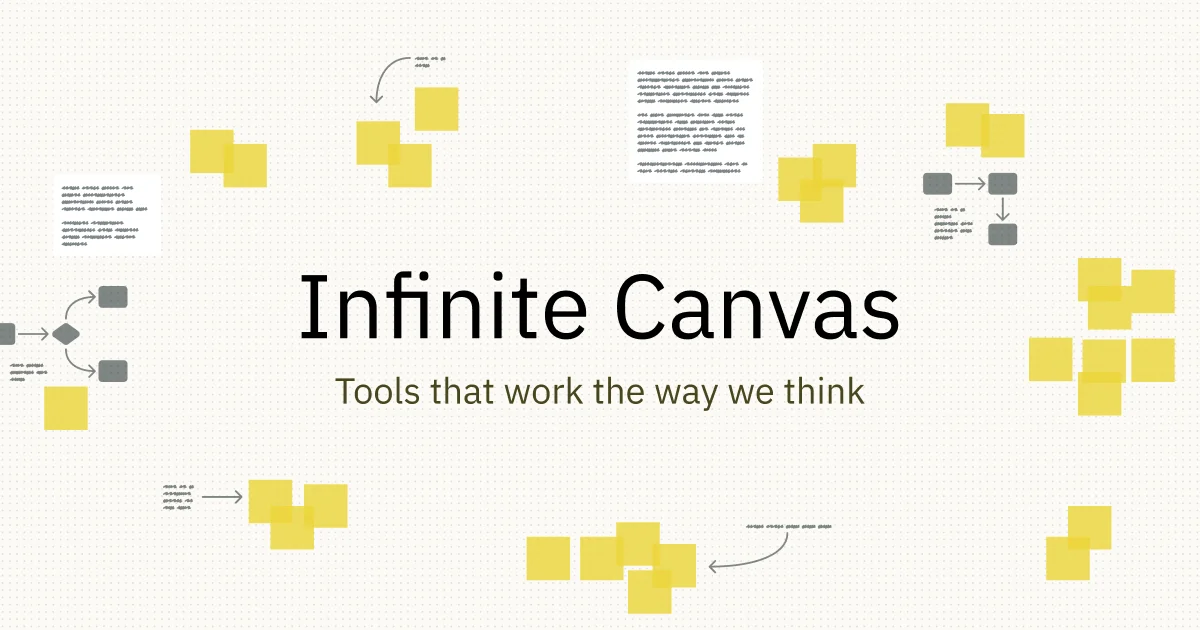
JSON Canvas
An open file format for infinite canvas data.Infinite canvas tools are a way to view and organize information spatially, like a digital whiteboard. Infinite ...

Infinite scrolling
Infinite scrolling, also known as endless scrolling, is an approach to web design where new material is continually dynamically added to the bottom of the page as the user scrolls downward, leading to the apparent ability to scroll forever. This is in contrast to pagination, where material is divided into discrete pages.

Scroll-driven Animations: The Road to Baseline Newly Available (CSS)
This scrolled timeline traces the 12-year journey of Scroll-Driven Animations from the earliest proposal in September 2014 to becoming Baseline Newly Available in October 2026 with the release of Firefox 159.
Scroll-Enhanced Experiences | Carmen Ansio | CSS Day 2024
Laying Out Pages | Web Browser Engineering
So far, layout has been a linear process that handles open tags and close tags independently. But web pages are trees, and look like them: borders and backgrounds visually nest inside one another. To support that, this chapter switches to tree-based layout, where the tree of elements is transformed into a tree of layout objects before drawing. In the process, we’ll make web pages more colorful with backgrounds.
Solving Performance for 2D & 3D Web Apps: Finally!
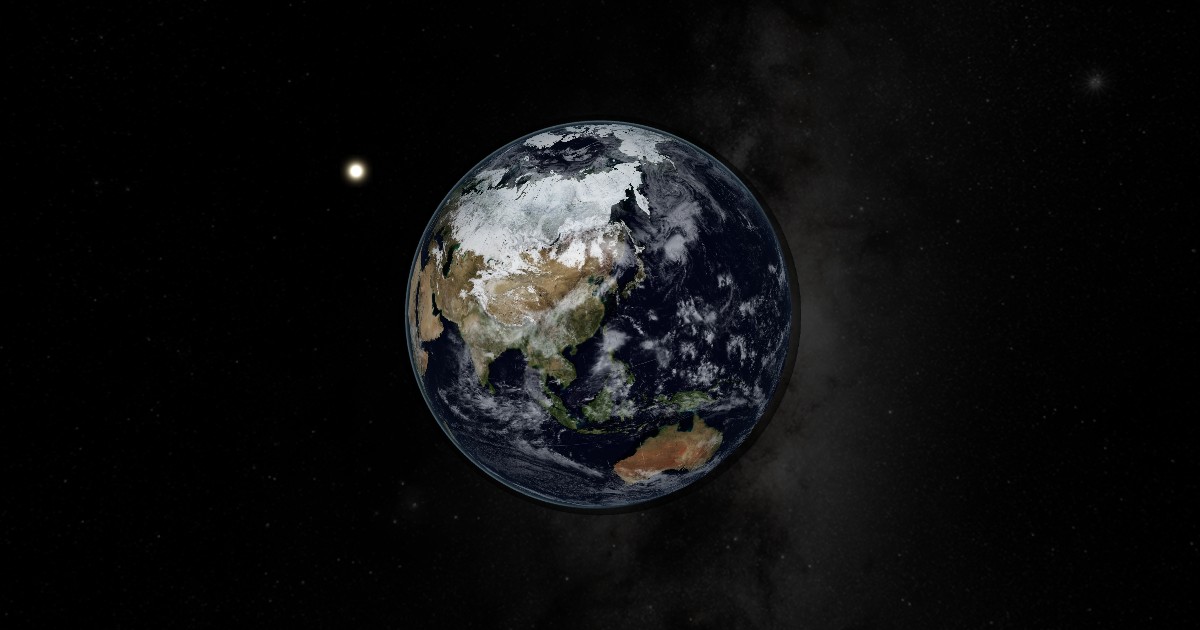
cssEarth: the universe in HTML and CSS
Explore planets, moons, stars and galaxies built from open space data as 3D HTML and CSS, without WebGL or canvas.
(PDF) The Loop and Reasons to Break It: Investigating Infinite Scrolling Behaviour in Social Media Applications and Reasons to Stop
PDF | Today's social media (SM) platforms are toolkits consisting of features with different use cases, some strongly related to habitual and regretful... | Find, read and cite all the research you need on ResearchGate

Introducing the HTML-in-Canvas API origin trial | Blog | Chrome for Developers
Learn about the HTML-in-Canvas origin trial in Chrome, and how it can help bring the DOM to your Canvas-driven applications.
Adding Visual Effects | Web Browser Engineering
Right now our browser can only draw colored rectangles and text—pretty boring! Real browsers support all kinds of visual effects that change how pixels and colors blend together. To implement those effects, and also make our browser faster, we’ll need control over surfaces, the key low-level feature behind fast scrolling, visual effects, animations, and many other browser capabilities. To get that control, we’ll also switch to using the Skia graphics library and even take a peek under its hood.
Most e-commerce sites feel like databases, not experiences. Grids. Filters. Scroll fatigue. I built a small POC to see what happens when browsing feels tactile and opinionated. Depth and motion instead of endless scrolling. #threejs #r3f
Most e-commerce sites feel like databases, not experiences.Grids. Filters. Scroll fatigue.I built a small POC to see what happens when browsing feels tactile and opinionated. Depth and motion instead of endless scrolling.#threejs #r3f pic.twitter.com/bDExG3Ehwr— 〽️att Greenberg (@McGreenBeats) January 21, 2026

🧵 On social media, we feel trapped in “filter bubbles” and “echo chambers.” Often, we see this as a problem with the algorithm. Our new essay argues the problem is the feed interface itself: it constrains our movement—all we can do is scroll. We lay out an alternative vision:

From Feeds to Trails
leaflet.pub🧵 On social media, we feel trapped in “filter bubbles” and “echo chambers.” Often, we see this as a problem with the algorithm. Our new essay argues the problem is the feed interface itself: it constrains our movement—all we can do is scroll. We lay out an alternative vision:
From Feeds to Trails
leaflet.pub