WAVE® is a suite of evaluation tools that helps authors make their web content more accessible to individuals with disabilities. WAVE can identify many accessibility and Web Content Accessibility Guideline (WCAG) errors, but also facilitates human evaluation of web content. Our philosophy is to focus on issues that we know impact end users, facilitate human evaluation, and to educate about web accessibility.
UI/UX Guidelines - User Experience Design & Technology
The Web Content Accessibility Guidelines (WCAG) are a set of internationally recognized standards for making web content accessible to people with disabilities. Created by the Web Accessibility Initiative (WAI) of the World Wide Web Consortium (W3C), WCAG provides a framework for designing inclusive digital platforms that cater to diverse user needs, including those with visual, auditory, cognitive, and physical impairments.
WebAIM: The WebAIM Million - The 2026 report on the accessibility of the top 1,000,000 home pages
For the eighth consecutive year, WebAIM conducted an accessibility evaluation of the home pages for the top 1,000,000 web sites. The evaluation was conducted using the WAVE stand-alone API (with additional tools to collect site technology and category data). The results provide an overview of and insight into the current state of web accessibility for individuals with disabilities as well as trends over time.
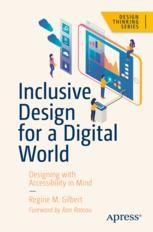
Inclusive Design for a Digital World
In this book, readers will learn the Web Content Accessibility Guidelines (WCAG) 2.1 requirements, emerging technologies such as VR and AR, best practices for web development, and implementation of inclusive design. Begin understanding the immense opportunities in designing for accessibility.
WebAIM: Web Accessibility In Mind
Expanding the potential of the web for people with disabilities by empowering individuals and organizations to create accessible content.
Google Wave Developer Preview at Google I/O 2009
Wave: Small Business Software - Wave Financial
Create beautiful invoices, accept online payments, and make accounting easy—all in one place—with Wave’s suite of money management tools.

A threat model for accessibility on the web - Alice
A explanation of the primary threat to accessibility on the web, and a call to action for the web standards community

brief history of browser accessibility support
Author: steve faulkner The Paciello Group contact: [email protected]
Fact Sheet: New Rule on the Accessibility of Web Content and Mobile Apps Provided by State and Local Governments
The Department of Justice published a Notice of Proposed Rulemaking (NPRM) on July 20, 2023 explaining how we propose updating the regulations for Title II of the Americans with Disabilities Act (ADA) to add more specific requirements about web and mobile application accessibility. This fact sheet gives a plain language summary of the technical standards that state and local governments would have to follow to meet their existing obligations under Title II of the ADA.
lukeslp/awesome-accessibility
Curated list of accessibility resources, tools, and best practices for creating inclusive digital experiences
Playwright Accessibility Testing: What axe and Lighthouse Miss
axe and Lighthouse miss 60–70% of WCAG violations. Learn the limitations of automated accessibility testing and how to write smarter Playwright tests.
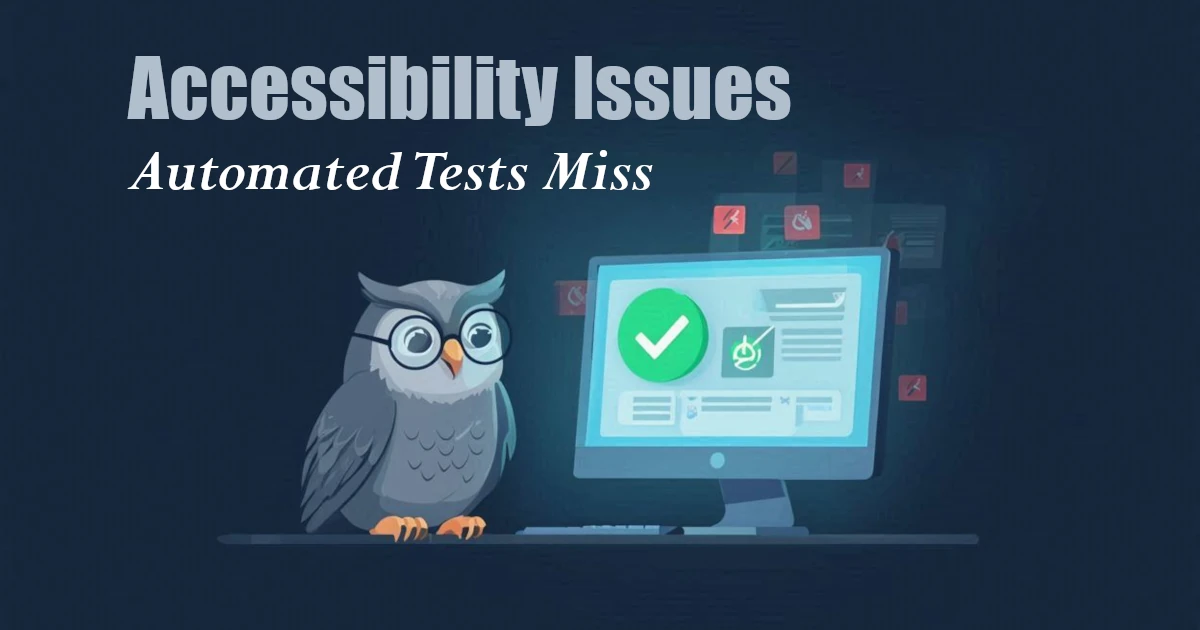
Axe DevTools | Automate accessibility testing
Integrate accessibility testing into your existing automated testing process with Axe DevTools. Toolkits available for web, iOS, and Android.
Cuelume. Interaction sounds for the web
Cuelume is a tiny, dependency-free library of carefully designed interaction sounds, synthesized live with Web Audio.
Cuelume. Interaction sounds for the web
Cuelume is a tiny, dependency-free library of carefully designed interaction sounds, synthesized live with Web Audio.
Google Wave's Failure: OT, Aaron Iba & the Taskade Lineage (2026)
Why Google Wave failed in 2010 and why its OT engine still powers every real-time editor - including Taskade Projects. The Aaron Iba lineage receipt.

A Deep Dive into Accessibility APIs, Part 1 — Knowbility
In this first Deep Dive into Accessibility APIs installment, we'll start from absolute scratch and recount the widely available basic story. It's written for beginners, but the fact that I describe web accessibility in the broader context of software accessibility might offer a different twist for current practitioners as well. Parts 2 and 3, on the other hand, are more technical. Although those discussions may largely be of interest only to "inquiring minds that want to know", understanding the history and variety of the specialized protocols at the heart of this process sheds light on why screen readers sometimes perform differently in the same application or on the same web site while also providing a glimpse of a likely future.