

The publication of 'The Californian Ideology' has inspired an impassioned debate over the issues raised by the article. Here is a selection of some of the most interesting responses to the piece:
Californian ideology
Californian ideology refers to the dominant ideology of Silicon Valley, as described by the British media theorists Barbrook and Cameron in their 1995 essay "The Californian Ideology". The ideology is very influential because of the ubiquity of Californian technology products, as well as because siliconization has made it prominent in computing industries all around the world.
THE CALIFORNIAN IDEOLOGY by Richard Barbrook and Andy Cameron | Imaginary Futures
“Not to lie about the future is impossible and one can lie about it at will” – Naum Gabo [1]
Afterlives of the California Ideology| “Polemic Becomes Canon”: An Interview With Richard Barbrook on the Californian Ideology
In this interview, Richard Barbrook shares his perspective on the essay “The Californian Ideology,” which he published in 1995 and 1996 with Andy Cameron, who died in 2012. Richard Barbrook lays out the essay’s genesis, explores the inspiration offered by Marx and Engels’ The German Ideology, discusses his ambivalent but not simply dismissive relationship to California and the United States, and provides insight into the thinking around the masters program in hypermedia at the University of Westminster, United Kingdom, that he and Cameron were setting up at the time of the essay’s publication. In the essay they wanted to impart a different approach to digital technologies than was prevalent in the Californian computer industry at the time. Overall, the interview makes it apparent how “The Californian Ideology” should be seen in its temporal context—as well as how the basic questions the essay raises continue to shape the discussion about digital media and infrastructures today.
Thirty Years On, the Californian Ideology is Alive and Well
In the seminal essay, Barbrook and Cameron insisted that there are other ways to build technology, and to do it democratically, writes Nathan Schneider.
Refusing Settler Domesticity — Oakland Public Library
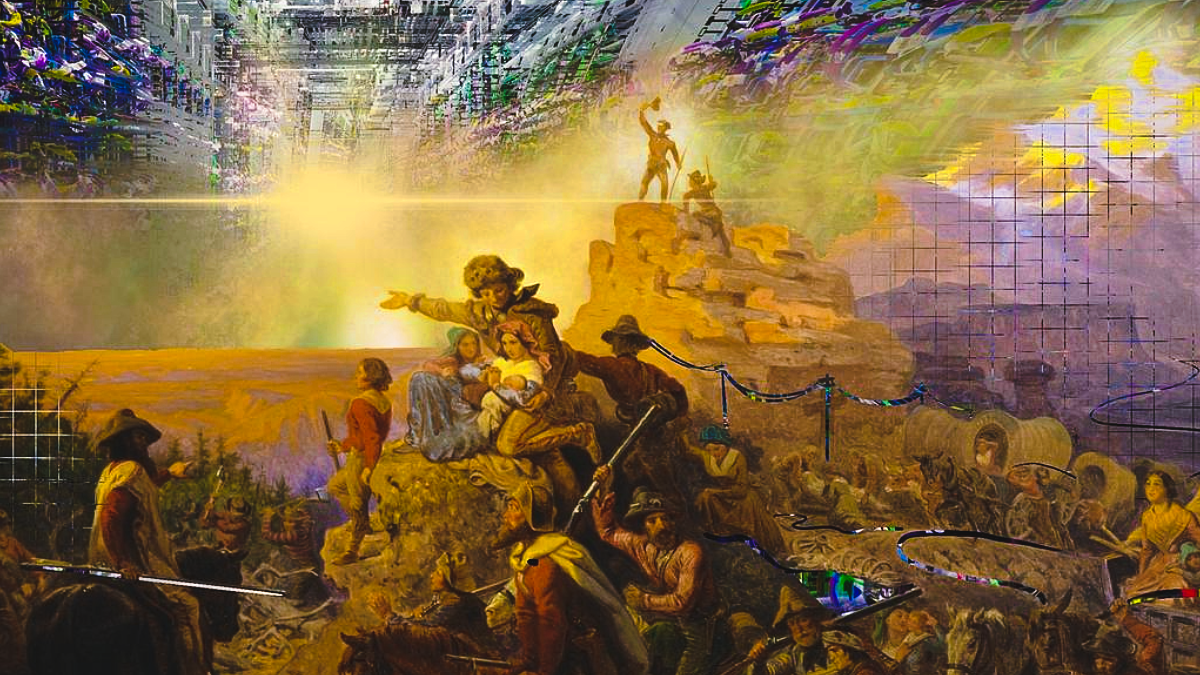
Refusing Settler Domesticity — Keliiaa, Caitlin, — In the early twentieth century, the Bay Area Outing Program coercively recruited over a thousand Native girls and women from boarding schools to labor as live-in domestic workers across the San Francisco Bay Area. Outing removed Native people from their communities and transferred them to white homes, farms, and businesses to work as menial laborers. In exchange for room, board, and meager pay, Native women and girls as young as twelve cooked, cleaned, and lived in the homes of their employers. Despite oppressive living and working conditions, Native women strategically resisted the worst aspects of outing, including Indian child removal, sexual surveillance, criminalization, and exploitation. Throughout, they forged social connections and navigated relationships to refuse domestication and assert their agency. In this groundbreaking work, Historian Caitlin Keliiaa examines Native women's lived experiences of federal policy and connects outing to the region's longer history of coerced Native labor. The book, as indictment, expands the existing work on Indian boarding schools, urban Indians, and the history of California and the West.
The Color of Power — Oakland Public Library
The Color of Power — Douzet, Frédérick — <p></p><p> <i>The Color of Power </i>is a fascinating examination of the changing politics of race in Oakland, California. Oakland has been at the forefront of California’s multicultural changes for decades. Since the 1960s, the city has been a shining example of a fruitful liberal black-and-white political partnership and the successful incorporation of black politicians into the political landscape. But over the past forty years, the balance of power has changed as a consequence of dramatic demographic trends and economic circumstances. The city’s formerly dominant biracial political machine has been challenged by the demands of new multiracial interests.</p><p></p><p>The city, once governed by a succession of black mayors and majority black city councils, must now accommodate rapidly growing Asian and Latino communities. While the black-led coalition still relies on white progressive support, this alliance has weakened due to a shift in the progressives’ agenda and the voting habits of the black community, the rise of a Hispanic-Asian coalition, and a strong demographic decline of the African American population. With similar demographic changes taking place across the nation, Oakland’s experience provides insight in to the multiracial future of other American cities.</p><p></p><p> <i>The Color of Power</i> investigates Oakland’s contemporary racial politics with a detailed study of conflicts over issues like education, elections and political representation, and crime. Trained as a journalist, a political scientist, and a geographer, the author provides a unique perspective supported by numerous maps and extensive interviews.</p><p>Winner of awards from the French Society of Geography and the French National Academy of Sciences</p><br/>Trained as a journalist, a political scientist, and a geographer, the author provides a unique perspective supported by numerous maps and extensive interviews.<p>Winner of awards from the French Society of Geography and the French National Academy of Sciences</p>
The Water’s Edge: Empire, Race, and the Global History of Oakland, California, 1848-1980
Author(s): Klein, Andrew Nelson Carver | Advisor(s): Kelley, Robin D.G. | Abstract: This dissertation explores historical intersections between capitalism, race-making, environmental change, and U.S. foreign relations from the vantage of Oakland’s waterfront. It tracks the evolution of this geostrategic coastline since it emerged as a coal-powered nexus of railroads, steamships, and military installations during American colonization. Revising the story of Oakland’s development from a global perspective, my project documents how local boosters, businessmen, and bureaucrats forged intimate ties with far-flung territories administered by U.S. troops and landowners. Combining social and environmental history with methods from Black studies, I map the transformation of Oakland’s fertile estuary into an infilled hub of postindustrial commerce, a vital node of military logistics, and a focal point for racialized labor migration. Simultaneously, this dissertation reveals how, over the long twentieth century, Black, Indigenous, Chinese, and other working-class Oaklanders found footholds on the harbor, often repurposing its imperial routes for dramatically different ends. Drawing on archives and oral histories in Cuba, Hawai‘i, and across the continental United States, I trace Oakland’s tradition of radical internationalism, most visible in the antiwar and Black Power movements of the sixties, to multi-generational struggles over the governance of coastal land. I argue that Oakland’s waterfront both bridged the continental and overseas expansion of an ascendant world power and came to serve as a proving ground for alternative forms of globalization. “The Water’s Edge” therefore offers a critical reappraisal of the generally place-bound history of North American urbanism and far-reaching lessons for building just cities in a present defined by global environmental crises.

American Babylon
A gripping portrait of black power politics and the struggle for civil rights in postwar Oakland

Somebody Blew up Oakland: Dispossession as a Praxis of Racial Ordering
Author(s): Jones, Stephanie Delise | Advisor(s): Hironaka, Ann; Sojoyner, Damien | Abstract: In this dissertation, I investigate the relationship between underdevelopment and Black geographies. I then explore the consequences of this relationship on the city of Oakland. From 2019 to 2021, I conducted 68 in-depth field interviews of Black Oakland residents who detailed the processes and mechanisms by which California housing policy contributed to the displacement of Black subjects. Building on the work of scholars of Black geographies, I have interrogated the myth of development and the relationship to the dispossession of Black geographies. I theorize how racial capitalism produces vulnerable populations through housing in urban areas. The empirical contribution of my research is to provide a framework for Black geographies as people are being displaced. The theoretical contribution is to provide a conceptualization for Black geographies existing through abjections and placelessness as understood through residents of Oakland.I argue that the relationship between dispossession and refusal creates a distinct politic. In chapter two, I theorize the work of Moms for Housing to further understand Black knowledges of resistance to dispossession. Moms for Housing is used as a case study to highlight the many theoretical implications of dispossession occurring in Oakland. In chapter 3, I use two interviews from developers to demonstrate the contradictions in what I call the mythology of development. In chapter 4, I walk through the geographic stories of 2nd and 3rd generation Oakland residents and demonstrate each of the ways they feel locked out of the city as a result of the urban changes. In chapter 5, I demonstrate how communities resist dispossession and disposability. The city of Oakland lacks proactive implementation of equitable housing policy. The lack of action by the city of Oakland puts the onus on everyday residents to organize against their landlords, employers and the state.
Hometown Chinatown: A History of Oakland's Chinese Community, 1852-1995
Focusing on the local history of the Chinese in Oakland, California, this study examines common stereotypes in the early Chinese community and Chinatown organizations.

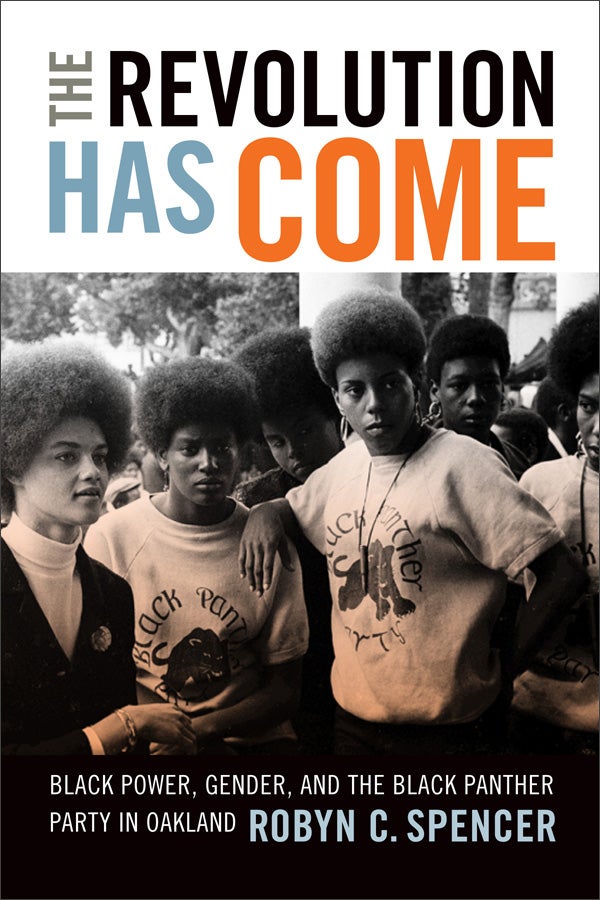
The Revolution Has Come: Black Power, Gender, and the Black Panther Party in Oakland
"Tearing down myths and distortions on virtually every page, The Revolution Has Come is the first substantive account of the Black Panther Party’s Oakland chapter—the iconic gathering that birthed the party and held on to its very last breath. Robyn C. Spencer’s incisive attention to gender, state repression, black radical alliances, philosophical and ideological debates, and the organization’s long decline makes this one of the most original studies of the Panthers to appear in years." - Robin D. G. Kelley, author of Freedom Dreams: The Black Radical Imagination
The Alternative to Capitalism Nobody Talks About | Eleanor Finley & Camila Vergara
Individualism Reconsidered
Joe Peacott Individualism Reconsidered with a bibliography by Jerry Kaplan 1991

From Redlining to Greenlining: The Political Ecology of Race, Class, and Access to Green Space in Oakland, California from 1937-2020
Author(s): Corbin, Chryl Natasha Elaine | Advisor(s): Morelli-Frosch, Rachel | Abstract: Since the 1960s, Oakland, California, has been represented as a predominantly African American, low-income, and high crime urbanity. In the 2000s, the municipality started to become recognized as a top green city, and by the 2010s the city began to emerge as a gentrification hot spot. This dissertation elucidates how the relationships between race, class, housing, and access to green spaces have changed from redlining—prior to the Civil Rights Acts of 1964, 1965, and 1968—to 2020, after Oakland adopted an environmental agenda and began to establish itself as a green city starting in the 1990s. I question how Oakland’s urban environmental “sustainable development” agenda has impacted residents’ access to green spaces, and to what extent and how are these policies and practices creating, exacerbating, and/or mitigating urban environmental (in)justice issues. I examine both sides of environmental (in)justice, uneven distribution of environmental harms and the uneven development of environmental goods in which low-income residents and communities of color are disproportionally exposed to environmental hazards while also being prevented from benefiting from environmental amenities. I interrogate Oakland as a 21st century sustainable green city while also examining the historical urban policies and practices embedded in legal residential segregation and the current green gentrification processes which influence and contribute to the environmental (in)justices being (re)produced today.
The roots of justice : crime and punishment in Alameda County, California, 1870-1910 | WorldCat.org

Have people heard or read about the California Ideology from Barbrook and Cameron circa 1995? networkcultures.org/wp-content/uploads/2015/10/05…
