

Servo is falling behind the web. It completes ~22 features/year at production quality, while the Baseline “Widely Available” set grows at ~52 features/year. At this pace, Servo plateaus around 80% by ~2037 and never catches up. Full velocity parity requires ~44 FTE (€8.8M/yr, €26.3M over 3yr). BWA features vary widely in real-world usage — a phased approach that prioritizes high-usage features first could reduce the initial headcount and cost by up to 40% while building toward full parity. The highest-leverage actions are unstalling 141 blocked features and fixing 51 regressions (features that lost >5 percentage points). This is a work-in-progress analysis focusing on one aspect of web engine development — feature-level readiness — and is not exhaustive. It is designed to orient thinking about cost and timelines. The central question: what would it cost in engineering investment alone to bring Servo to velocity parity within 3 years, excluding non-engineering and operational costs?
This month in Servo: new webview API, relative colors, canvas buffs, and more! - Servo aims to empower developers with a lightweight, high-performance alternative for embedding web technologies in applications.
Servo is becoming truly embeddable this year.

Frameworks for humans in the age of machines
On genAI: Was prototyping really a bottleneck?
I keep hearing folks claim that the fact we can ‘prototype’ so quickly now is a good thing (thanks to modern genAI). But what if the slow parts about prototyping are actually what make it worth doing?
Measuring the Impact of Early-2025 AI on Experienced Open-Source Developer Productivity
Despite widespread adoption, the impact of AI tools on software development in the wild remains understudied. We conduct a randomized controlled trial (RCT) to understand how AI tools at the February-June 2025 frontier affect the productivity of experienced open-source developers. 16 developers with moderate AI experience complete 246 tasks in mature projects on which they have an average of 5 years of prior experience. Each task is randomly assigned to allow or disallow usage of early 2025 AI tools. When AI tools are allowed, developers primarily use Cursor Pro, a popular code editor, and Claude 3.5/3.7 Sonnet. Before starting tasks, developers forecast that allowing AI will reduce completion time by 24%. After completing the study, developers estimate that allowing AI reduced completion time by 20%. Surprisingly, we find that allowing AI actually increases completion time by 19%--AI tooling slowed developers down. This slowdown also contradicts predictions from experts in economics (39% shorter) and ML (38% shorter). To understand this result, we collect and evaluate evidence for 20 properties of our setting that a priori could contribute to the observed slowdown effect--for example, the size and quality standards of projects, or prior developer experience with AI tooling. Although the influence of experimental artifacts cannot be entirely ruled out, the robustness of the slowdown effect across our analyses suggests it is unlikely to primarily be a function of our experimental design.

Features-as-Plugins First Transitions Into Features-as-Projects
Last year, I identified key factors that suggested the features-as-plugins first model was falling apart. A lack of communication, direction, buy-in from core developers, and synchronized developme…

Writing Code vs. Shipping Code: Productivity Effects Across Generations of AI Coding Tools
How do the productivity effects of AI evolve across successive generations of tools, and to what extent do task-level gains ultimately translate into final outp

Writing Code vs. Shipping Code: Productivity Effects Across Generations of AI Coding Tools
How do the productivity effects of AI evolve across successive generations of tools, and to what extent do task-level gains ultimately translate into final outp
Trying the Software factory pattern.
One of the interesting challenges of the AI ecosystem in 2026 is that new, effective patterns emerge faster than I can adopt them. I’ll find a handful, get back to work, and realize a month later that I’d missed four or five more. The adoption cycle for Imprint this year has been something like: January: get every engineer onto Claude Code every single day March: ok, let’s also get everyone else onto Claude Code or Claude Cowork every single day April: local development is bottlenecked on checkout and worktree model, instead create ~10 local workspaces which each have an independent checkout of every repository, and operate at the workspace level, not at the repository level, so it can generate cross-repository pull requests across frontend, backend, infrastructure and data monorepos June: oh boy, agent-driven development is heavily constrained by lack of a common task management system with higher visibility and less permission complexity than Jira, so let’s migrate the entire company over to Linear and hard stop on Jira July: yikes, now we have visibility into all these tickets, many of them are trivial but managing them through local development isn’t scaling, let’s roll out an orchestrated harness which internally we call “Agent Fleet”, along the lines of Stripe’s Minions The most recent question for me has been figuring out how to adopt the software factory pattern. (After some light research, the specific AI-context origin of this term is slightly messy to attribute, but I think it might be Justin McCarthy in February 2026’s Software Factories And The Agentic Moment.)

No Vibes Allowed: Solving Hard Problems in Complex Codebases – Dex Horthy, HumanLayer
hdctools: Chrome OS Hardware Debug & Control Tools - Servo v4.1
Everything is ugly, so go build something that isn't — Raiza Martin, Huxe (ex NotebookLM)
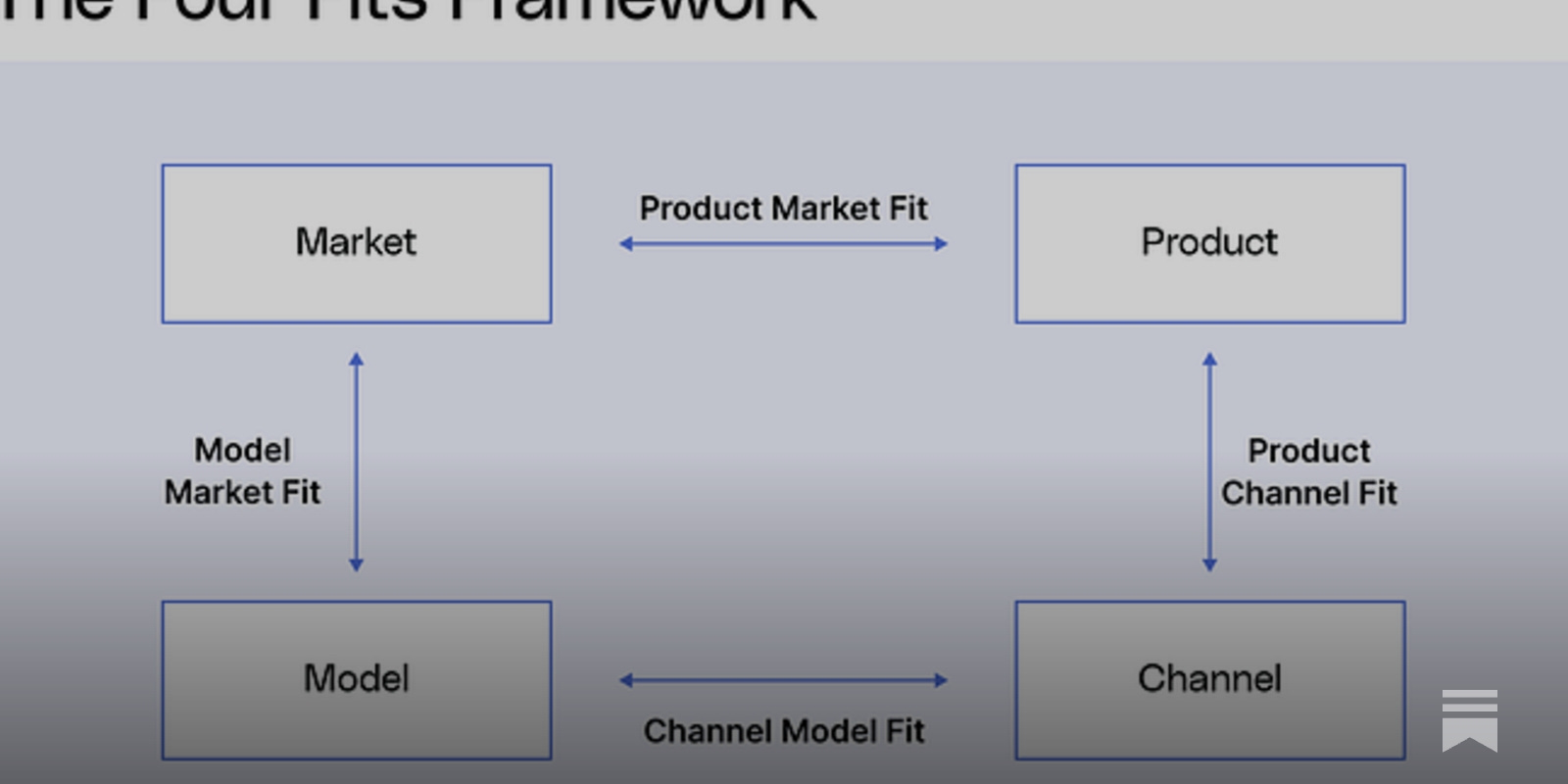
The Four Fits: A Growth Framework for the AI Era
Everything's changed. Here's how to reach $100m at venture speed.
zeroclaw-labs/zeroclaw
Fast, small, and fully autonomous AI assistant infrastructure — deploy anywhere, swap anything 🦀
How do we get to more than just three web engines owned by three US companies? It's a gargantuan question, with no easy or right answer. I've put together a draft report, thinking about it through a very specific approach - please enjoy: Servo Readiness Report webtransitions.org/servo-readiness/

