Are you focused on serving a need or building a product? The difference matters more than you think.
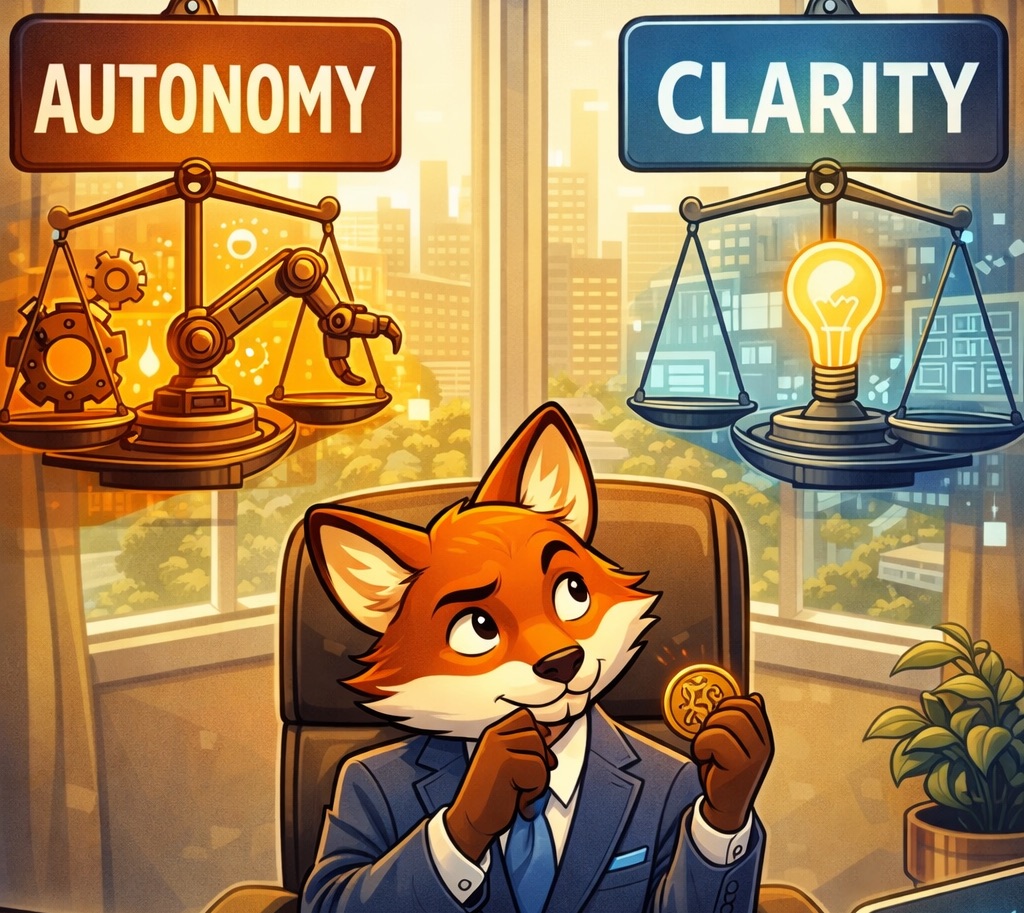
Autonomy and Clarity in Leadership Styles
There’s no one right style of leadership. Use the right style of at the right time.
Develop Strategic Thinkers Throughout Your Organization
It’s the single most important skill a leader needs.

Leadership: Values
A question I get quite frequently is “What makes a good leader?” One of the most important aspects of a good leader is that they have values. This may at first sound noncontroversial, but we are surrounded today by leaders who do not have values or whose only values are to get rich personally or to be powerful (or both). Tech investors have been especially guilty of enabling charismatic leaders, and sometimes even non-charismatic but wildly successful ones, who are fundamentally hollow and wi...
(PDF) Leadership Failure in the Eyes of Subordinates: Perception, Antecedents, and Consequences *
PDF | Effective leaders and leadership behaviors and practices are well-researched areas in the domain of leadership and management. However,... | Find, read and cite all the research you need on ResearchGate

How to Grow Distributed Leadership
Watch the video below, check out the infographic, or read on for the text version.

Simon Sinek: Why Leaders Eat Last
In this in-depth talk, ethnographer and leadership expert Simon Sinek reveals the hidden dynamics that inspire leadership and trust. In biological terms, leaders get the first pick of food and other spoils, but at a cost. When danger is present, the group expects the leader to mitigate all threats even at the expense of their personal well-being. Understanding this deep-seated expectation is the key difference between someone who is just an “authority” versus a true “leader.” For more on this topic, check out Sinek’s latest book Leaders Eat Last: Why Some Teams Pull Together and Others Don’t now available for pre-order. About Simon Sinek A trained ethnographer and the author of Start With Why: How Great Leaders Inspire Everyone to Take Action, Simon Sinek has held a life-long curiosity for why people and organizations do the things they do. Studying the leaders and companies that make the greatest impact in the world and achieve a more lasting success than others, he discovered the formula that explains how they do it. Sinek’s amazingly simple idea, The Golden Circle, is grounded in the biology of human decision-making and is changing how leaders and companies think and act. His innovative views on business and leadership have earned him invitations to meet with an array of leaders and organizations, including Microsoft, Dell, SAP, Intel, Chanel, Members of the United States Congress, and the Ambassadors of Bahrain and Iraq. Sinek recently became an adjunct staff member of the RAND Corporation, one of the most highly regarded think tanks in the world. He also works with the non-profit Education for Employment Foundation to help create opportunities for young men and women in the Middle East region. He lives in New York, where he teaches graduate level strategic communications at Columbia University.

Holacracy: a red herring in the quest for leadership
Does Holacracy liberate employees from the shackles of traditional management structures so they can perform like entrepreneurial leaders? Well, for me the answer’s a definite no. It’s a paradox that for Holacracy to succeed employees need a leadership mindset. But if they have that mindset in the first place they don’t actually need Holacracy. Let’s […]

Want to Instantly Become a Better Leader? Science Says 3 Simple Habits Will Make You More Influential and Charismatic
Simple things you can immediately start doing, without changing your leadership style. (Or yourself.)

Management and Organization at Medium
Medium aspires to empower individual voices and avoid the bureaucracy that often accompanies traditional organizational structures. As a…

The 4 essential questions to ask yourself as a leader
Instead of seeking answers, becoming a better leader starts with asking ourselves the right questions. You want the answer. The silver bullet, the trick, the hack, the leadership best practice, the…

Leadership requires taking some risk.
At a recent offsite with Carta’s Navigators, we landed on an interesting topic: leadership roles sometimes mean that making progress on a professional initiative requires taking some personal risk. This lesson was hammered into me a decade ago during my time at Uber, where I kicked off the Uber SRE group and architectured Uber’s self-service service provisioning strategy that defined Uber’s approach to software development (which spawned a thousand thought pieces, not all complimentary). I did both without top-down approval, and made damn sure they worked out. It wasn’t that I was an anarchist, or that I hated all authority, rather that I could have never gotten explicit approval for either approach. It was the sort of culture where occasionally you were told not to do something, but you were only rarely given explicit permission to do anything. My choice was to either point fingers about why I was stuck, or take on some personal risk to make forward progress.

Kelly Schuknecht | Personal Branding & Thought Leadership Strategist
Personal branding and thought leadership strategy for business owners and executives. Build authority, grow visibility, and become the recognized leader in your industry.

How to share your company vision as a leader
The #1 piece of information you should be focused on as a leader is sharing company vision. Here’s exactly how to do it. “Company vision” might be the fluffiest business term I know. Thrown around …

The Most Important People in Business | Observer
The most powerful leaders in business, with a focus on media, technology and finance.

The Most Important People in Business | Observer
The most powerful leaders in business, with a focus on media, technology and finance.
On Liberation
Across the world, regular citizens of all ages are bravely and spontaneously standing up to forces of oppression and exploitation. Now, a leader of...