


Tracking where Durable Objects are created, wherever you are in the world.
About — Every Object an Archive
We interview people about their experiences with technological objects that were once everywhere, but are now being replaced or redesigned. We are interested in the physical experience of living with these objects, their handfeel and relationships to our bodies. We are also interested in how they shaped our habits, relationships, and ways of being. Technologies are more than physical objects: whole worlds of infrastructure, process, policy and culture are built around them.


Pi Durable | Earendil
Pi Durable is a new experimental package for long-running, durable, and malleable agents that can run anywhere. A tour of what we built and why.


Architecture and the Internet: Designing places in cyberspace
Cyberspace, as the information space is called, has become accessible in the past decade through the World Wide Web. And although it can only be experienced through the mediation of computers, it is quickly becoming an alternative stage for everyday economic, cultural, and other human activities. As such, there is a potential and a need to design it according to place–like principles. Making places for human inhabitation is, of course, what architects, landscape architects, and town planners have been doing in physical space for thousands of years. It is curious, therefore, that Cyberspace designers have not capitalized on the theories, experiences, and practices that have been guiding physical place–making. While most 3D environments closely mimic physical spaces, they are, by and large, devoid of the essential characteristics that differentiate a ‘place’ from mere ‘space.’ And only rarely are they sensitive to, and take advantage of, the peculiarities of Cyberspace. We believe that this state of affairs is temporary, characteristic of early adoption stages of new technologies. As the Web matures, and as it assumes more fully its role as a destination rather than as means of communication, there will be a growing need to design it according to place–making principles. By looking at physical architecture as a case study and metaphor for organizing space into meaningful places, this paper explores the possibility of organizing Cyberspace into spatial settings that not only afford social interaction, but, like physical places, also embody and express cultural values. At the same time, because Cyberspace lacks materiality, is free from physical constraints, and because it can only be ‘inhabited’ by proxy, these ‘places’ may not necessarily resemble their physical counterparts.
Embodied Experience Design: Thinking Through Tree Apprecation
Bringing together place-based technologies, embodied experience and trees
Localized Resilience → Area → Sustainability
Definition → Localized Resilience refers to the capacity of a specific community or geographically defined system to anticipate, absorb, adapt to, and recover from disruptive shocks and stresses, such as climate events or economic downturns. This quality is characterized by strong internal social cohesion, diversified local economies, and decentralized resource systems, like local food production or microgrids.
inFORM: dynamic physical affordances and constraints through shape and object actuation
We propose a new approach to Physical Telepresence, based on shared workspaces with the ability to capture and remotely render the shapes of people and objects. In this paper, we describe the concept of shape transmission, and propose interaction ...

A Sheaf Theoretical Approach to Uncertainty Quantification of Heterogeneous Geolocation Information
Integration of multiple, heterogeneous sensors is a challenging problem across a range of applications. Prominent among these are multi-target tracking, where one must combine observations from different sensor types in a meaningful and efficient way to track multiple targets. Because different sensors have differing error models, we seek a theoretically justified quantification of the agreement among ensembles of sensors, both overall for a sensor collection, and also at a fine-grained level specifying pairwise and multi-way interactions among sensors. We demonstrate that the theory of mathematical sheaves provides a unified answer to this need, supporting both quantitative and qualitative data. Furthermore, the theory provides algorithms to globalize data across the network of deployed sensors, and to diagnose issues when the data do not globalize cleanly. We demonstrate and illustrate the utility of sheaf-based tracking models based on experimental data of a wild population of black bears in Asheville, North Carolina. A measurement model involving four sensors deployed among the bears and the team of scientists charged with tracking their location is deployed. This provides a sheaf-based integration model which is small enough to fully interpret, but of sufficient complexity to demonstrate the sheaf's ability to recover a holistic picture of the locations and behaviors of both individual bears and the bear-human tracking system. A statistical approach was developed in parallel for comparison, a dynamic linear model which was estimated using a Kalman filter. This approach also recovered bear and human locations and sensor accuracies. When the observations are normalized into a common coordinate system, the structure of the dynamic linear observation model recapitulates the structure of the sheaf model, demonstrating the canonicity of the sheaf-based approach. However, when the observations are not so normalized, the sheaf model still remains valid.

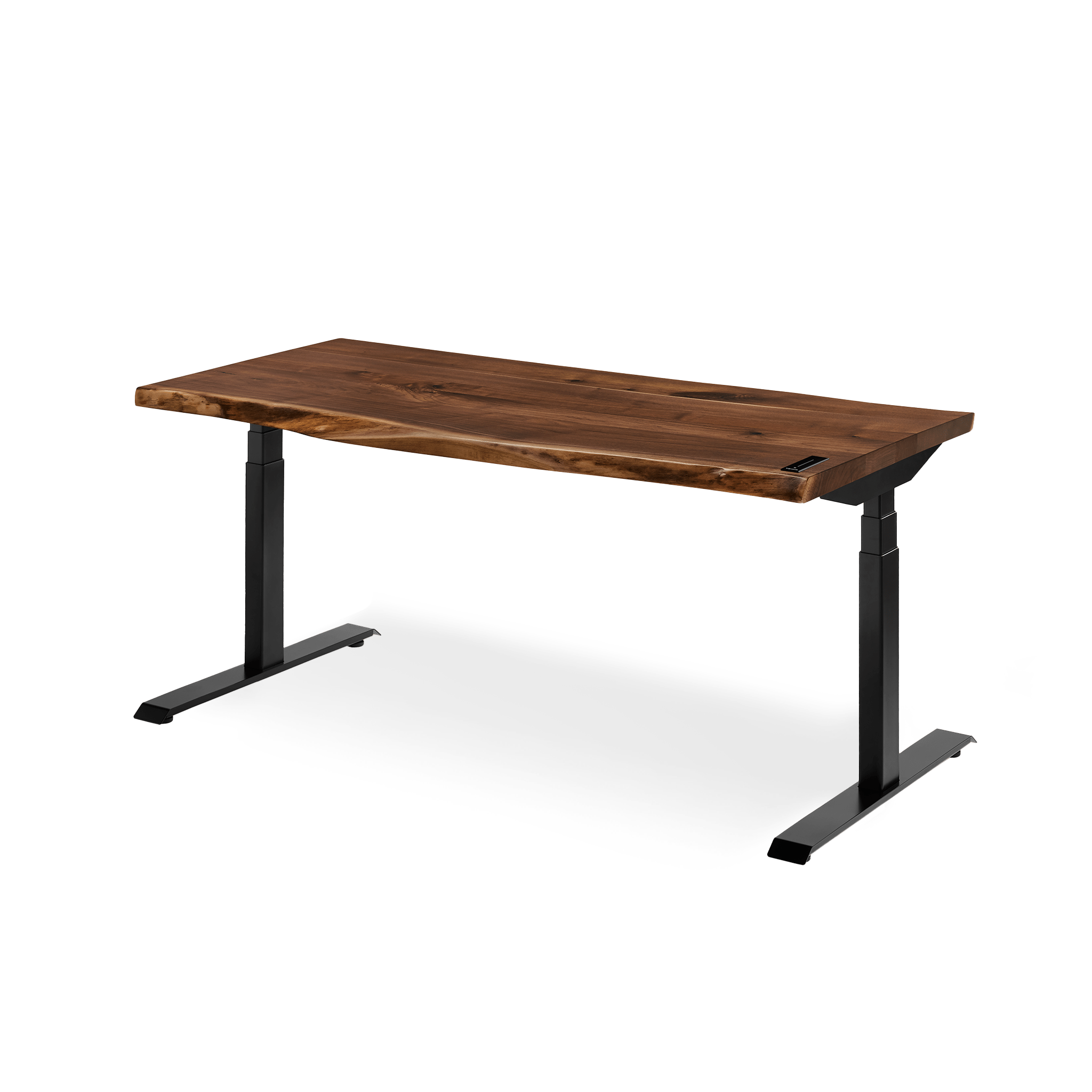
Alive Standing Desk
Work ergonomically without compromising on design with the Alive Standing Desk—a true statement piece in any workspace. Its innovative Swipe technology lets you adjust the height with a simple glide of your finger, offering a more intuitive, seamless experience every time you sit or stand. Crafted from certified solid walnut or maple sourced from sustainably managed forests, the Alive features a live edge that celebrates the natural beauty of the wood. Each desk is one of a kind, handcrafted with precision to deliver exceptional durability and striking presence.

The Glimmer — thefugue.space
A brief history of my attempts to bring Spatial Computing to the wider audience..

All The Places
A growing set of web scrapers designed to output consistent geodata about as many places of business in the world as possible.
Live Flight Tracker - Real-Time Flight Tracker Map | Flightradar24
The world’s most popular flight tracker. Track planes in real-time on our flight tracker map and get up-to-date flight status & airport information.

📔 ATlogs

These are ATmosphere services related to logging or tracking activities and libraries. * Kindly check the "Connections" tab for possible sub-collections. #ATmosphereConf
TaskedAT
Cheeseburger Database
rolld — log your board game plays on atproto
byline.pub is now live in beta
RankThat - Collections

filmograph.io